
The Retina: As Unique as Your Fingerprint – Only More BeautifulDiscover your unique signature
Two people, one gaze – and a hidden pattern that exists only once. Welcome to the most fascinating structure of the human eye.
Discover more↓
The eye is said to be the window to the soul. Behind this window lies the retina – and with it a pattern as unique as you are.

The mysterious retina
In the fascinating world of the eye there are two decisive components: the iris, which surrounds the pupil, and the retina at the back of the eye.
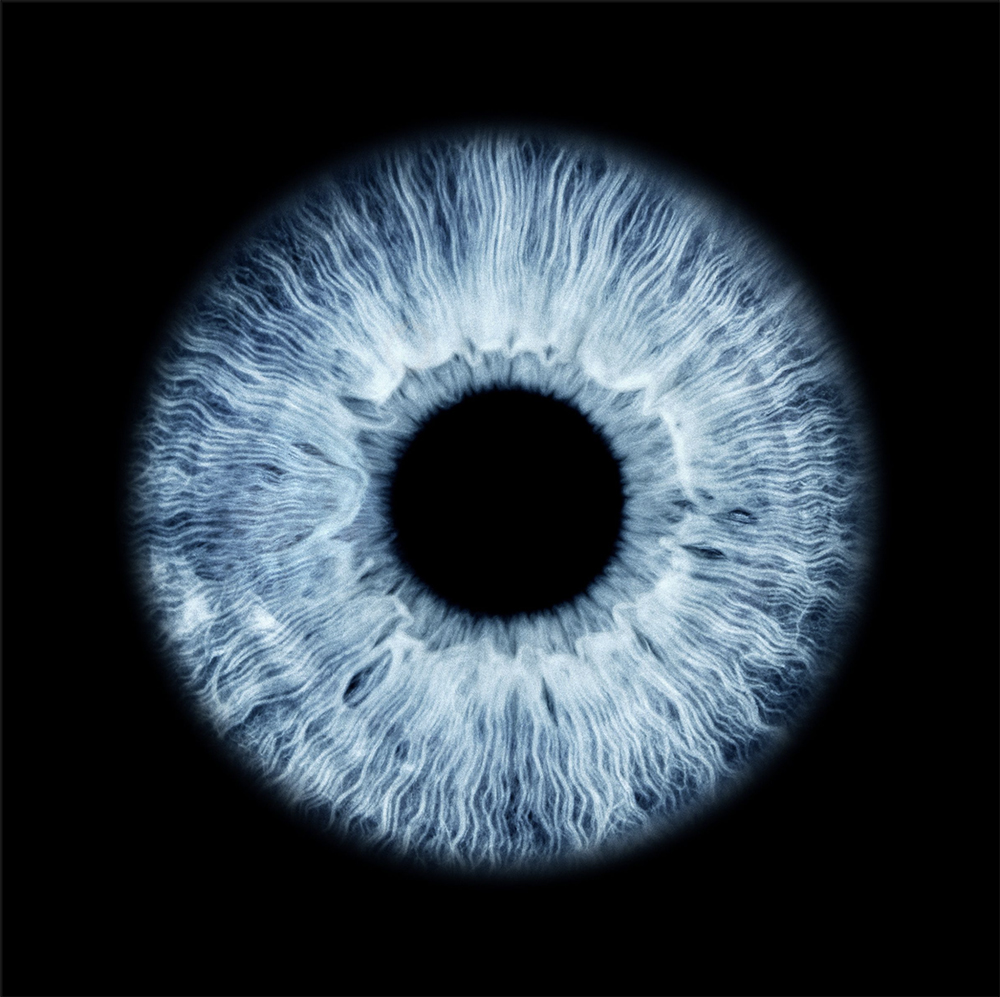
Iris: the curtain of the eye
The iris is the colored layer of pigment around the pupil, visible at the front of the eye. It determines our eye color and works like the aperture of a camera: it regulates how much light enters the eye, narrowing in bright light and widening in the dark. It can contain pigments of different colors and is well known today because of iris photography, which is currently very popular. Here you will find a page we have dedicated to the iris.[2]
Retina: the sensory net
The retina houses the rods and cones some of us remember from biology class: specialized nerve cells that pass light impulses on to our brain via the optic nerve. It lies hidden at the back of the eye and is only visible with a special camera – which is why it remains relatively unknown.[1]
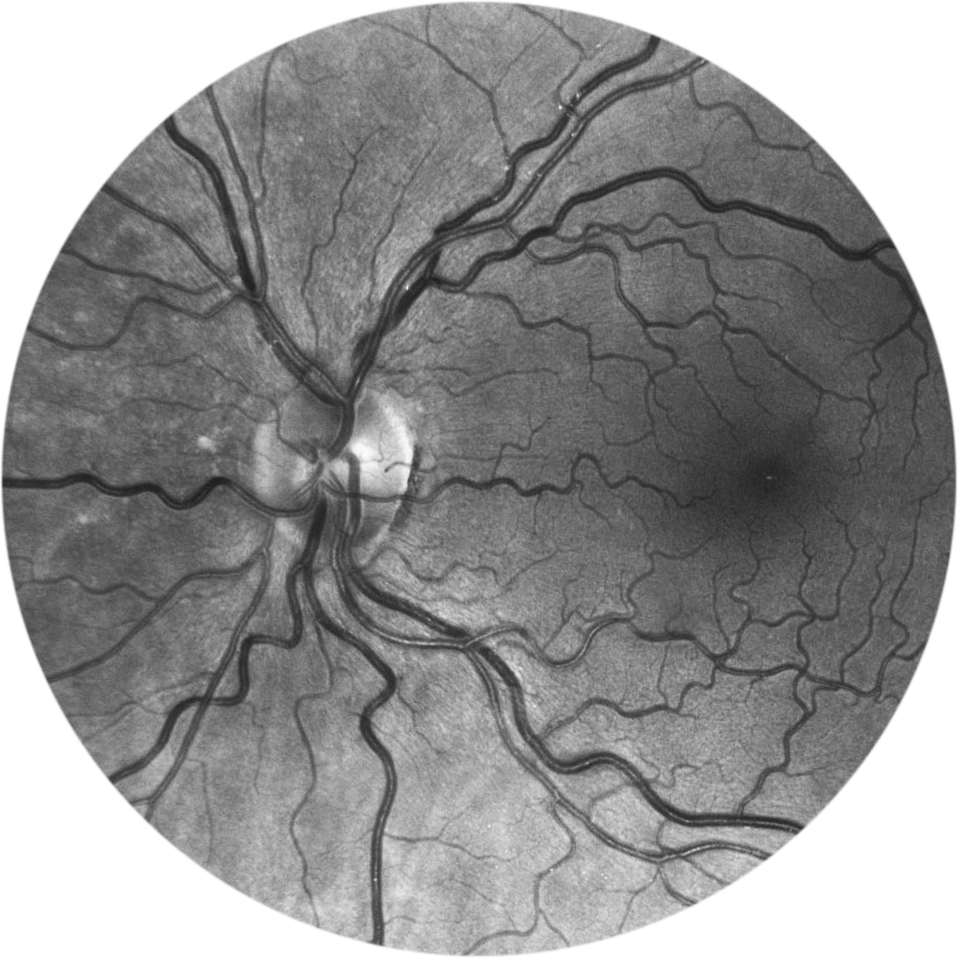
A beautiful pattern that belongs to you alone
In structure and function, the retina is extraordinarily complex. Three of its most important features explain why it fascinates us so much.
The seat of sharp vision
The macula is the central area of the retina. It is responsible for sharp vision and allows us to perceive detail – to read text or recognize faces.[3]
The wildest region
Here the nerve fibers converge to form the optic nerve, which carries the signals to the brain. At the same time, this is where the arteries enter and the veins exit. Around the optic nerve the vascular pattern is at its most expressive – and usually at its most interesting for our designs.[4]
What the brain fills in
Where the optic nerve exits there are no light-sensitive cells – this creates a blind spot. The brain fills in this area unnoticed, so we perceive no gap in our field of vision.[5]

Why we use your retina for jewelry
«How do you come up with an idea like that?» I hear this question almost every day – and it is more than justified. To answer it, I have to go back a little: I came from Austria to Switzerland in 2000 to do a doctorate in neurobiology. I spent hours at the microscope analyzing nerve cells, fascinated by the complexity of our nervous system.
After a period in the pharmaceutical industry, I trained as a goldsmith and, together with my wife, built up the atelier «kleine Rheinperle» on the Rheinsprung in Basel. Soon I had discovered two new passions: creative jewelry design and entrepreneurship.
In search of a personal, aesthetic signature
When we began to focus more on wedding rings, we quickly realized that mass-produced pieces and standard designs were not for us. As unique as our handcrafted rings were – to me they were not personal enough. I wanted to create something worn by one single person, something with a direct and unmistakable meaning.
Above all, we were looking for our own wedding rings and were disappointed by the creativity of the jewelry industry – everything looked very much alike. For the most emotionally important piece of jewelry in our lives, one we hoped to wear on our fingers for six decades, an impersonal mass product made no sense – we wanted something personal.
An engraved name was not enough. Fingerprints always had something forensic about them for me – deeply unromantic. Life lines from the palm, sound waves of the voice: intriguing ideas, but they did not meet my aesthetic standards. What I had in mind was a signature that was personal and beautiful at the same time.
Then my biological side spoke up – and suddenly it was clear what we needed: the retina. It is ultra-personal, as unique as a fingerprint and yet far more beautiful. At first glance it resembles the roots or branches of a tree, with crossings that look like embraces, sometimes even like hearts.
Not just little veins
To some, vessels on a wedding ring seemed strange at first. But these are not the red veins that appear in the eye after a long night out – those sit at the front on the conjunctiva and have nothing to do with the retina. You literally have to look a little deeper: the uniqueness and beauty of this hidden pattern carry a symbolic meaning that goes far beyond «veins somewhere in the body».

From the first image to the world premiere
For the first real retinal images, I contacted a specialist in Basel in 2016 – he replied to my email immediately with the words «a breathtakingly beautiful idea!» – and we photographed my wife's retina and mine that very same day.
In 2019 I presented the concept at 15 trade fairs around the world: Zurich, Bern, Lucerne, Paris, London, Edinburgh, even Abu Dhabi. No one had ever seen jewelry this symbolic before – the power of the idea fascinated almost everyone.

The magic of eye contact
Our eyes are not only a marvel of nature, but probably the organ that connects us most directly with the world around us. With a single glance we share fear, joy, love, wonder – without words, without a shared language. Eye contact is far more powerful than many people think.
A social experiment demonstrated this impressively: around 45 000 people in more than 90 cities worldwide held eye contact with a stranger for one minute each. Many reported a special sense of connection afterwards – after just one minute.[8]
The «eye contact exercise» also became known through a performance by the artist Marina Abramović: in «The Artist Is Present» she sat opposite strangers at the Museum of Modern Art in New York for months in 2010 and looked them in the eye.[7]
«We are like islands in the sea – separate on the surface, but connected in the deep.»

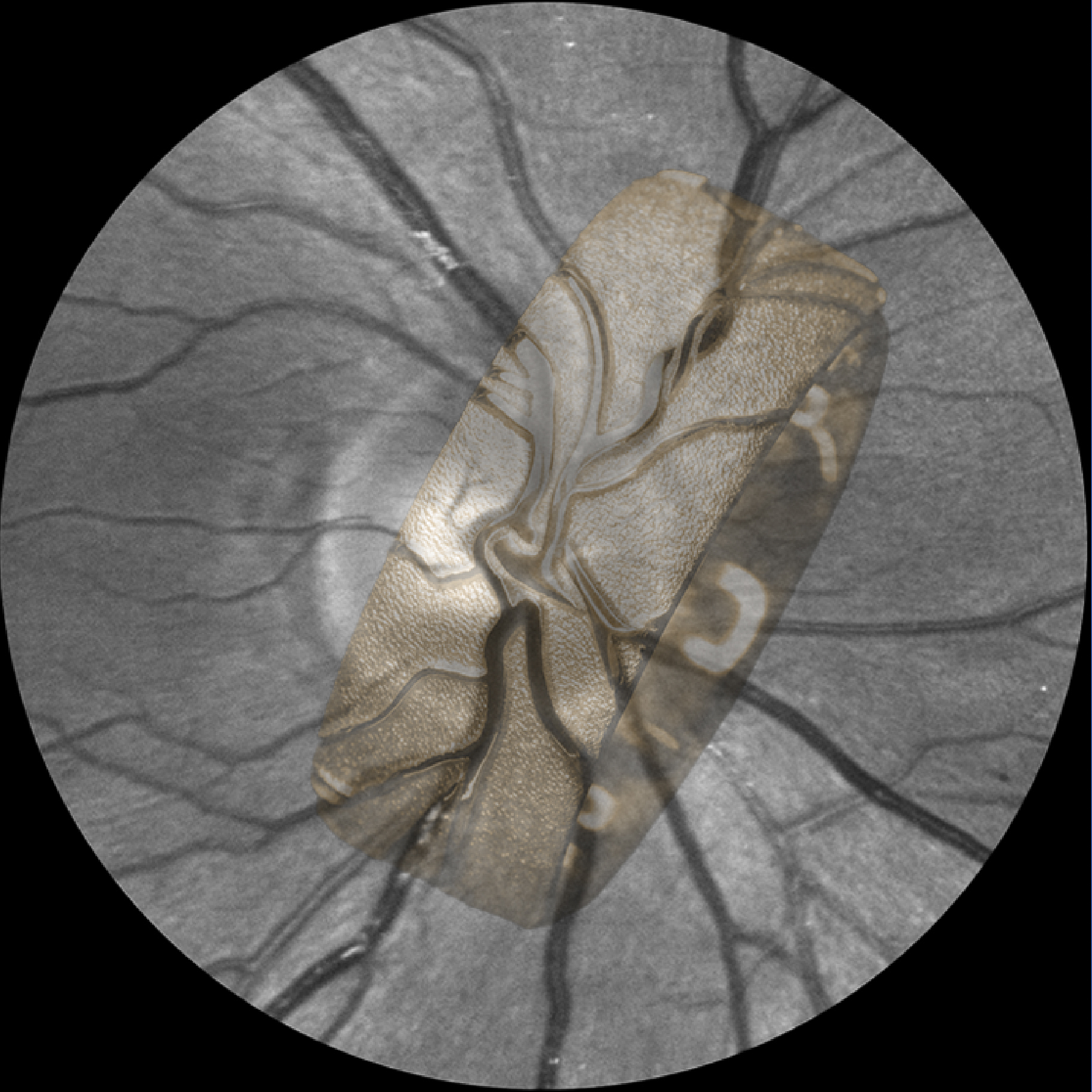
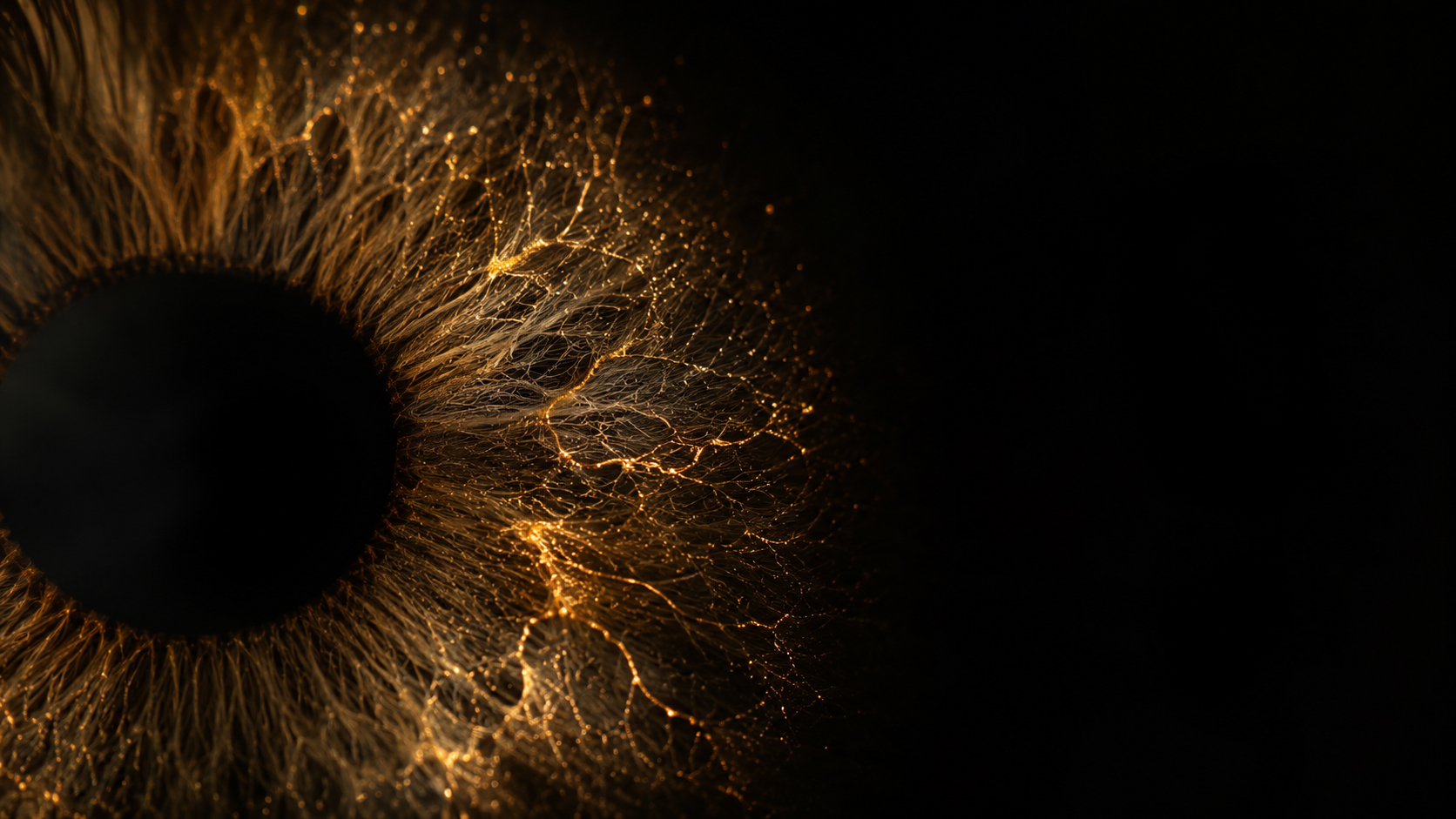
Your pattern. Only once in the world.
See your own retinal image for the first time – and let us think together about how it could become a piece of jewelry that belongs to you alone. The conversation begins with time, listening and your story.
Book a consultationFrequently asked questions about the retina and the RETINA® Concept
What is the retina?
The retina is the light-sensitive layer of nerve cells at the back of the eye. Its rods and cones convert light into nerve signals that travel to the brain via the optic nerve. The beautiful lines you see on retinal images are blood vessels. The retina is only visible with a special camera, which is why it is relatively unknown.
What is the difference between the iris and the retina?
The iris is the colored diaphragm at the front of the eye; it determines eye color and, like a camera aperture, regulates how much light enters. The retina sits at the back of the eye and converts that light into nerve signals. The two are often confused – for our jewelry we use the pattern of the retina, not the iris.
Why does RETINA® use the retina for jewelry?
Because the retinal pattern is ultra-personal and as unique as a fingerprint – but far more beautiful. At first glance it resembles the roots or branches of a tree, with crossings that can look like embraces or hearts. It sits exactly at the interface between our visible outer world and our inner world: the window to the soul.
Is a RETINA® piece of jewelry a biometric or medical product?
No. We understand the retina as a personal, hidden and aesthetic signature, not as a biometric identifier or medical feature. An expressive section of the pattern is artistically abstracted. It serves neither identification, diagnosis nor security, but symbolism and beauty.
Does the retinal pattern change over a lifetime?
The basic structure of the blood vessels forms during pregnancy and remains essentially stable for life. That is exactly what makes the pattern such an enduring personal mark. For medical details, please consult recognized sources such as Wikipedia or ophthalmological institutions.
Do identical twins have the same retinal pattern?
No. Even identical twins who look alike on the outside have different retinal vessels. The pattern is therefore unique even where the genetic material is identical.
What is the macula?
The macula is the central area of the retina and is responsible for sharp vision. It allows us to perceive detail – reading text, for example, or recognizing faces.
What is the optic nerve and why is this region so interesting for the pattern?
At the optic nerve, the nerve fibers of the retina converge and carry the signals to the brain. In this region the arteries enter and the veins exit at the same time. That is why the area around the optic nerve is the «wildest» and usually the most interesting zone for the pattern we use in jewelry.
What is the blind spot?
Where the optic nerve exits there are no light-sensitive cells – this creates a «blind spot». The brain fills in this area unnoticed, so we perceive no gap in our field of vision.
Are the lines on the retinal image the same red veins you see after a long night out?
No. The red veins you see in the eye after a long night sit at the front on the conjunctiva and have nothing to do with the retina. The vessels of the retina lie deep at the back of the eye and form the fine, tree-like pattern we use in our designs.
Is the RetinaScan dangerous or unpleasant?
No. A special camera photographs the retinal pattern without contact and completely safely, similar to an image taken at the ophthalmologist. It is not a procedure, just a photograph.
How long does the RetinaScan take?
About one minute. The scan can be done in Basel or with a partner from our worldwide network.
Where did the idea of using the retina for jewelry come from?
Founder Stefan Wacha came from Austria to Switzerland in 2000 for a doctorate in neurobiology and was fascinated by the complexity of the nervous system. While building up the goldsmith atelier with his wife, he searched for a signature for wedding rings that was both personal and aesthetic. Fingerprints felt forensic, sound waves unsuitable – until his biological side delivered the answer: the retina.
What does eye contact have to do with the RETINA® Concept?
In most cultures the eye is regarded as the window to the soul. Eye contact creates closeness and connection within moments – social experiments with many thousands of people worldwide have shown this. A piece of jewelry that carries exactly this pattern sits symbolically on the threshold between outside and inside.
Who was Marina Abramović and what does she have to do with this topic?
Marina Abramović is a performance artist. In «The Artist Is Present» she sat opposite strangers at the Museum of Modern Art in New York for months in 2010 and held their gaze. The work made strikingly visible how powerful and moving wordless eye contact can be.
Can I have the RetinaScan done abroad?
Yes. The scan can be done with a partner from our worldwide network, the consultation takes place by video, and the finished piece is shipped worldwide.
What comes after this article?
If you would like to know how your personal piece of jewelry emerges from the retinal pattern, the RETINA® process and the concept guide you step by step – from the consultation and the RetinaScan to the handcrafted one-of-a-kind piece.
Sources and further reading
- Wikipedia: «Retina». en.wikipedia.org/wiki/Retina
- Wikipedia: «Iris (anatomy)». en.wikipedia.org/wiki/Iris_(anatomy)
- Wikipedia: «Macula of retina». en.wikipedia.org/wiki/Macula_of_retina
- Wikipedia: «Optic nerve». en.wikipedia.org/wiki/Optic_nerve
- Wikipedia: «Blind spot (vision)». en.wikipedia.org/wiki/Blind_spot_(vision)
- National Eye Institute (NEI, NIH): «How the Eyes Work». nei.nih.gov – How the Eyes Work
- Museum of Modern Art (MoMA): Marina Abramović, «The Artist Is Present» (2010). moma.org/calendar/exhibitions/964
- The World’s Biggest Eye Contact Experiment (The Liberators International). theliberators.org/eye-contact-experiment
- The quote «We are like islands in the sea» is frequently attributed to William James.
This article deliberately simplifies medical relationships and does not replace advice from an ophthalmologist. For details, please refer to the sources listed above.