

Gemstone setting
A stone does not only change how a piece of jewelry looks. It changes how it is made.
At RETINA®, every stone is set by hand – into a piece that exists only once. The type of setting determines how much light the stone receives, how protected it sits, how suited the piece remains to everyday wear – and above all, how it relates to the RetinaSignature.
This is exactly where two paths part. The classic settings place the stone on the piece of jewelry. Our own settings place it in your signature.
The classic settings
Four methods that every good goldsmith masters. We work with them too – wherever a stone is meant to stand on its own.
Bezel settingThe most protective option
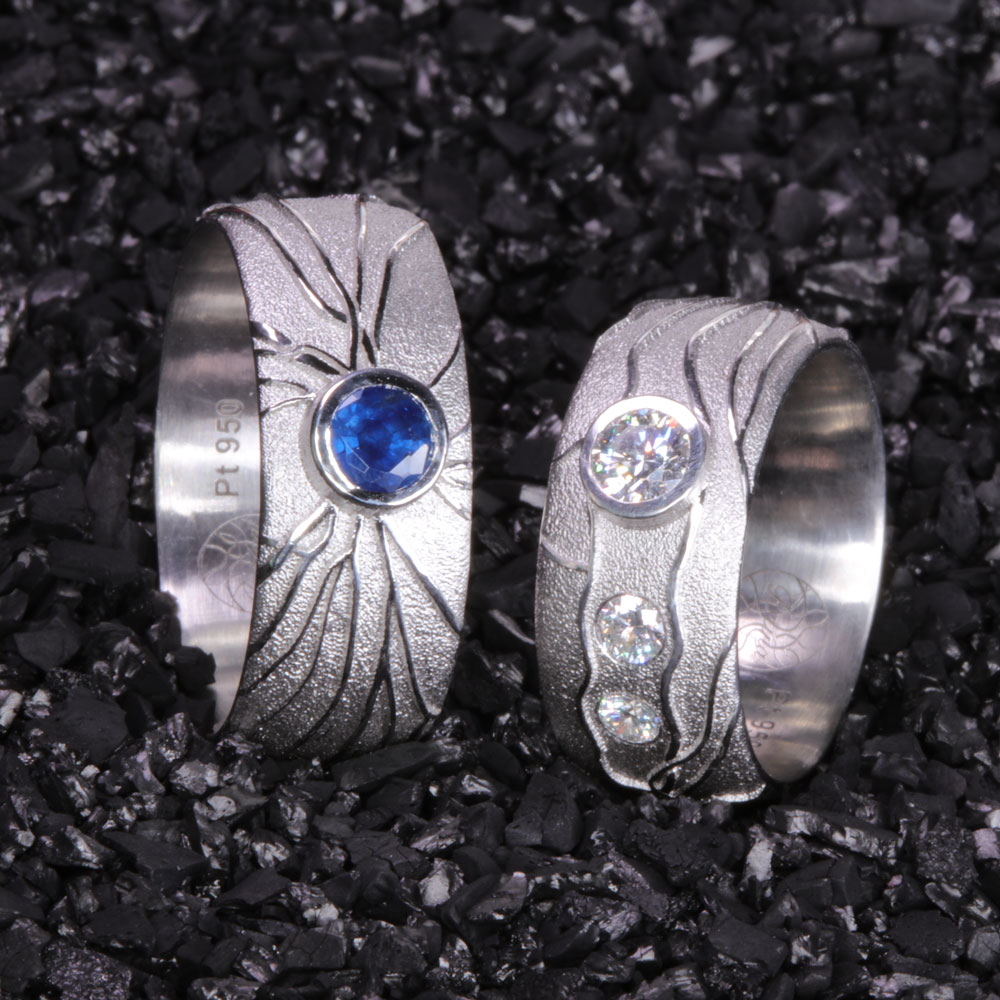
A continuous rim of metal holds the stone all the way around. Nothing protrudes, nothing catches – flat, calm and very suited to everyday wear. The bezel setting is the first choice for hands that work and for people who never want to take their ring off.
Because the rim covers part of the stone, it appears slightly smaller, but in return it is practically invulnerable. The bezel is especially beautiful with large colored stones: the calm metal all around makes the color appear stronger.
Prong settingMaximum light for the stone
Fine metal claws, the prongs, hold the stone at just a few points and leave it open from as many sides as possible. Light reaches it unhindered, the stone shows its full fire and appears larger than in a bezel.
In return, it sits somewhat higher and needs more attention in everyday life. The classic setting for a solitaire that is meant to take center stage.
Tension settingThe stone appears to float
The stone seems to sit freely between two flanks of metal, held solely by the tension of the material. Visually the most spectacular effect and, in terms of craft, the most demanding work: the tension has to remain exact for decades, and the metal must not fatigue.
That is why only certain alloys are suitable – platinum has the advantage here, because it holds its shape particularly well.
PavéA surface of many small stones
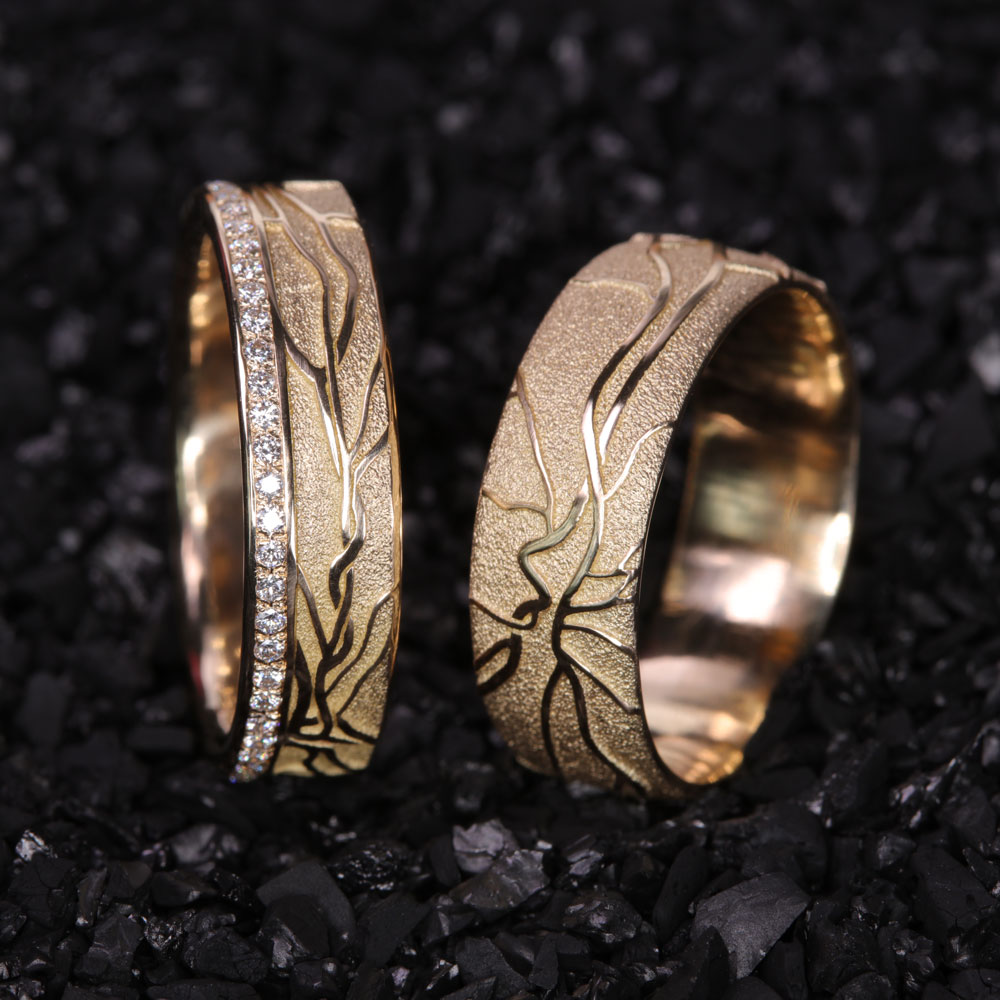
Pavé is French for paving – and that is exactly what it looks like: many small stones sit closely together, held by tiny beads of the metal itself. From a distance, you no longer see individual diamonds but one continuously sparkling surface.
The classic application is the eternity ring: the stones follow a straight line around the ring. For this, the goldsmith cuts an even channel in which all the stones sit at the same spacing and the same height. Precision work, but geometrically predictable.
This is exactly where our diamond vein begins – it is a pavé whose line does not run straight but follows the pattern of an eye.
When the stone becomes part of the signature
Four settings, the first of which exists only at RETINA® – because they would be unthinkable without a RetinaSignature.
In an ordinary ring, a stone is usually set centrally, symmetrically and geometrically. With a RETINA® piece, the question is different: how does the stone relate to the lines that come from this person’s eye? Four settings have grown out of this question.
Diamond vein
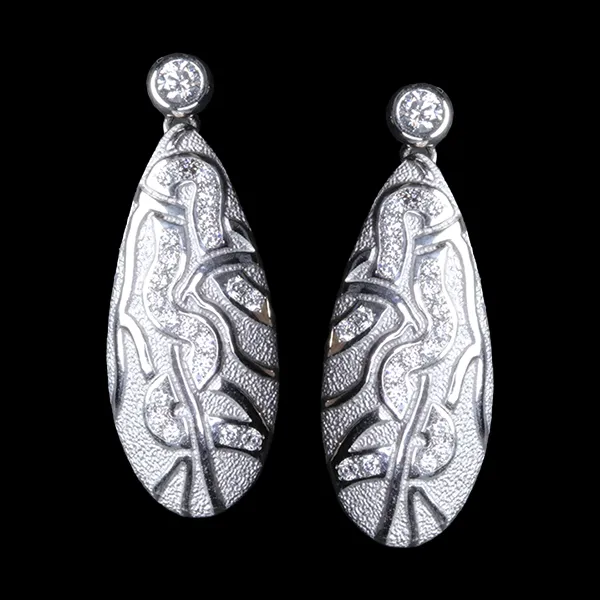
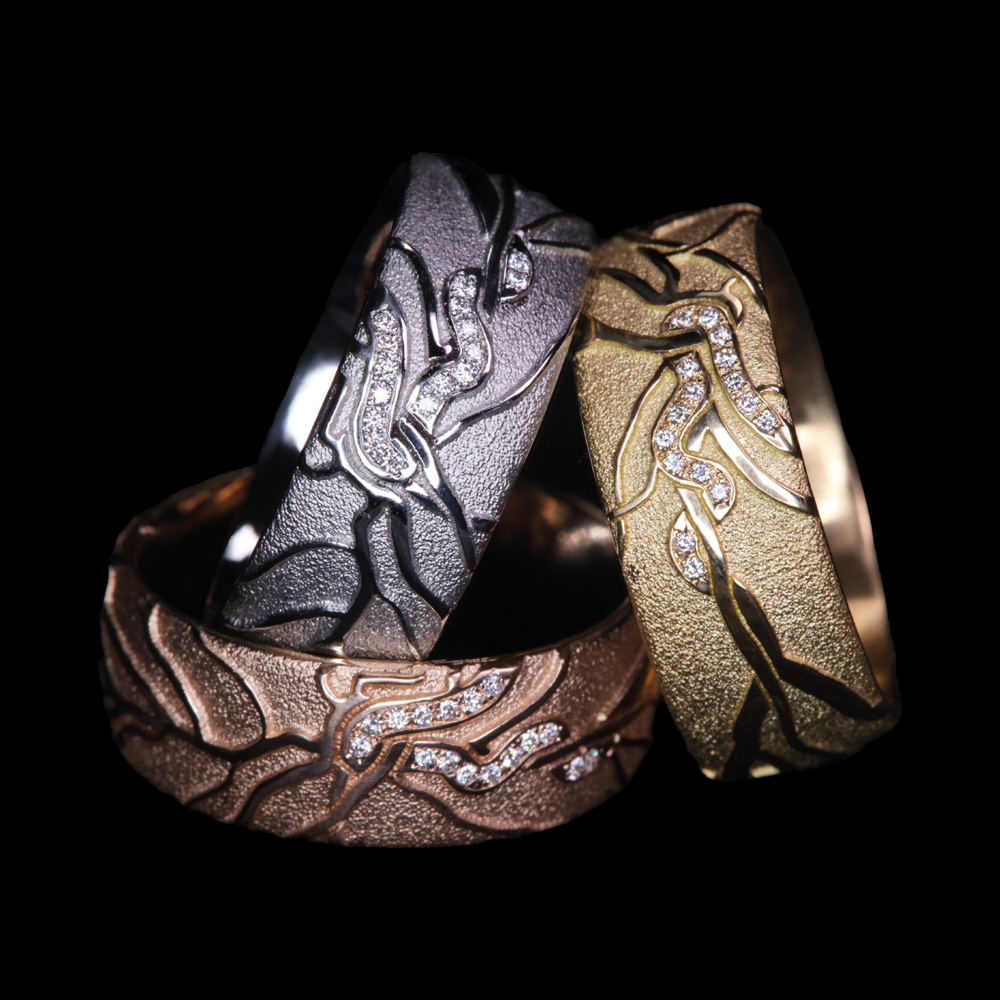
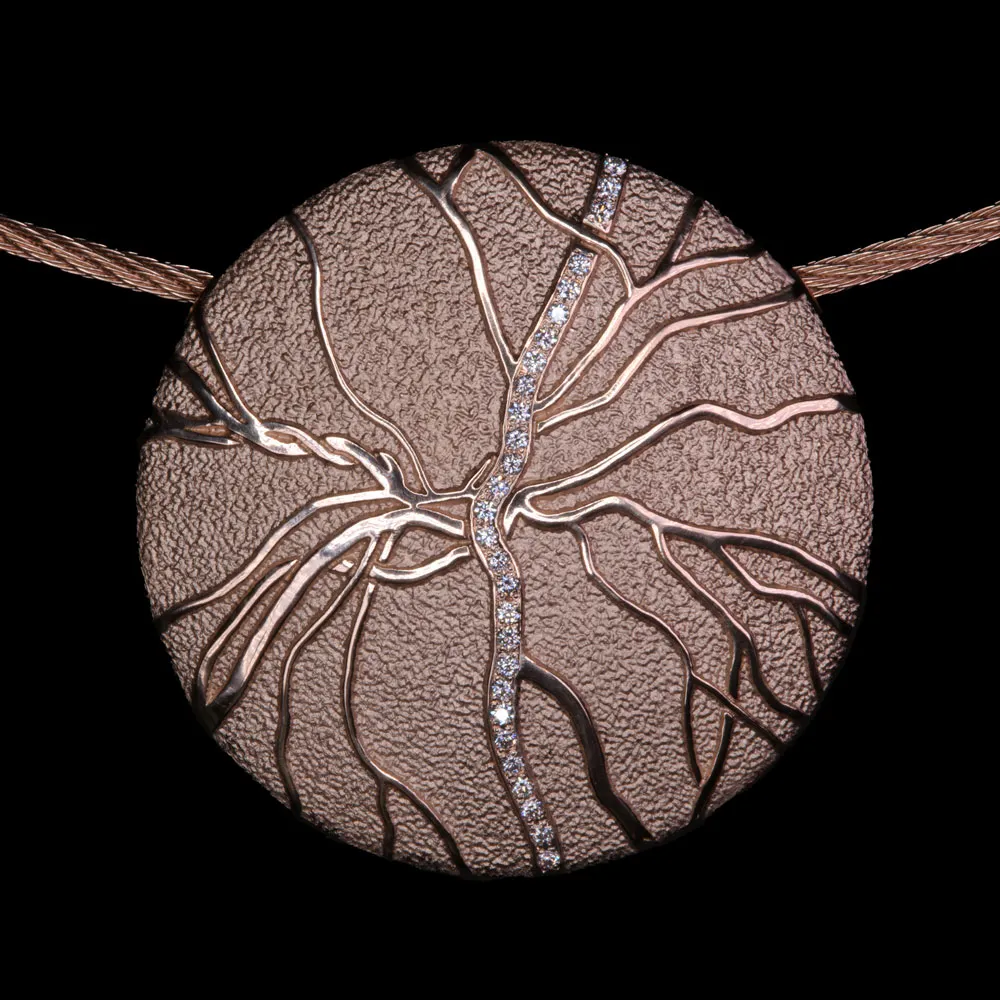
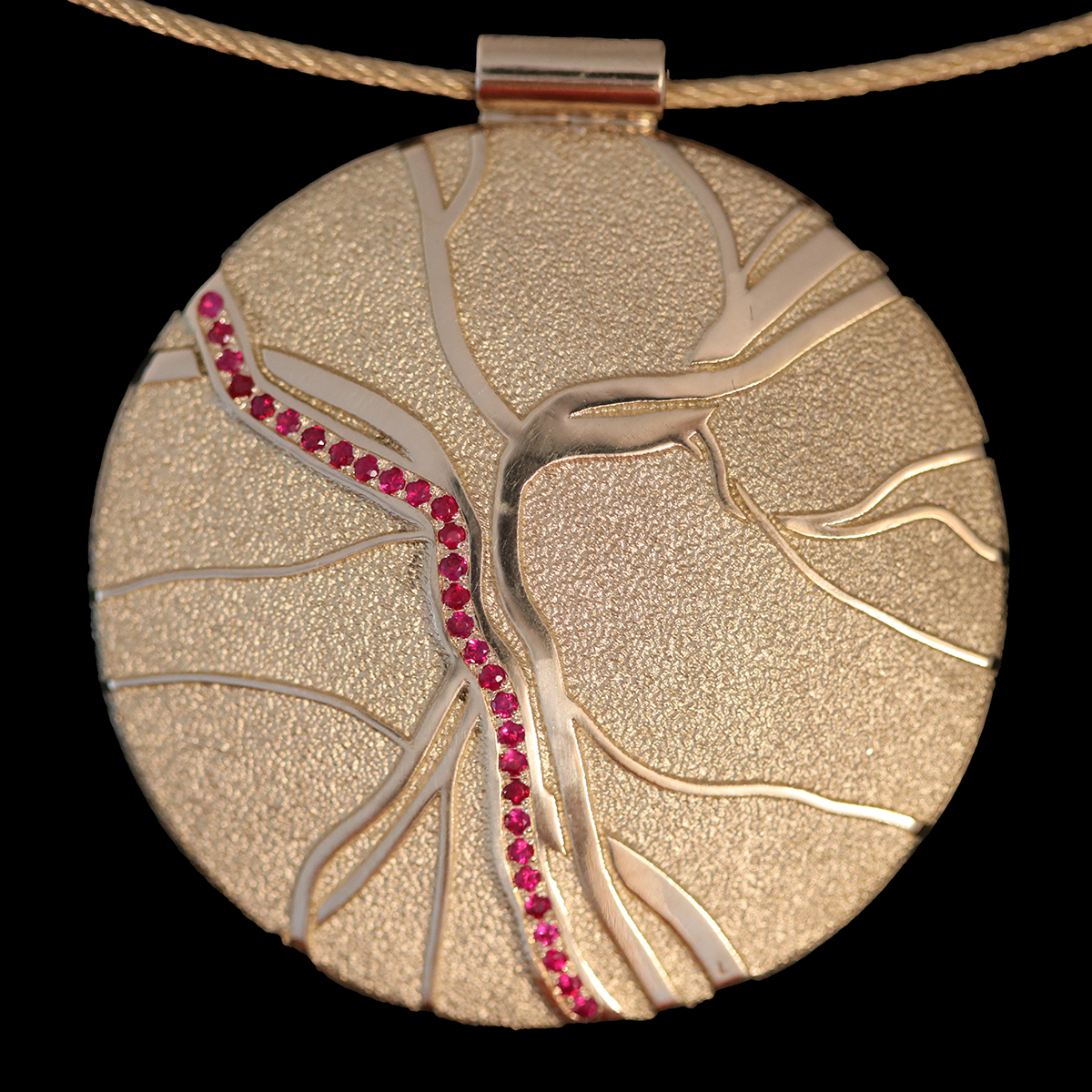
Our favoriteA vein in your RetinaSignature is selected to be set with diamonds or other gemstones. The vein is widened slightly for this, to give the diamonds enough room and to show them to their best aesthetic effect. Particularly striking are interruptions by veins crossing over it, which visually heighten the three-dimensional feel.
Technically, the diamond vein is a pavé in its more difficult form. In the classic eternity ring, the stones follow a straight line: the channel can be cut evenly, every stone sits at the same spacing and the same height. A vein, by contrast, runs organically – it widens and narrows, it curves, it tapers away. Every seat has to be determined individually, every bead raised individually, and the surface keeps falling away as you work. The same setting, incomparably more handwork.
Where in an ordinary setting a stone lies on a ring, the diamond vein holds several, mostly smaller stones in a line. They form a trail of light that follows the course of your retina. That is why it is our favorite way to set stones: the most organic, the most personal and the most alive, because a part of the wearer or their partner thereby becomes the setting itself.
Swipe left to browse.
Scattered stones
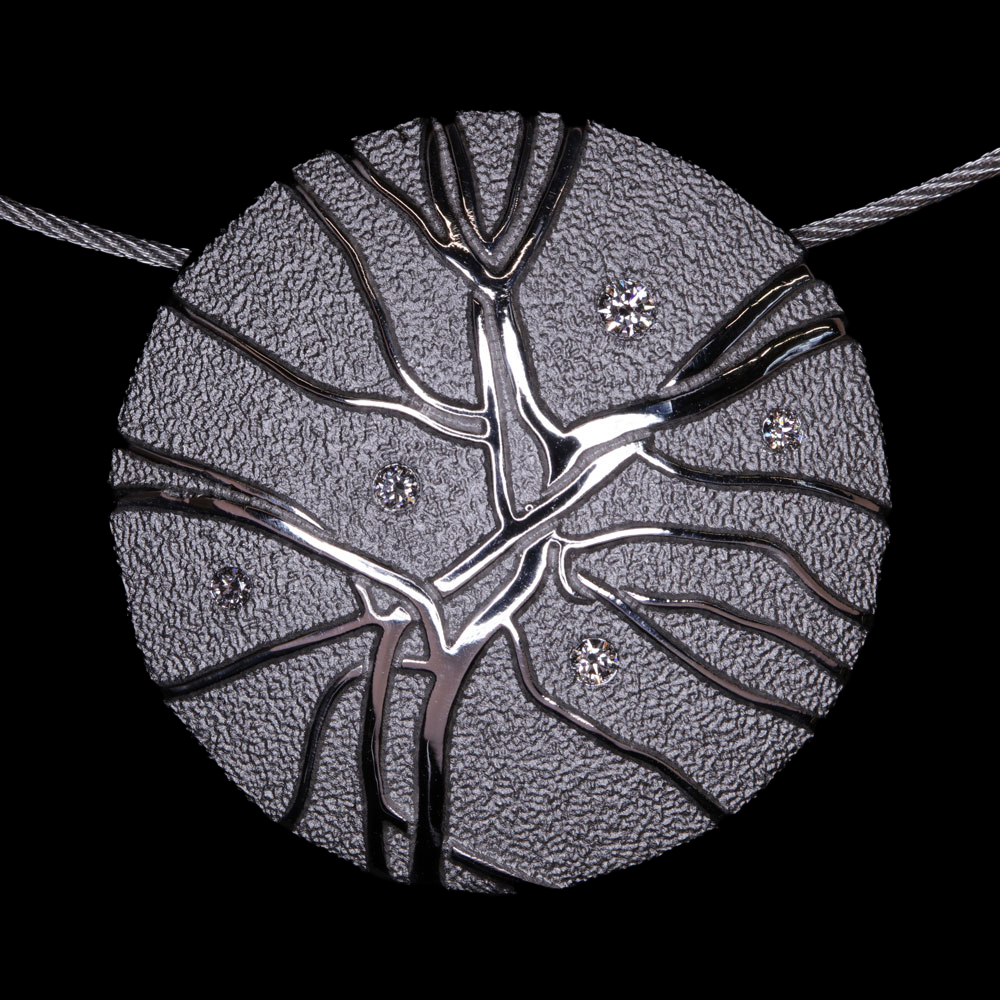
Between the veinsHere the stone does not sit in the line but in the calm surfaces in between. Scattered means: the diamond is set into the precious metal until its table sits almost flush with the surface. No rim, no prong, nothing protrudes.
This is the most restrained way of giving a piece of jewelry light. From around seven diamonds we often speak of a «starry sky», which becomes even more alive when gemstones of different sizes are chosen. The signature remains the main figure; the stones set accents in the spaces between, the way stars stand between branches. Because nothing protrudes, this setting is exceptionally suited to everyday wear.


Swipe left to browse.
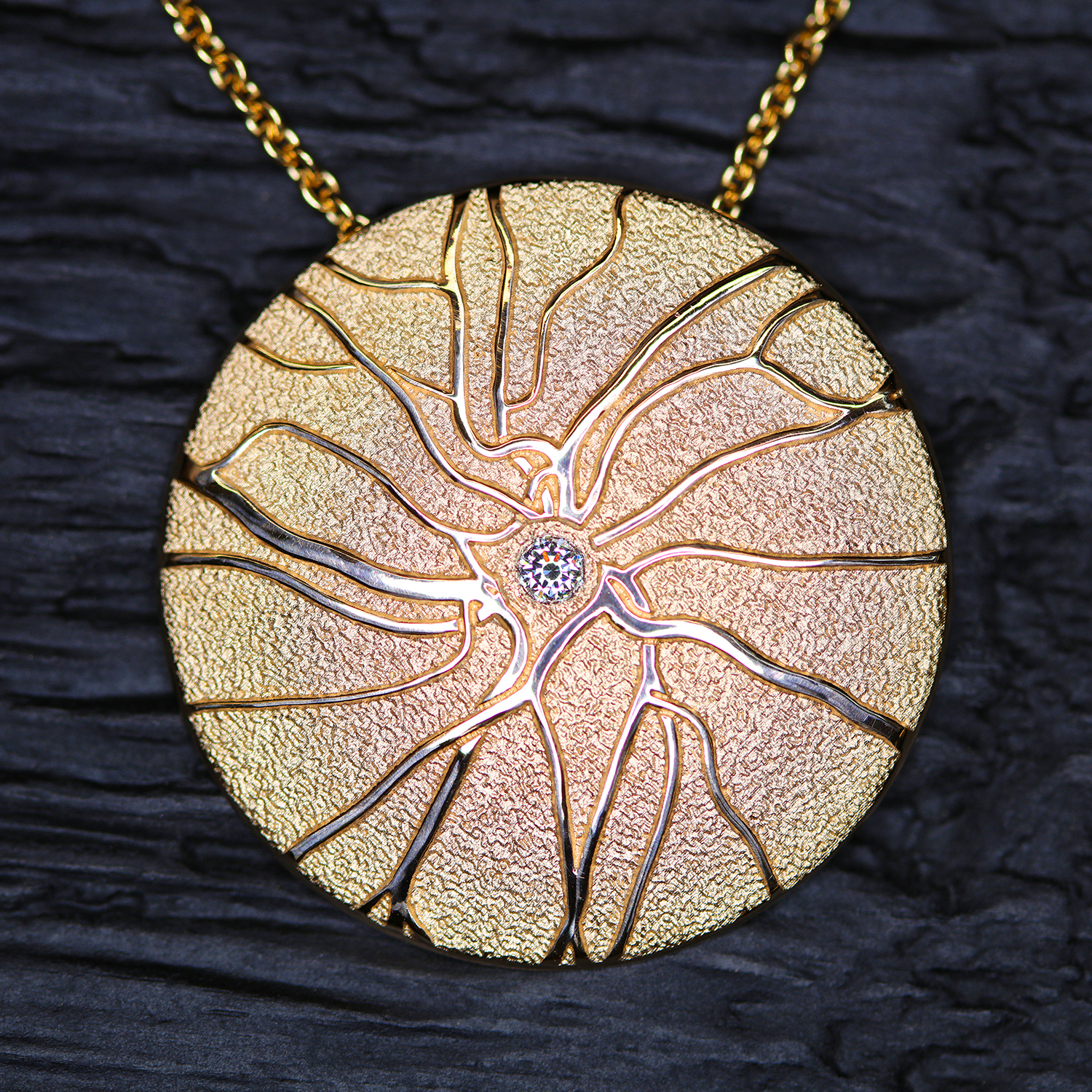
Optic nerve center
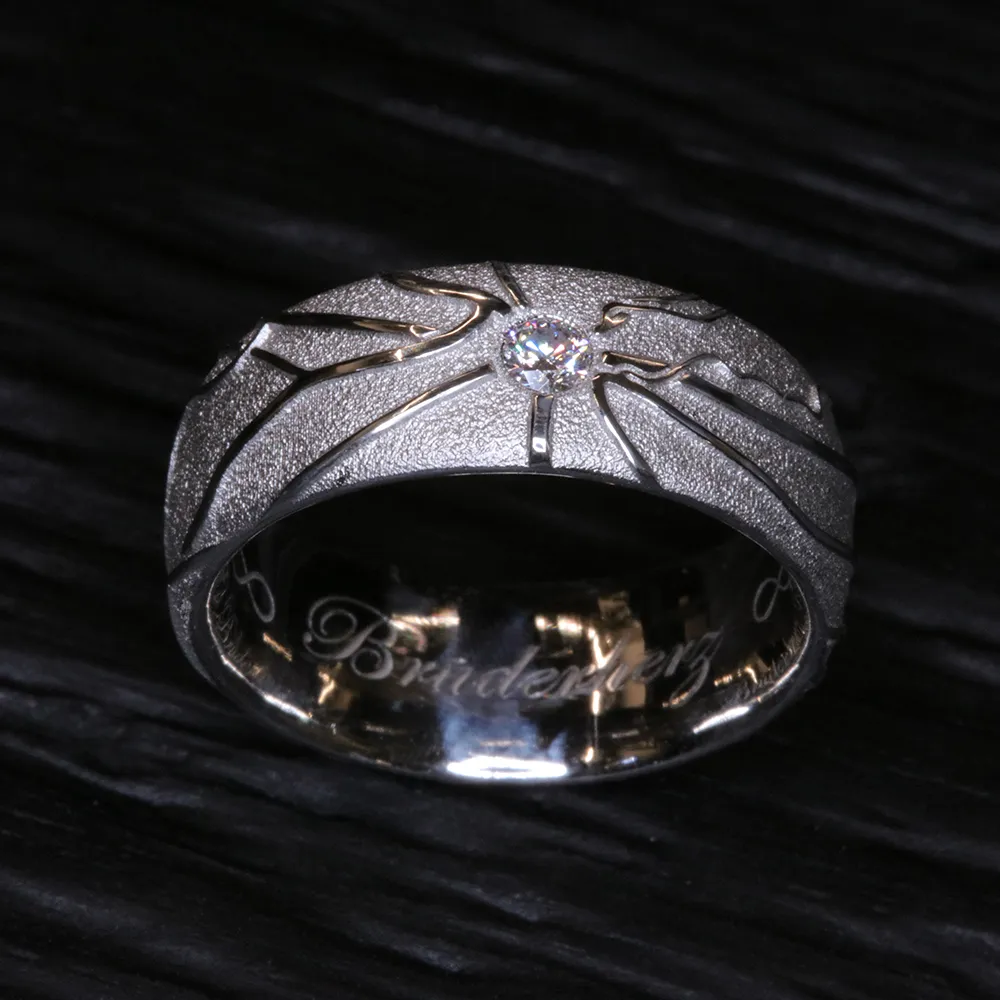
The origin of all veinsOne very special place in a retina is the point where everything converges, where all the veins seem to begin and end: this is where the optic nerve enters, and from here all the vessels branch out into the eye. This place exists only once in every eye.
In this setting, we place the diamond exactly there. The result: the veins grow out of the stone – the diamond does not stand beside the signature, it is its origin. Of all four settings, this is the most symbolically dense: light at the very place where seeing begins. Larger diamonds come into their own best here.

Swipe left to browse.
Diamond halo
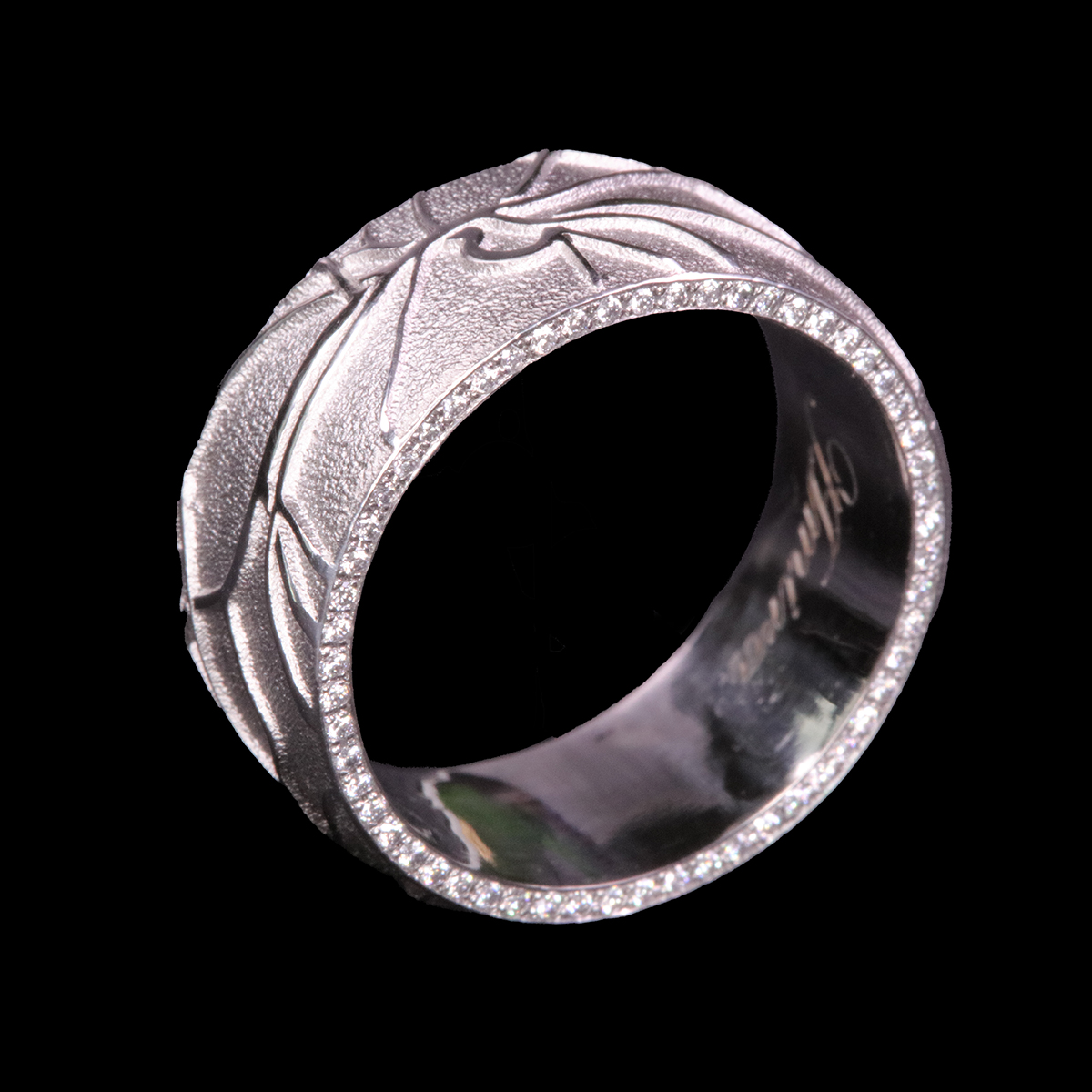
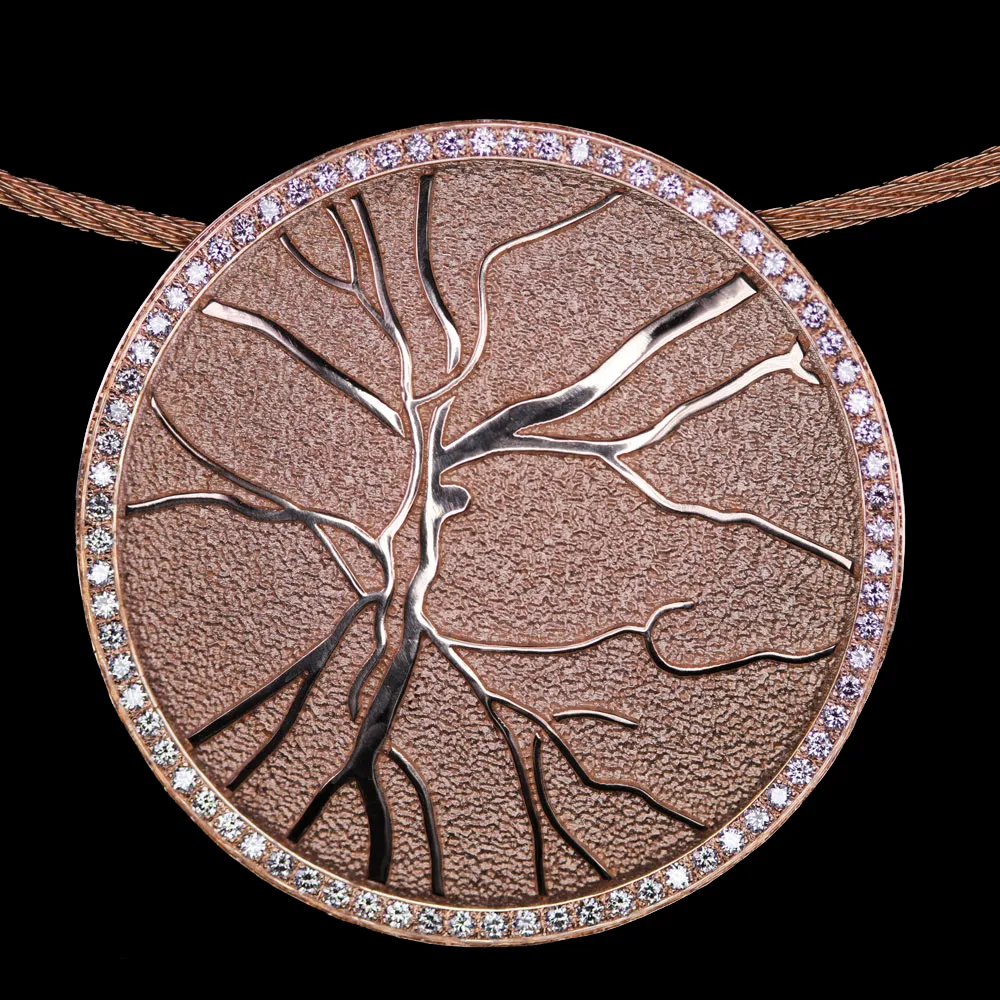
When it should sparkleThe most classic of our own variants – and the only one in which the sparkle deliberately takes the foreground. A halo of diamonds frames the signature instead of blending into it. For people who do not want their jewelry to whisper.
For rings, there is a quiet variant: the halo sits on the face of the ring, that is, on its narrow surface. From the outside it remains almost invisible; it is seen only by the wearer herself and by the person opposite. Hidden sparkle that you have to know about in order to see it, and a fitting match for the secret of the RetinaSignature itself.

Swipe left to browse.
How gemstone setting affects the price
A stone setting changes the price in three ways: through the stone itself (size, quality, color), through the number of stones, and through the setting work, which is measured in hours. A single set diamond is a manageable item; a continuously set vein or a complete halo is another order of magnitude.
With our own settings, a step is added that does not otherwise exist: every seat is determined individually for your signature. Exactly where a vein is wide enough, where the optic nerve center lies, how much calm surface remains between two lines – that is different for every person and cannot be taken from a template.
That is why we deliberately give no figures here. You will find current guide values on the prices page, in the 3D visualization you will see every stone seat before production, and after the consultation you will receive a binding quote for exactly your piece.
One practical note: for rings without stones, ring resizing is free of charge with us. With set stones, a small service fee applies, because the settings have to be realigned in the process – details on the service page.