
Platinum
The noblest metal for the pieces that matter most.
Platinum is nearly indestructible, 35 times rarer than gold, naturally white and exceptionally enduring – in the RETINA® goldsmith atelier in Basel, we craft it by hand into one-of-a-kind pieces that can outlast generations.
Gold speaks of warmth. Platinum speaks of permanence. If you are looking for a sign that will carry, unchanged for decades, what it carried on the first day, you will find in platinum the quietest of all precious metals.

A metal that needs no explanation
Platinum has always been the metal of permanence.
While fashionable materials come and go, platinum has stayed – the metal of long spans of time.
The Spanish conquistadors took it for unripe silver – «platina», little silver, they called it, almost dismissively. Only much later did Europe recognize what goldsmiths know today: platinum is the noblest metal a goldsmith can work. It does not corrode, it does not tarnish, and over decades it loses almost no material. Whatever is made from platinum is made to last.
That is precisely why many of the world’s most important pieces of jewelry hold their stones in platinum settings – and precisely why platinum is the preferred metal at RETINA® for pieces worn every day for a lifetime.
What makes platinum so special
Four qualities that no other jewelry metal unites in quite this way.
35× rarer than gold
In the earth’s crust, platinum is around 35 times rarer than gold. A single ounce requires processing 10 to 40 metric tons of ore – and annual output is only a fraction of gold production.
A weight you can feel
Platinum is considerably denser than gold. A platinum ring rests more substantially in the hand and on the finger – a weight many find reassuring: you can feel that you are wearing something.
950 parts in 1000
RETINA® works with Platinum 950: 95 percent pure platinum. By comparison, 750 gold (18 karat) contains 75 percent gold. In jewelry, platinum is worn at a higher purity than any other precious metal.
Hypoallergenic
The platinum used at RETINA® is nickel-free and considered especially skin-friendly – ideal for sensitive skin and for rings that are never taken off.
Why we love working with platinum at RETINA®
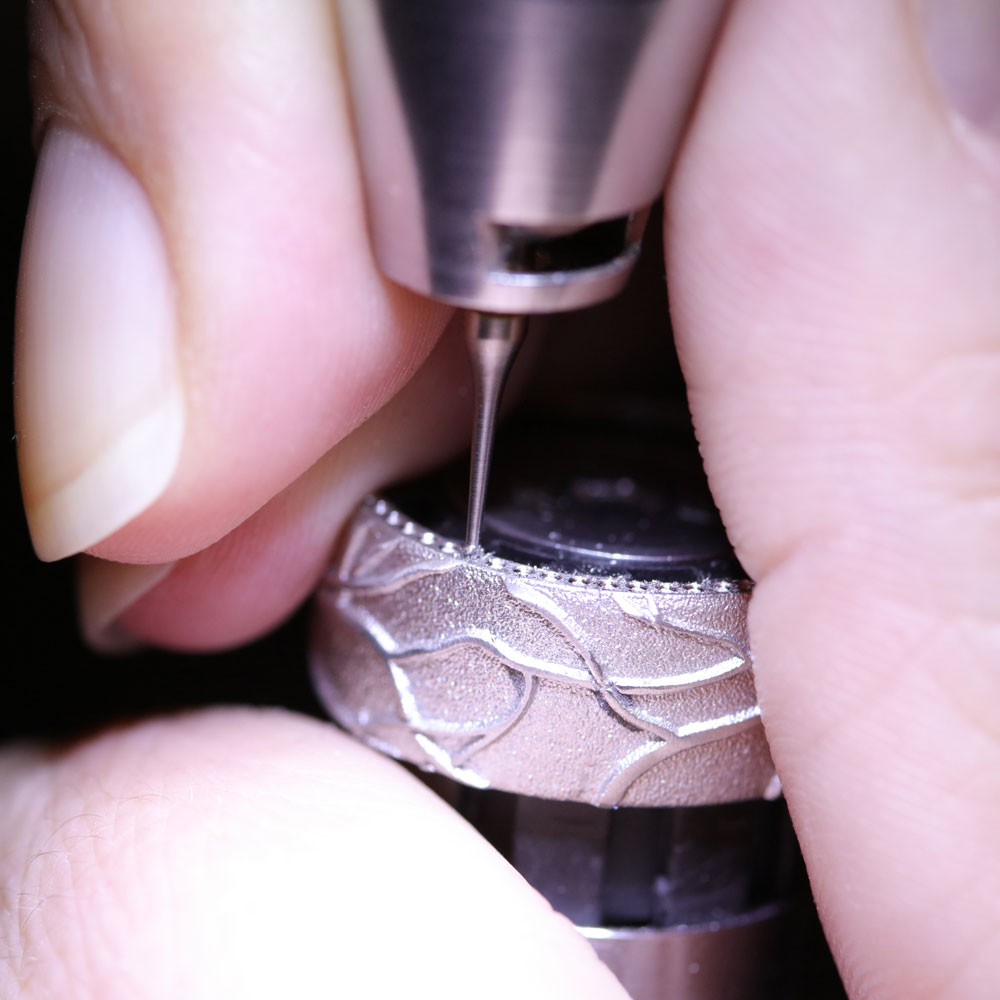
The RetinaSignature consists of the finest organic lines. It needs a metal that can hold on to delicate things.
Platinum is tough and holds its shape. Where softer metals wear fine structures away over the years, platinum holds them far more firmly – so the lines of your RetinaSignature remain as well protected as they possibly can be.
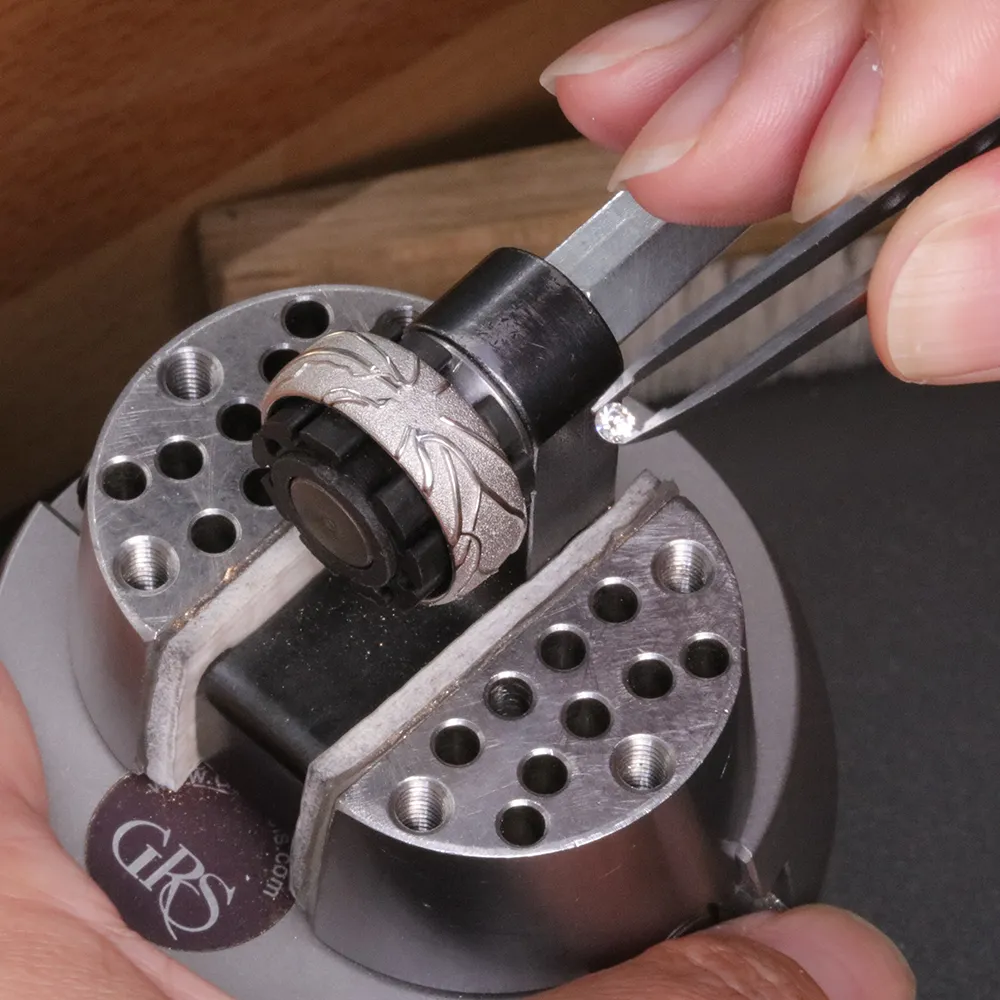
Then there is the color: platinum is naturally white. Unlike white gold, it never needs rhodium plating to keep its bright tone, and unlike rhodium-plated white gold, which usually loses its coating over time, it cannot change color. What you see on the first day, you will still see twenty years later. For a piece of jewelry that carries a promise, that is an important part of lasting value.
Platinum 950 – our alloy
Pure platinum would be too soft for everyday wear. The jewelry alloy Platinum 950 combines 950 thousandths of pure platinum with a small proportion of related metals that give the material its hardness. The result is a metal that can be worked with precision and endures decades of daily life.
Its pairing with diamonds is especially refined: naturally white platinum is color-neutral and therefore complements gemstones of any color beautifully, whereas with gold, which carries a warm tone, the color of the stone often calls for closer attention.
Platinum or white gold?
A frequent question in our consultations. White gold is a gold alloy that loses its yellow color when alloyed with palladium, but only becomes white through a surface layer of rhodium plating – a layer that wears off and must be renewed. Platinum is white by nature, through and through. Over time it develops a silky patina, yet in color and substance it remains what it is.
White gold is lighter, somewhat less dense and, as of fall 2026, actually more expensive – unlike just a few years ago. Platinum is purer and easier to care for over long periods. For pieces worn every day for a lifetime, such as wedding rings, we often recommend platinum in our consultations. We craft both by hand in Basel.
Value that endures
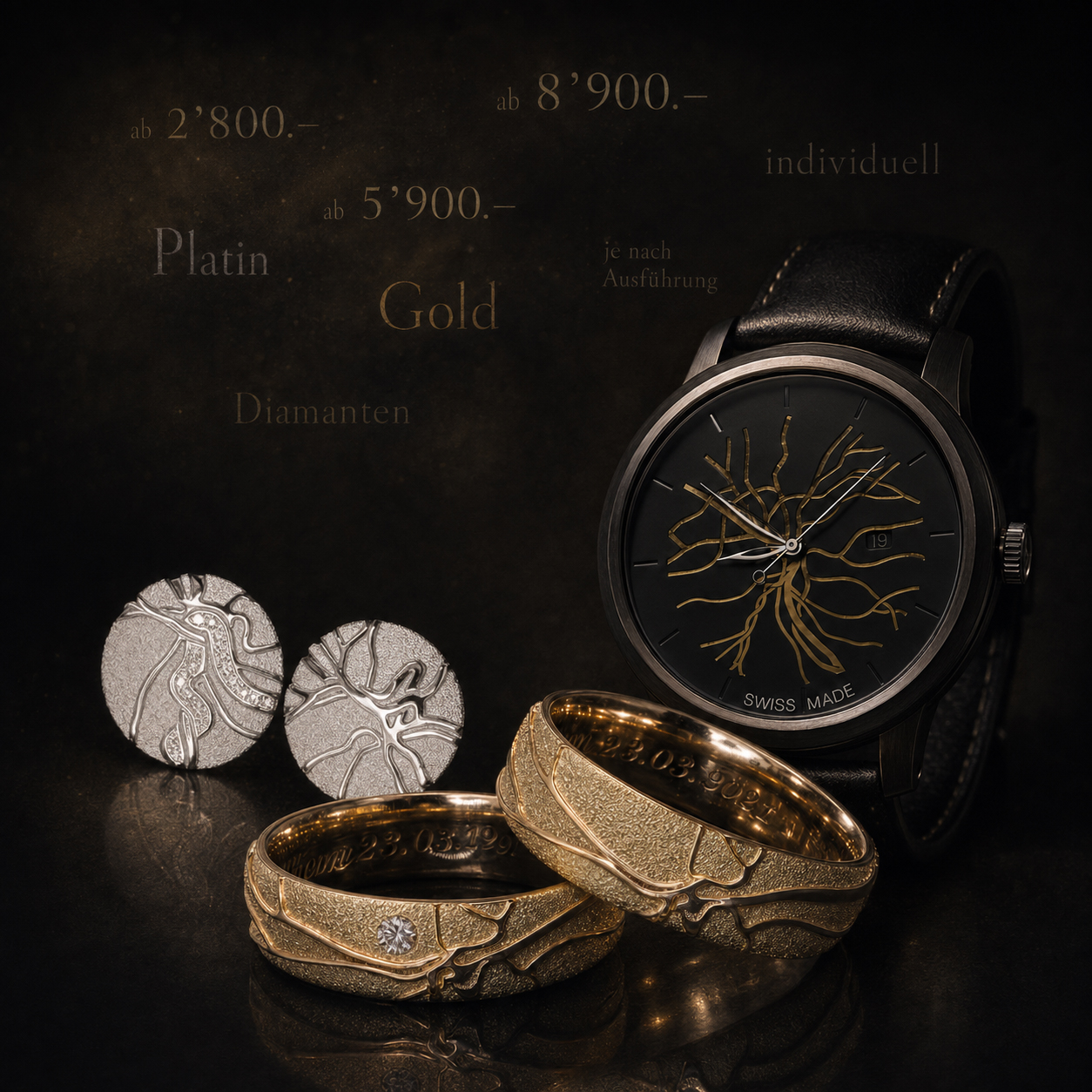
Like gold, platinum is traded at the daily price. Because it is denser and worked at a higher purity, a platinum piece used to be somewhat more expensive than the same piece in gold – it simply contains more precious metal by weight. At the moment, however, the steep rise in the price of gold has made platinum more affordable. Platinum is also more demanding to work: it is a tenacious, sluggish metal that requires different tools and polishing media, which wear out faster. That is why work on platinum still costs more than work on gold.
What this means for your piece in concrete terms is shown by the guide prices on our prices page. And why the value of a one-of-a-kind RETINA® piece never ends at the price of metal anyway, you can read in our essay on meaningful luxury.
Care: simpler than you think
Platinum forgives a great deal in everyday life. And whatever everyday life leaves behind, we take care of for you.
Over the years, platinum develops a fine, silky matte surface – its patina. Hardly any material is lost in the process; it is merely displaced. Many people love this trace of a life lived. If you prefer the original shine, simply bring your piece to us.
Platinum, too, will show signs of wear and scratches – especially a piece worn on the hand, such as a ring. It is therefore worth paying attention to a few things to keep the outward-facing RetinaSignature beautiful for a long time. We recommend not wearing a second ring on the same finger, as the two rub against each other and visible signs of wear become unavoidable over time. In Switzerland, wedding rings are usually worn on the left hand anyway – an advantage for right-handed people, since rings on the non-dominant hand are exposed to less everyday wear. The same applies to the neighboring finger: a ring worn there could leave regular micro-scratches on the RetinaSignature.
Free lifetime cleaning and refinishing in our atelier
At home, lukewarm water, mild dish soap and a soft brush are all you need
Free ring resizing for rings without set stones



Your one-of-a-kind piece in platinum
Whether a wedding ring, a pendant or a piece that does not yet exist: in a free consultation – online or in our atelier at Rheinsprung 10 in Basel – we will find out together whether platinum is your metal.
Book a consultationFrequently asked questions about platinum
What is Platinum 950?
Platinum 950 is the platinum alloy customary in fine jewelry: 950 of 1000 parts are pure platinum. By comparison, 750 gold (18 karat) contains 750 parts pure gold. In jewelry, platinum is therefore worked at a higher purity than gold – one reason for its calm, dense presence.
Why is platinum rarer than gold?
In the earth’s crust, platinum is around 35 times rarer than gold. Annual output is a fraction of gold production, and extraction is laborious: several tons of rock must be moved for a single ounce of platinum.
Is platinum more expensive than gold?
For a long time, a platinum piece was generally more expensive than the same piece in gold – less because of the raw material price, which fluctuates daily, than because of the material in the piece: platinum is considerably denser than gold, so the same volume weighs more, and it is worked at a higher purity. At the moment, we offer it at a lower price than the same piece in gold. You will find current guide prices on our prices page.
Is platinum suitable for people with allergies?
Yes. Platinum 950 is virtually nickel-free and is considered especially skin-friendly and hypoallergenic. It is therefore very well suited to people with sensitive skin and to jewelry worn every day – such as wedding rings.
What is the platinum patina?
Over time, platinum develops a fine, silky matte surface made up of countless microscopic traces of wear – the patina. Hardly any material is lost in the process; it is merely displaced. Many find the patina beautiful because it tells of a life lived. If you prefer the original shine, you can have the piece refinished by us at any time.
How do I care for platinum jewelry?
Platinum is uncomplicated: lukewarm water, a little mild dish soap, a soft brush. At RETINA®, cleaning and refinishing your piece is free for life – you can bring it to our atelier in Basel at any time.
Can platinum be combined with gold?
Yes, and beautifully so. The combination of naturally white platinum and warm yellow or red gold makes the RetinaSignature especially visible and allows partner rings that belong together and yet are different. Both metals age with dignity – just differently.
Why is platinum especially well suited to the RetinaSignature?
The RetinaSignature consists of the finest organic lines. Platinum is tough and holds its shape: it retains these fine structures for decades without wearing them away. Add to this its naturally white color, which never needs re-plating – so the signature stays exactly as it was crafted.