
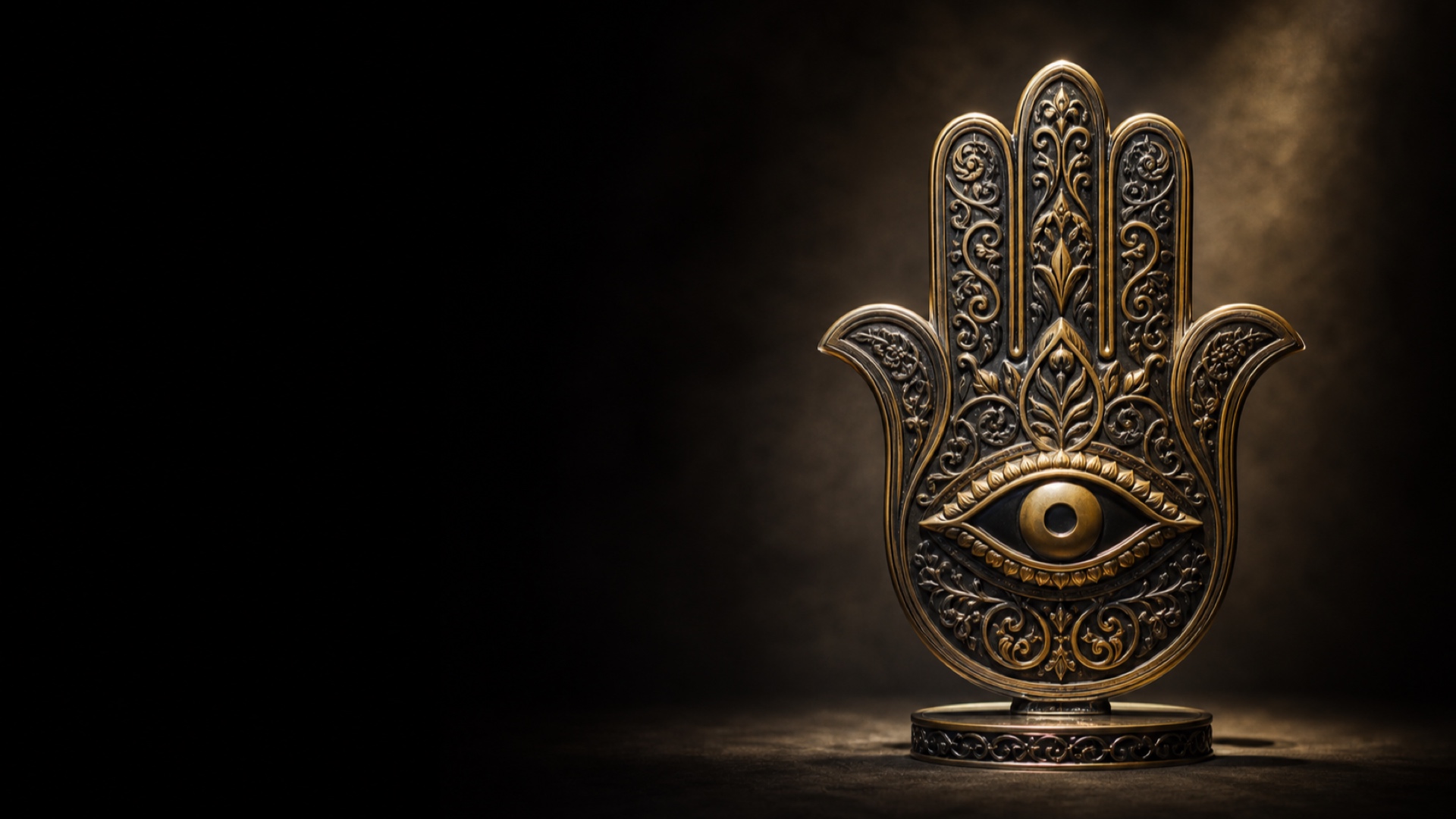
Hamsa – Meaning, History and Symbolism
Some things we can influence.
Some things we must let go.
The hamsa is one of the world's best-known protective symbols. The stylized, usually symmetrical hand – often with an eye at its center – has appeared in jewelry, architecture and amulets for centuries.
Discover personal symbolism →Origin
The hamsa shows an open, usually symmetrical hand, often with an eye in the palm. It is meant to protect against misfortune and the “evil eye” and has accompanied people in many cultures of the Mediterranean and the Middle East for centuries.
The word “hamsa” goes back to the Arabic and Hebrew word for “five” – the five fingers of the hand. Its message reaches deeper than the mere wish for safety: it is about the feeling of being held.
Use in Jewelry
In jewelry, the hamsa appears as a pendant, on bracelets or as a talisman – often finely decorated, sometimes with a small stone as the eye. It can point upward or downward; both orientations are common.
It is worn as a sign of protection, security and trust. It looks most refined when its symmetry is precisely crafted and the decoration deliberately restrained.
Symbolic Meaning of the Hamsa
The hamsa reminds us that security is something other than control. Those who feel secure do not need to eliminate every uncertainty. It describes not safety, but the wish to feel sheltered despite uncertainty.
Some things we can influence – some things we must let go.
Protection
An open hand meant to ward off misfortune.
Security
Not control, but the feeling of being held.
Trust
Confidence, even when not everything is certain.
Blessing
In many cultures a sign of luck and blessing.
Letting Go
Influencing some things – and being able to release others.
The Human Longing Behind the Symbol – Hamsa
People long for safety. At the same time, we know that life can never be fully controlled.
Illness, loss, change and unexpected events are part of life. No one can rule out every risk.
Perhaps that is exactly what explains the special meaning of the hamsa. It reminds us that security is something other than control.
Those who feel secure do not need to eliminate every uncertainty. The hamsa describes not safety, but the wish to feel held despite uncertainty.
That is precisely why this symbol often accompanies people through phases of life in which trust becomes more important than certainty.
The History of the Hamsa as a Symbol
Hand symbols are among humanity's oldest protective signs. Over the centuries, the hamsa evolved into a connecting symbol of several cultures and religions.1
Ancient Protective Symbols
Hand symbols already appear in early cultures as signs of protection.
Read more
Images of hands were associated with protection and the warding off of negative influences as early as the first cultures of the Mediterranean and the Middle East.1
The open hand was seen as a gesture of defense – and at the same time of blessing. It thus became an early amulet against the “evil eye”, the belief that envious glances can bring misfortune.
Hand-shaped amulets were worn, mounted on houses and passed down through generations – as a tangible sign of an invisible hope.
Hand of Fatima
In the Islamic tradition, the hamsa became the Hand of Fatima.
Read more
In the Islamic world, the hamsa is known as the Hand of Fatima – named after the daughter of the Prophet Muhammad – and stands for protection, patience and blessing.1
Artfully crafted silver khamsa pendants, often decorated with enamel, remain part of the jewelry tradition of North Africa and the Middle East to this day.
The five fingers are repeatedly linked to the five pillars of Islam. As an amulet, the hand accompanies people to this day.
Hand of Miriam
The hamsa is firmly rooted in the Jewish tradition as well.
Read more
In the Jewish tradition, the hamsa is known as the Hand of Miriam – named after the sister of Moses – and is likewise associated with protection and blessing.2
Hamsa depictions can be found on amulets, wall decorations and even on banners carried on pilgrimages.
That both traditions share the same sign makes the hamsa a connecting symbol. Its meaning reaches beyond individual religions.
Modern Times
Today the hamsa is worn worldwide as a protective symbol.
Read more
Its meaning is now often understood independently of religious traditions – as a universal sign of protection, security and trust.3
In jewelry and design, it is one of the most popular protective motifs worldwide.
Its message remains the same: to feel held, even in uncertainty.
The Hamsa in Jewelry
As a pendant, on bracelets or as a talisman, the hamsa is an expressive motif – often finely decorated, sometimes with a small stone as the eye. Its symmetry makes it a rewarding motif for precise craftsmanship.
Hamsa Pendant
The protective hand, worn close to the heart.
Hamsa Ring
The protective sign in miniature, carried around the finger.
Hamsa Bracelet
A beloved talisman, close to every gesture of daily life.
From Symbol to Signature
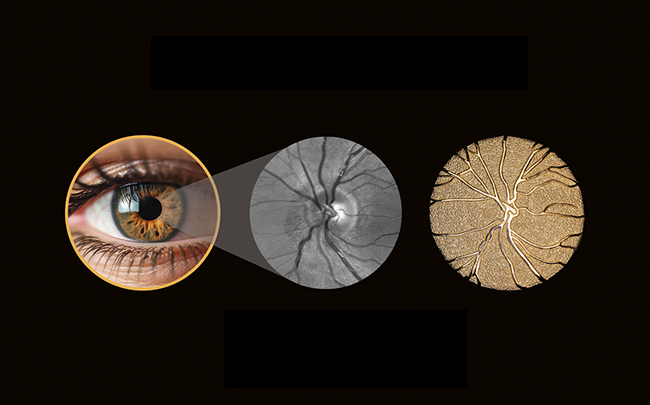
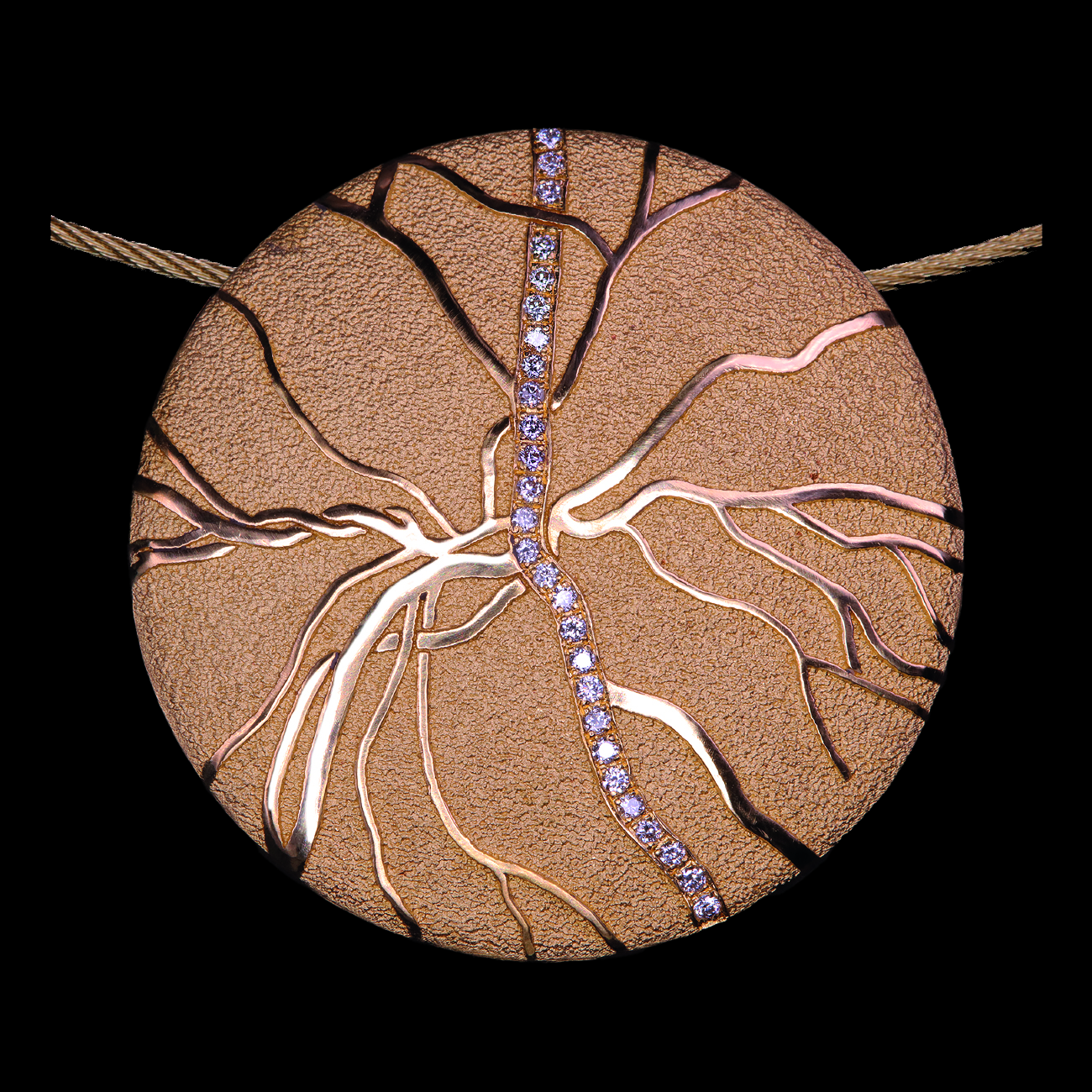
The hamsa is a universal sign. RETINA® goes further: instead of making a familiar symbol more personal, your own retina itself becomes an unmistakable signature.
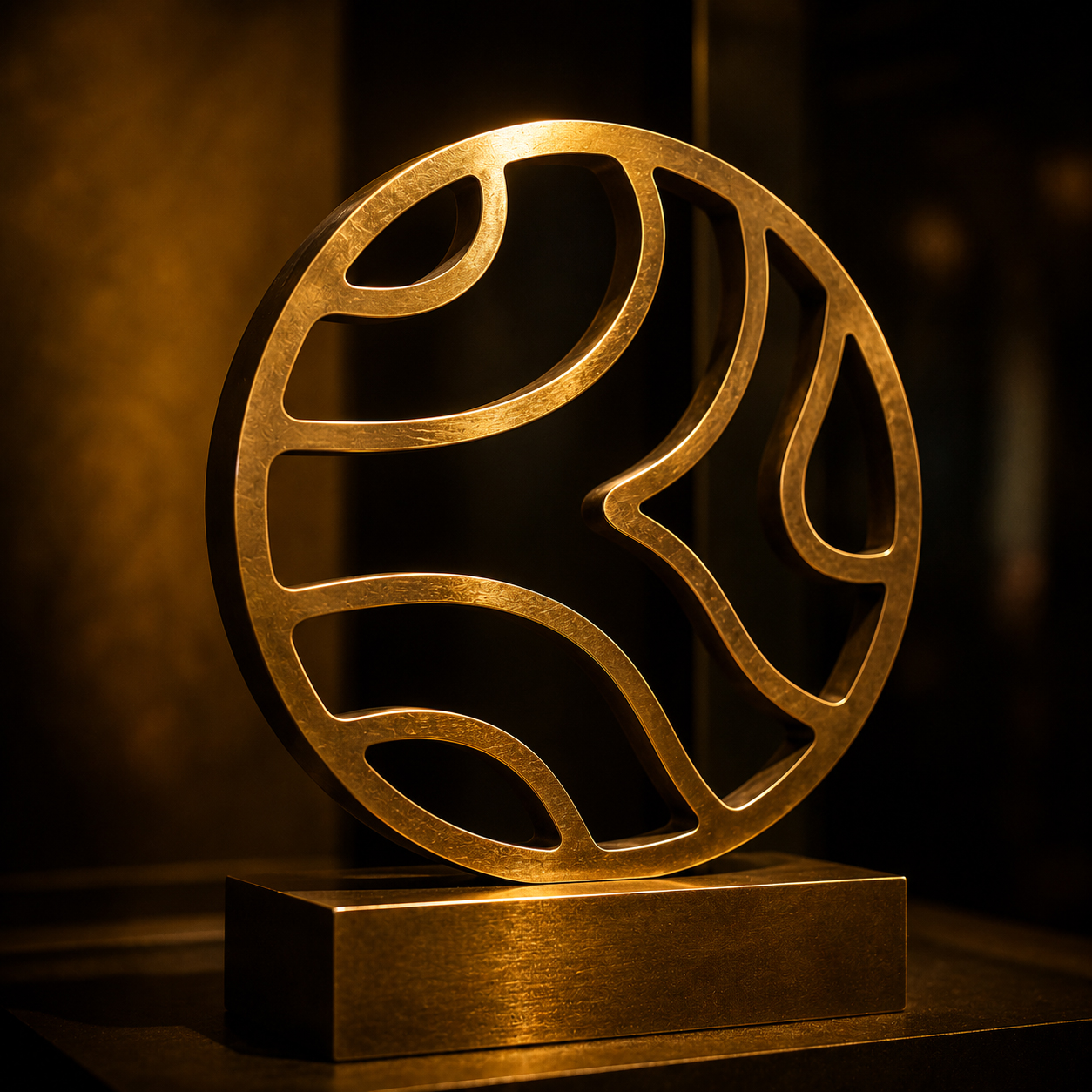
The RETINA® Perspective
The hamsa makes protection visible. But it does not tell what a person wishes to protect – which experiences have revealed vulnerability and which relationships have become especially precious. It answers the question: What do I long for?
This is exactly where personal symbolism begins. The hamsa gives the wish for protection a form. A RetinaSignature can additionally show why this protection matters so deeply to a person. And like the eye in the palm of the hamsa, the retina also refers to seeing – except that it shows a single, unmistakable human being.
From the Hamsa to the RetinaSignature
The hamsa can make the wish for protection visible. A RetinaSignature can show which person – and which story – stands behind it.
Discuss personal jewelry →Related RETINA® Pages

Related Symbols


Frequently Asked Questions About the Hamsa Symbol Meaning
What does the hamsa mean?
The hamsa stands for protection, security and trust – for the hope of moving safely through life despite uncertainty. It is also known as the Hand of Fatima.
What is the Hand of Fatima?
“Hand of Fatima” is the name of the hamsa in the Islamic world, named after the daughter of the Prophet Muhammad. It stands for protection, patience and blessing.
What is the Hand of Miriam?
“Hand of Miriam” is the name of the hamsa in the Jewish tradition, named after the sister of Moses. Here too, the hand stands for protection and blessing.
What does the eye in the hamsa mean?
The eye in the palm is meant to protect against the “evil eye” – an old belief that envious glances can bring misfortune.
What does the hamsa mean in jewelry?
It usually stands for protection, security and trust. As a pendant, bracelet or talisman, it is one of the most popular protective motifs.
Should the hamsa point up or down?
Both are common: pointing up, it is seen as warding off misfortune; pointing down, as inviting blessing and abundance. Both readings are customary.
Is the hamsa Jewish or Islamic?
Both. In the Islamic tradition it is the Hand of Fatima, in the Jewish tradition the Hand of Miriam. That both share it is precisely what makes it a connecting symbol.
Where does the name hamsa come from?
The name goes back to the Arabic and Hebrew word for “five” and refers to the five fingers of the hand.
Can you wear the hamsa without being religious?
Yes. Today the hamsa is worn worldwide as a universal sign of protection and security – regardless of religious affiliation.
Is the hamsa suited to memorial jewelry?
Yes. As a sign of protection and security, it suits people and phases of life in which trust matters.
Which material suits hamsa jewelry?
Traditionally, the hamsa is often crafted in silver; gold and platinum lend it a noble, timeless presence. A small stone as the eye sets a fine accent.
Is the hamsa more feminine or masculine?
Neither. The hamsa is an open symbol and can appear delicate or striking depending on the design. Proportion, material and surface are what matter.
How does the hamsa look modern rather than folkloric?
It looks modern as a reduced, precise silhouette with clear symmetry – less ornament, more craftsmanship. This keeps the motif timeless.
Which symbols pair well with the hamsa?
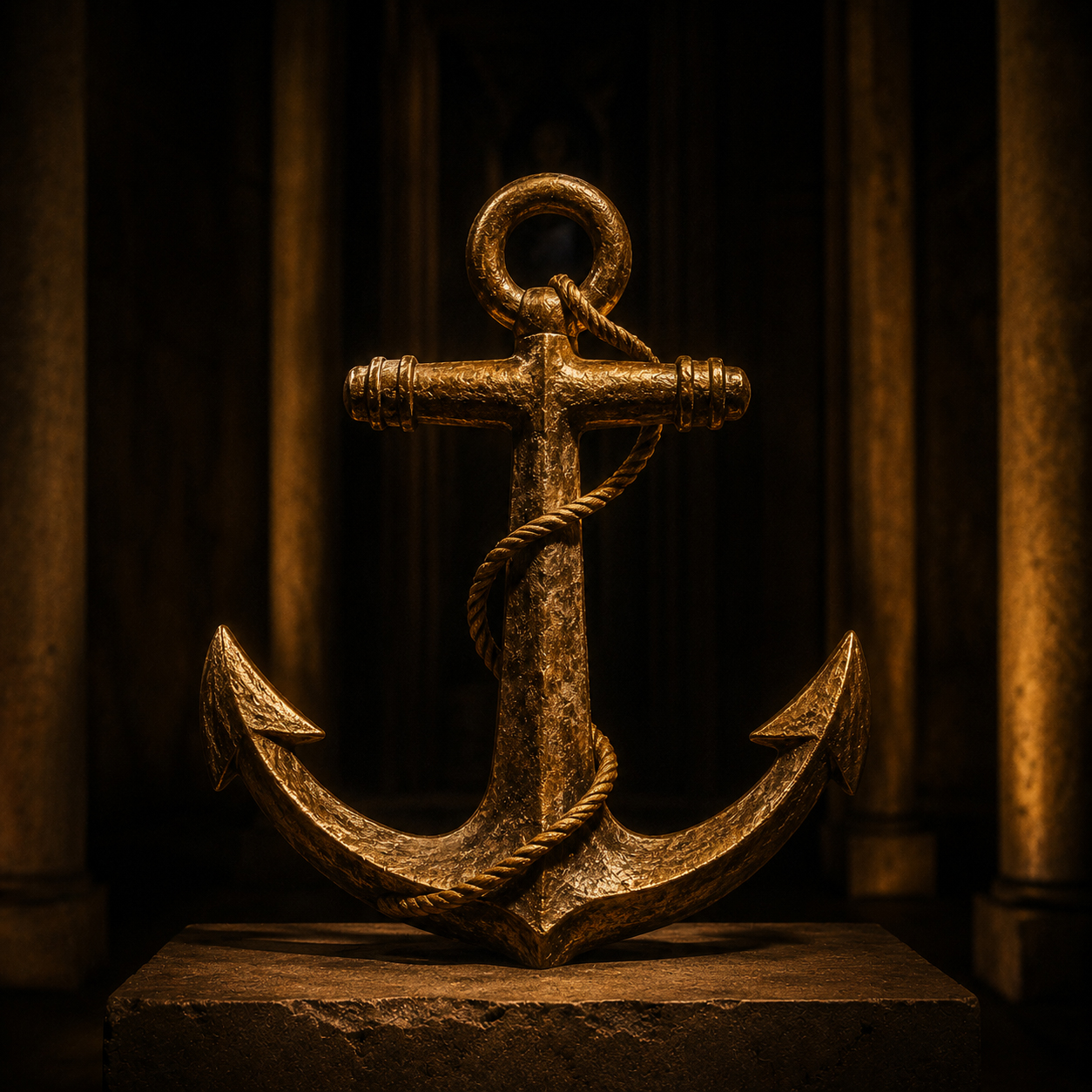
The anchor, the key and the Tree of Life extend the hamsa with stability, trust and security. The eye as a symbol in its own right is also close to it.
What is more personal than a hamsa?
The hamsa stands for a universal idea of protection. A RetinaSignature additionally refers to a specific person and can therefore exist only once.
Sources and Further Reading
Show sources on the history of the symbol
1) Silver khamsa pendant (Hand of Fatima): The British Museum: Khamsa pendant amulet
2) On the hamsa in the Jewish tradition: Jewish Museum London: Silver Hamsa banner
3) On the history of jewelry and amulet motifs: Victoria and Albert Museum: A History of Jewellery


Jewelry That Makes Meaning Visible
A symbol can open a story. A RetinaSignature makes it personal. Discover jewelry that gives identity, memory and connection an unmistakable form.
Get in touch →