
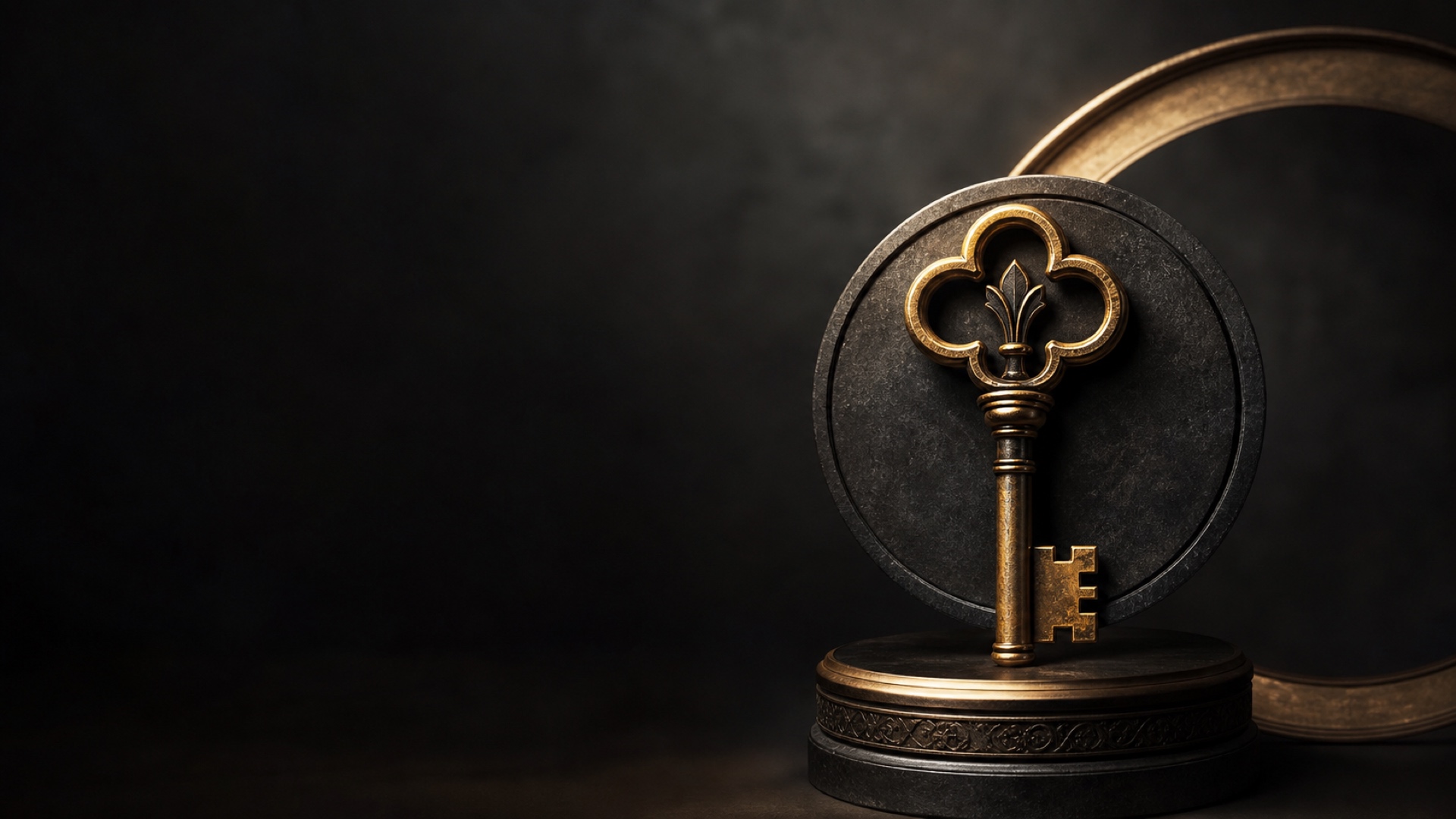
A key is not given to everyone.
It is a sign of trust.
The key is among the most expressive symbols of all. It opens what is locked, and at the same time stands for access, trust and the mystery behind a door.
Discover personal symbolism →
Discover personal symbolism →Origin
Whoever holds the key decides who may enter – and whoever it is entrusted to is given trust. Even in antiquity, the key was therefore a sign of guardianship and responsibility.
Use in Jewelry
Use in Jewelry
It is worn as a sign of trust, belonging and the “key to the heart”. It looks refined when the bow (the handle) and the bit are shaped with precision and calm.
Symbolic Meaning of the Key
The key reminds us that access and trust belong together. We lock away what is precious to us – and pass the key on only to those we trust. Therein lies its power.
A key is not given to everyone. It is a sign of trust.
Access
Opens what is locked.
Trust
Trust
Mystery
Mystery
Protection
Protection
New Beginnings
The key to a new chapter.
The Human Longing Behind the Symbol – Key
People want to protect what is precious. At the same time, we long to trust someone and let them come close.
Both at once is not easy. Those who lock everything away stay safe, but alone. Those who leave everything open become vulnerable.
Perhaps this is exactly what explains the special meaning of the key.
It is the point where protection and trust come together. To hand over a key means: I let you in. That is why the key remains such a personal gift to this day.
This is precisely why this symbol often accompanies people in moments when trust is ventured and closeness becomes possible.
The History of the Key as a Symbol
As long as there have been locks, there have been keys – and with them the idea of access and guardianship. Over centuries, a simple tool became one of the most meaningful symbols in cultural history.
Guardian of the Threshold1
Even in antiquity, the key stood for protection and transition.
Read more
Read more
The key made visible that every transition is guarded: a gate can be opened or locked. To this day, the month of January, the beginning of the new year, is named after Janus.1
Thus the key early on became a sign of access, protection and the beginning of something new.
The Keys of Saint Peter
In Christianity, the key becomes a sign of spiritual authority.
In the Gospel of Matthew, Jesus says to Peter: “I will give you the keys of the kingdom of heaven” (Matthew 16:19). Ever since, the key has been regarded as a sign of authority and responsibility in the Church.
Read more
Peter is often depicted with two keys: one of gold for spiritual authority, one of silver for worldly authority. As crossed keys, they can still be found in the coat of arms of the Vatican today.2
Here the key stands not for possession, but for entrusted responsibility.
Artful Craftsmanship
Keys became finely wrought showpieces.
Historical keys are among the high points of the locksmith's art. Museums such as the Victoria and Albert Museum in London preserve keys whose openwork bows are reminiscent of jewelry.
Read more
An elaborately designed key was a sign of rank: chamberlains wore their key as a symbol of their office, and ceremonially presented city keys stood for admittance and honor.3
Thus an everyday object became a bearer of status and meaning.
Modern Era
Modern Times
The key to a first home of one's own, the key to the heart, the symbolic key to coming of age: in the modern era, the key stands above all for trust and for the beginning of a new chapter in life.
Read more
As a gift, it expresses closeness – the message “I let you in”.4
Its message remains the same: access founded on trust.
The Key in Jewelry
As a pendant, on bracelets or as a talisman, the key is an expressive motif – often finely decorated, and popular as a pair with a heart or lock. Its clear form makes it a rewarding motif for precise craftsmanship.
Key Pendant
A sign of trust, worn close to the heart.
Key Ring
The motif of access, finely traced around the finger.
Key Bracelet
A talisman of trust, close to every gesture.
From Symbol to Signature
From Symbol to Signature
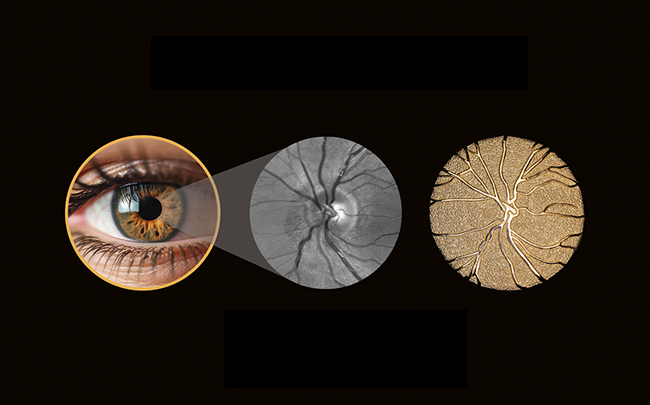
The key is a universal sign. RETINA® goes further: instead of making a familiar symbol more personal, your own retina itself becomes an unmistakable signature.

The RETINA® Perspective
This is exactly where personal symbolism begins.
This is exactly where personal symbolism begins. For your own retina is like a key that exists only once: unique, unmistakable, impossible to copy. More about RetinaSignatures →
The key can make trust visible. A RetinaSignature can show which person – and which story – stands behind it.
Discuss personal jewelry →
Discuss personal jewelry →Related RETINA® Pages


Related Symbols


Frequently Asked Questions About the Key Symbol Meaning
What does the key mean as a symbol?
The key stands for access, trust and mystery – for the power to open something or keep it locked. Whoever holds a key has access to something precious.
What does a key mean in jewelry?
As a jewelry motif, the key usually stands for trust, belonging and the “key to the heart”. It is popularly worn as a pendant, bracelet or talisman.
What does the “key to the heart” mean?
It expresses that you grant someone access to your feelings. The key stands for trust and closeness, often complemented by a heart or a lock.
What are the keys of Saint Peter?
In the Gospel of Matthew (16:19), Jesus gives the apostle Peter “the keys of the kingdom of heaven”. They stand for spiritual authority and appear as crossed keys in the coat of arms of the Vatican.
Why is Janus depicted with a key?
Janus was the Roman god of doors, gates and transitions. The key showed him as guardian of the threshold who can open and close passages. The month of January is named after him.
Why are there two keys on the Vatican coat of arms?
The crossed keys refer to the keys of Saint Peter. Traditionally, the golden key stands for spiritual and the silver key for worldly authority.
What does a key mean as a gift?
A key given as a gift is a sign of trust and closeness. In essence it says: “I let you in.” That is why it suits people who are especially close to each other.
Does a key suit partner jewelry?
Yes, very well. As a pair with a lock or heart, the key stands for connection – two parts that belong together.
What does the key mean as a birthday gift?
In some countries, the key is a gift for coming of age. It symbolizes independence, trust and the entry into a new chapter of life.
Which material suits key jewelry?
The clear form works in many materials. Silver emphasizes its artisanal character, while gold and platinum lend the key a noble, timeless aura.
Which symbols go well with the key?
Door, heart and compass are close to the key: they extend it with transition, closeness and orientation. A lock is also its classic counterpart.
Is the key more of a masculine or feminine symbol?
Neither. The key is an open symbol and appears bold or delicate depending on its design. Form, material and finish are what matter.
What is more personal than a key symbol?
The key stands for a universal idea of trust and access. A RetinaSignature additionally refers to a specific person and can therefore exist only once.
Sources and Further Reading
Show sources on the history of the symbol
1) On Janus, doors and the key as an attribute of the doorkeeper: Encyclopaedia Britannica: Janus and World History Encyclopedia: Janus
2) On the keys of Saint Peter (Matthew 16:19) and the gold/silver symbolism: Archdiocese of Saint Paul and Minneapolis: Symbols of St. Peter
3) On keys as artfully crafted objects: Victoria and Albert Museum: Key (England, ca. 1690)
4) On Janus, January and the key as a sign of new beginnings: World History Encyclopedia: Janus


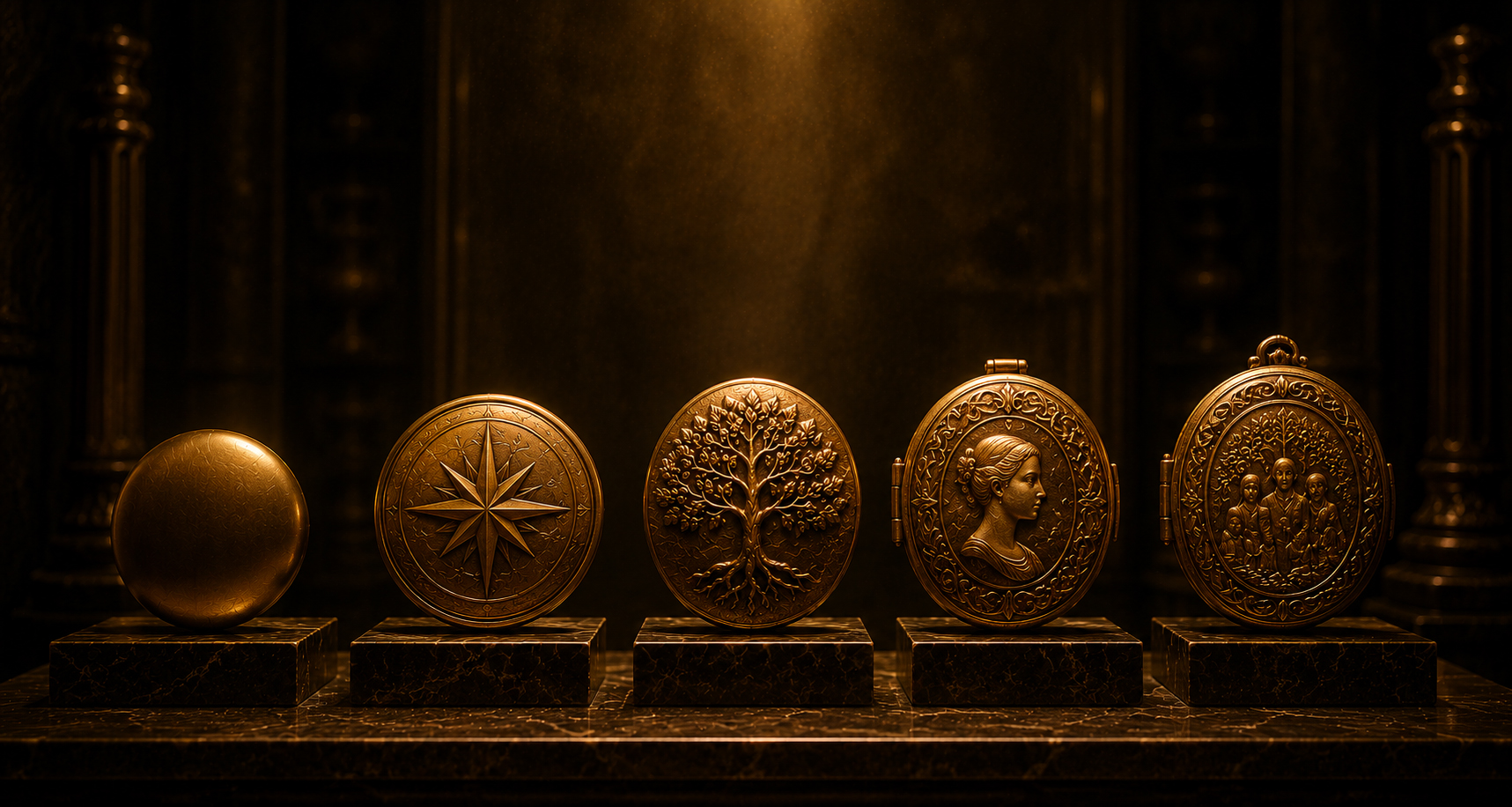
Jewelry That Makes Meaning Visible
A symbol can open a story. A RetinaSignature makes it personal. Discover jewelry that gives identity, memory and connection an unmistakable form.
Get in touch →