
Why People Need Symbols
Making the Invisible Visible.
A symbol can express in an instant what would otherwise require many sentences. Perhaps that is why symbols accompany every culture, every love and every memory.
People need symbols because the most important things in their lives are invisible: love, memory, belonging, hope, identity. A symbol gives this invisible world a form that can be seen, touched and worn. Symbols are therefore not decoration – they are the language of meaning.
Making the Invisible Visible
Imagine for a moment a world without symbols. No hearts, no flags, no wedding rings, no family crests. No signs that mean more than their form. Such a world would be poorer than it first appears.
Human beings possess a remarkable quality: we do not live only in the present. We remember the past, think about the future, love people who are not with us and mourn those we have lost. We carry hopes, memories and stories within us – and all of them are invisible. No one can see love. No one can touch a memory. No one can measure belonging.
That is why people create symbols. They give the invisible a form.
Most symbols can be assigned to one of these categories.
For a comprehensive exploration of every category of symbol, visit our Lexicon.
Love
Affection and closeness seeking a visible form – even when words are absent.
Memory
Moments and people we wish to keep close, even as time passes.
Belonging
The bond with a family, a community, a shared life.
Hope
Direction and confidence in times when neither can be taken for granted.
Identity
That which makes a person unmistakably themselves – and deserves to become visible.
The Human Longing Behind Symbols
Someone searching for the meaning of a symbol is rarely seeking only a definition. More often, a deeper question lies behind it: a feeling, a memory, a connection, a desire for direction.
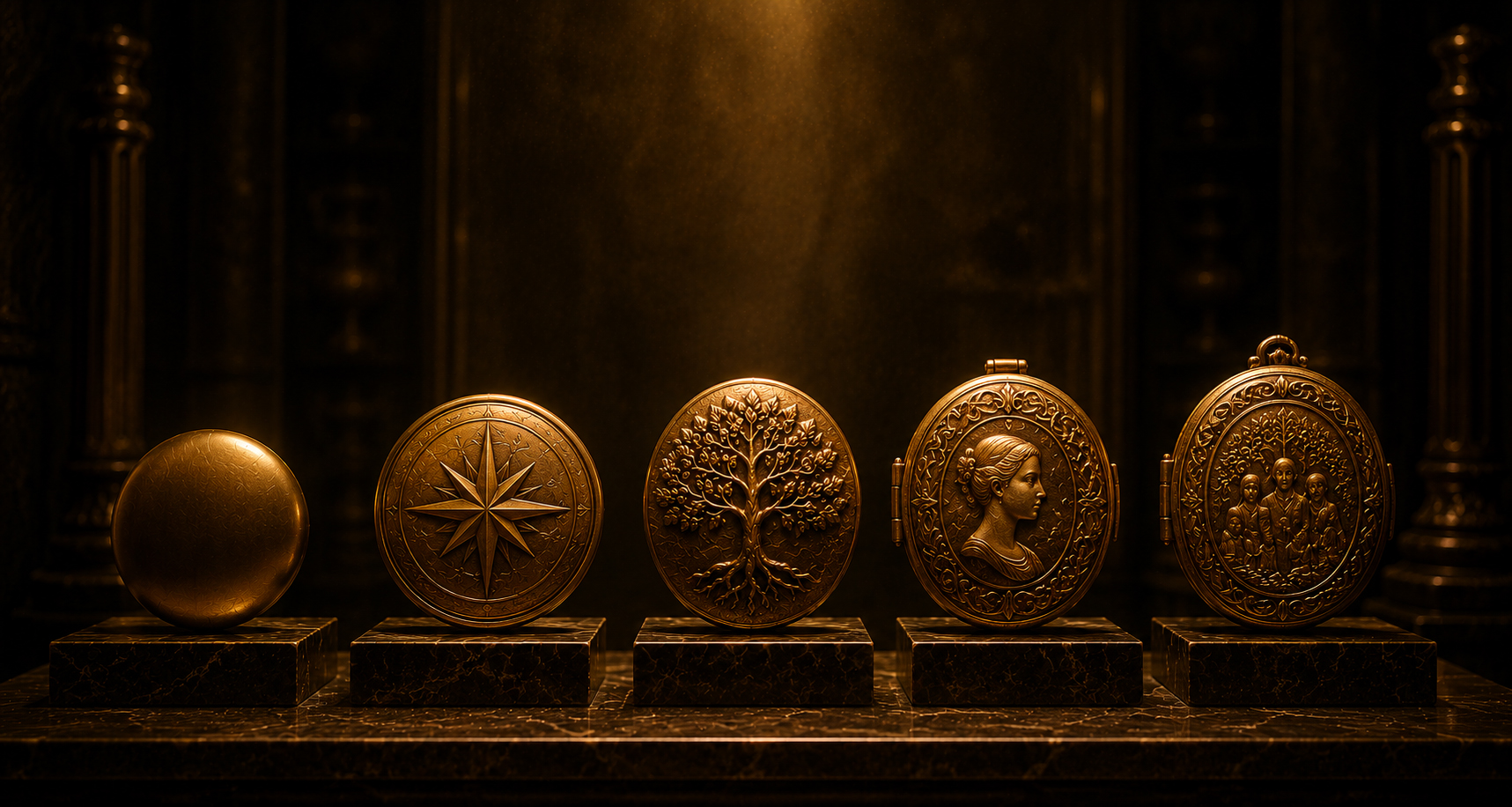
A powerful symbol does not answer a single question – it distils a story. A heart does not simply mean love; it recalls the many experiences people associate with love. An anchor does not simply mean hope; it evokes security in times of uncertainty.
Perhaps this is precisely why symbols touch us so deeply: they translate complex experiences into a simple, wearable form. The symbol is the visible point of entry. The true search is for the meaning behind it.
Older Than Writing: A Brief History of Symbols
Long before people could write, they used signs. Cave paintings, totems, amulets, rituals. These early symbols helped bring order to a complex world – they arose not from decoration, but from a human need: the need for meaning.1
Prehistory
Humanity’s earliest signs are symbols – painted, carved, worn.
Read More
Cave paintings tens of thousands of years old, pierced shells and pendants made from bone or tooth are among the earliest traces of human culture. They reveal that long before writing and cities, people already wished to preserve something that reached beyond the moment.
Remarkably, many of these early objects were worn on the body. Meaning was not merely to exist – it was to remain close. That gesture has not changed to this day.
Writing & Early Civilisations
Signs became systems: hieroglyphs, runes, seals and amulets.
Read More
In Egypt, Mesopotamia and other early civilisations, symbols became a language in their own right. Amulets accompanied people through life and beyond; seals made identity and belonging visibly binding.2
What is fascinating is the dual role of these signs: they were publicly legible and at the same time charged with personal meaning. A scarab was a universally understood symbol of protection – yet it belonged to a particular person.
Belonging & Cultures
Knots, coats of arms and insignia made visible where a person belonged.
Read More
Celtic knots, family crests, religious signs and the emblems of guilds and orders all tell the same story: people wished to show whom they were connected to – a family, a faith, a community.
Symbols thus became a quiet form of biography. Those able to read them knew where someone came from and what they stood for. Jewellery was often the most intimate bearer of these signs.
The Modern Age
Today we are surrounded by more symbols than ever before – and many mean less than ever before.
Read More
Logos, icons, emojis: the present is filled with signs that are understood instantly. Yet the more often a symbol is reproduced, the less it reveals about the individual who wears it.
Perhaps this explains a striking counter-movement: the growing desire for signs that do not exist by the million. For symbols with a specific, personal story.
Why We Wear Symbols
People do not merely look at symbols – they wear them. This is remarkable, because a symbol thereby becomes part of one’s own identity. A ring, a pendant, a locket: we do not merely wear metal. We wear meaning. Perhaps jewellery therefore holds a special place among all symbolic forms. It rests against the skin, accompanies everyday life for decades, is given, inherited, cherished and rediscovered. A piece of jewellery can express what words cannot – a quiet form of communication. A language without words.
Worn symbols are the most intimate form of symbolic language: meaning that touches the body.
The Limits of Universal Symbols
If symbols are so important – why do people keep searching for new ones? Perhaps because universal symbols may be understood, yet are not always personal.
A heart tells of love – but not which love. An anchor tells of hope – but not which hope. A tree of life tells of family – but not which family. The more universal a symbol becomes, the more people can recognise themselves in it. And the less it reveals about one individual story.
Universal Symbols
Shared by millions of people and understood around the world.
Their strength lies in their intelligibility: they create connection without words.
Their limitation lies in their generality: they tell of ideas, not of a particular person.
The more often a sign is reproduced, the less it reveals about the person who wears it.
Personal Symbols
They arise where meaning ceases to be general and becomes individual.
Their power comes not from recognition, but from their connection to a specific story.
The question is no longer: What does this symbol stand for? But rather: For whom?
Immortalise yourself and the person you love in a symbol that tells of uniqueness.
The RETINA® Perspective
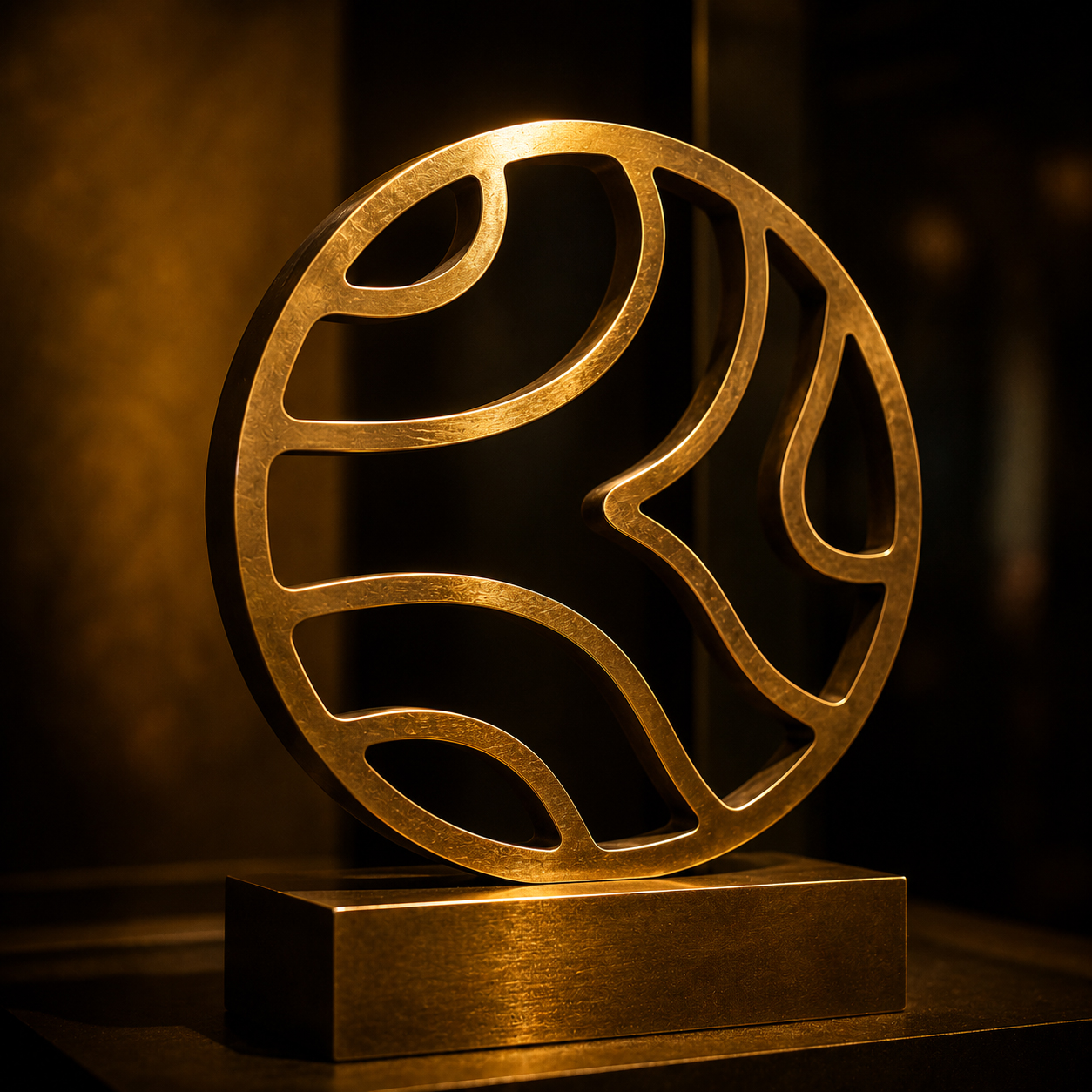
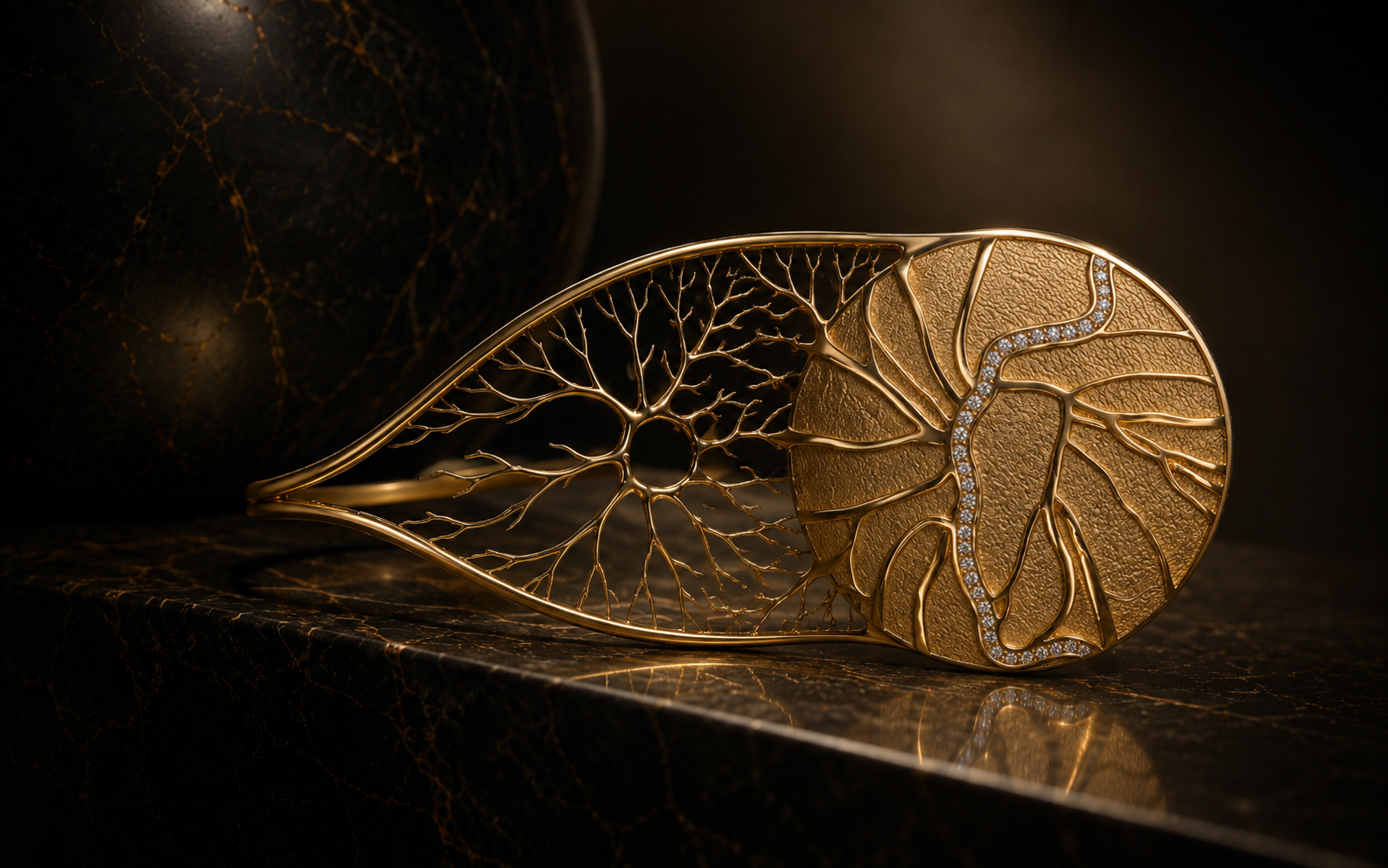
The RETINA® perspective begins with precisely this question: what happens when the focus is no longer a universal sign, but the person themselves? Every person possesses a unique retina – no two patterns are identical. A RetinaSignatur makes this uniqueness visible: it is not invented or selected, but discovered.
Universal symbols tell of ideas. The RetinaSignatur tells of a person – or of the connection between people. Not as a replacement for traditional symbolism, but as its most personal evolution.
Why Symbols Endure
In the end, each person answers the question of why they need symbols differently. For some, a symbol is a memory; for others, belonging, comfort, direction or a promise. Almost always, it is a distilled message: a value we uphold, a desire we pursue, a connection we wish to make visible.
Our own starting point in 2007 was precisely such a desire. We were searching for a symbol for our marriage that did not look like a mass-produced object, because for us the wedding ring was to become the most emotionally significant piece of jewellery in our lives. What we found disappointed us; what we could not find inspired us to become creative ourselves.
Almost twenty years later, we could not be happier with what has grown from that beginning – for us and for our clients. Many people are searching for something they cannot yet name. No one searches for RetinaRinge before knowing they exist. Some discover RETINA® by indirect routes, perhaps while looking for fingerprint rings, and then realise that the retina can be the more refined, beautiful and personal fingerprint.
It moves us that these seekers so often become clients. In those moments, our work feels like more than a profession: it becomes an opportunity to help people find a symbol that may have existed within them as a longing for a very long time, and that suddenly feels entirely right and true.

Discover Symbols in the Lexicon
heart
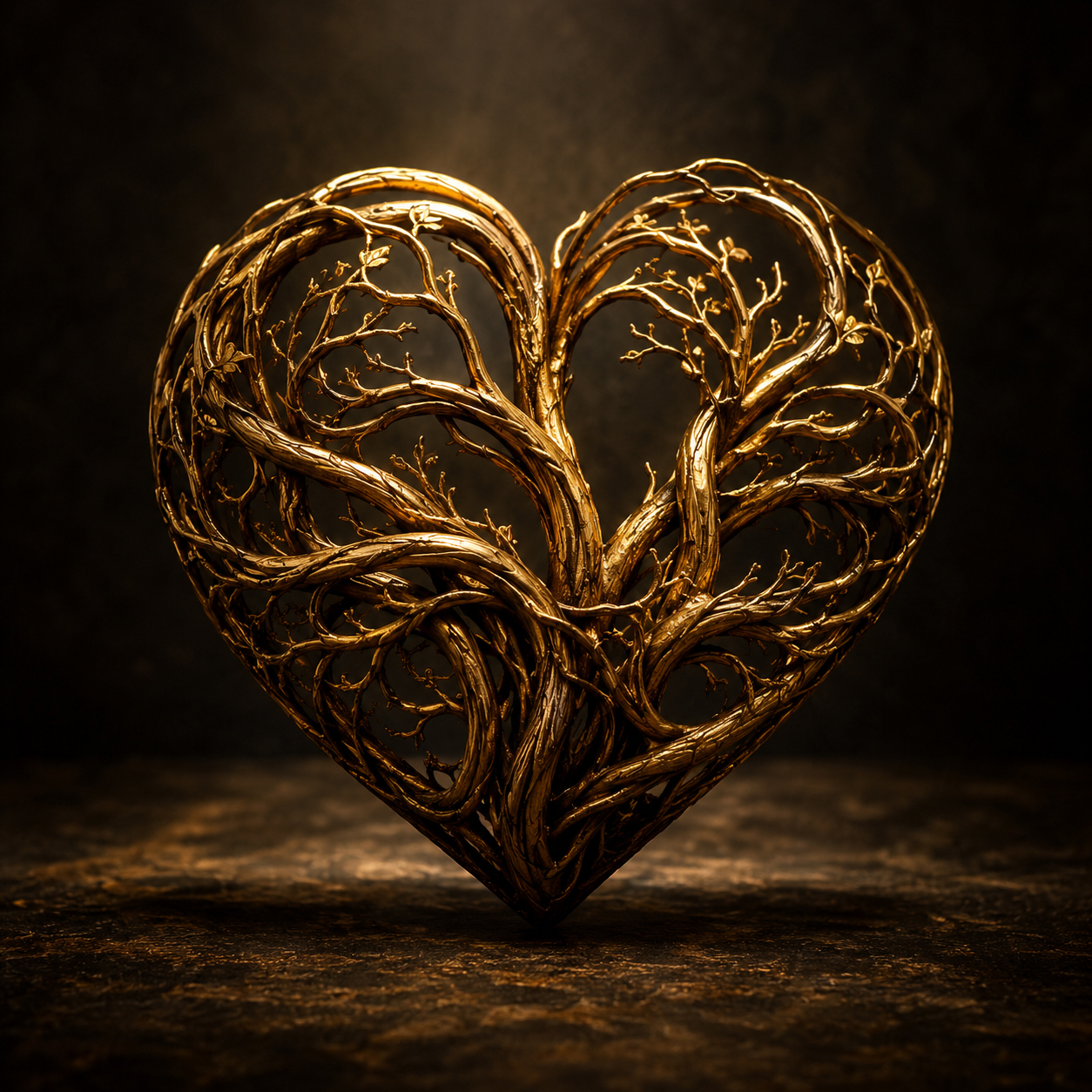
Love, closeness, compassion and the meaning of a relationship.
Read More →
Infinity
Eternity, recurrence and an enduring connection.
Read More →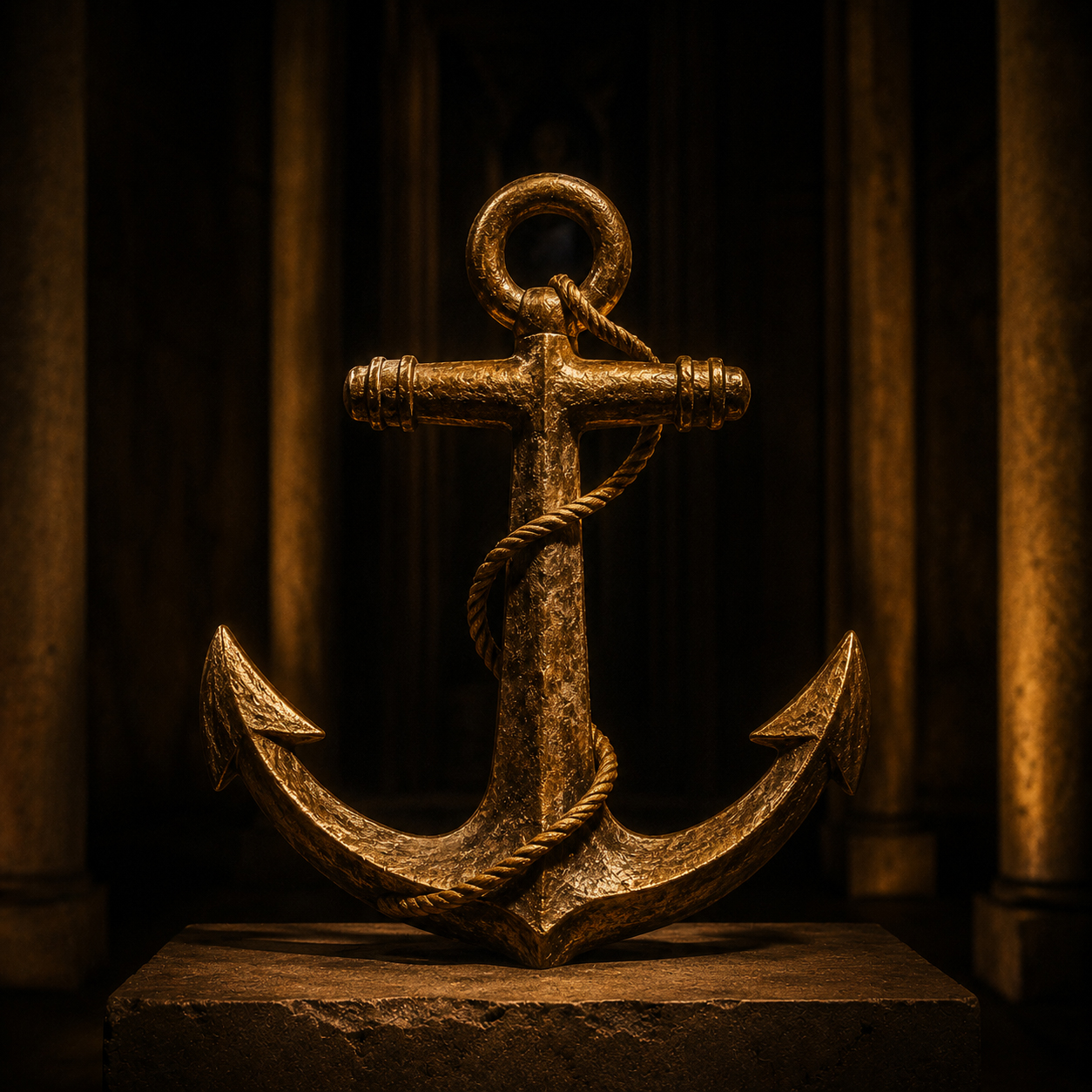
anchor
Stability, security and hope in unsettled times.
Read More →
tree of life
Roots, growth, family and lifelines.
Read More →
Rose
Love, beauty, gratitude and remembrance.
Read More →
Frequently Asked Questions: Why People Need Symbols
Why do people need symbols?
People need symbols because essential experiences such as love, memory, belonging and hope are invisible. Symbols give this invisible world a visible, wearable form and make meaning shareable – without words.
What makes a powerful symbol?
A powerful symbol does not merely answer a question; it distils a story. It translates complex feelings and experiences into a simple form that is understood intuitively while leaving room for personal meaning.
Are symbols truly older than writing?
Yes. Cave paintings, amulets and pendants made from shells, bone or tooth are among the earliest traces of human culture – many of them considerably older than the first writing systems. Symbols arose from the need for meaning, not from decoration.
Why do people wear symbols as jewellery?
Worn symbols become part of one’s identity. Jewellery rests against the skin, accompanies everyday life for decades and can be given, inherited and cherished – it is the most intimate and enduring form of symbolic language.
What is the difference between universal and personal symbols?
Universal symbols such as the heart or anchor are understood around the world and represent ideas. Personal symbols connect meaning with a particular person or a unique story. Universal symbolism answers: what does something stand for? Personal symbolism adds: for whom?
Where do universal symbols reach their limit?
The more universal a symbol becomes, the more people can recognise themselves in it – and the less it reveals about one particular person. A heart tells of love, but not which love.
What does it mean when identity itself becomes a symbol?
Then it is no longer a general sign that represents a person – the person themselves becomes the sign. A symbol points to meaning; identity embodies it. This is the most powerful form of personal symbolism.
What is a RetinaSignatur?
The RetinaSignatur is the artistically translated, unique structure of the human retina, crafted as jewellery in gold or platinum. It is neither invented nor selected, but discovered – and therefore exists only once.
Does personal symbolism replace classical symbols?
No. Hearts, roses, anchors and trees of life retain their beauty and power. Personal symbolism such as the RetinaSignatur carries their idea further: from a sign for an idea to a sign for a particular person.
How do I find a symbol that truly suits me?
The most powerful starting point is not the form, but the question: what should become visible? A memory, a connection, an identity? The Symbol Lexicon helps with universal signs; the RetinaDesign concept reveals the path to a symbol that belongs to you alone.
Sources and Further Reading
Show Sources on the History of Symbols
1) On early pictorial signs and cave art: The Met: Lascaux (Heilbrunn Timeline of Art History)
2) On amulets and protective symbols in ancient Egypt: The Met: Egyptian Amulets
3) On the history of jewellery as a bearer of meaning: Victoria and Albert Museum: A History of Jewellery
A Symbol That Exists Only Once
When jewellery is meant not only to be beautiful, but to carry meaning, identity and connection, the RetinaDesign journey begins: from the unique structure of your eye to a personal signature in gold or platinum.
Discuss Personal Jewellery →