
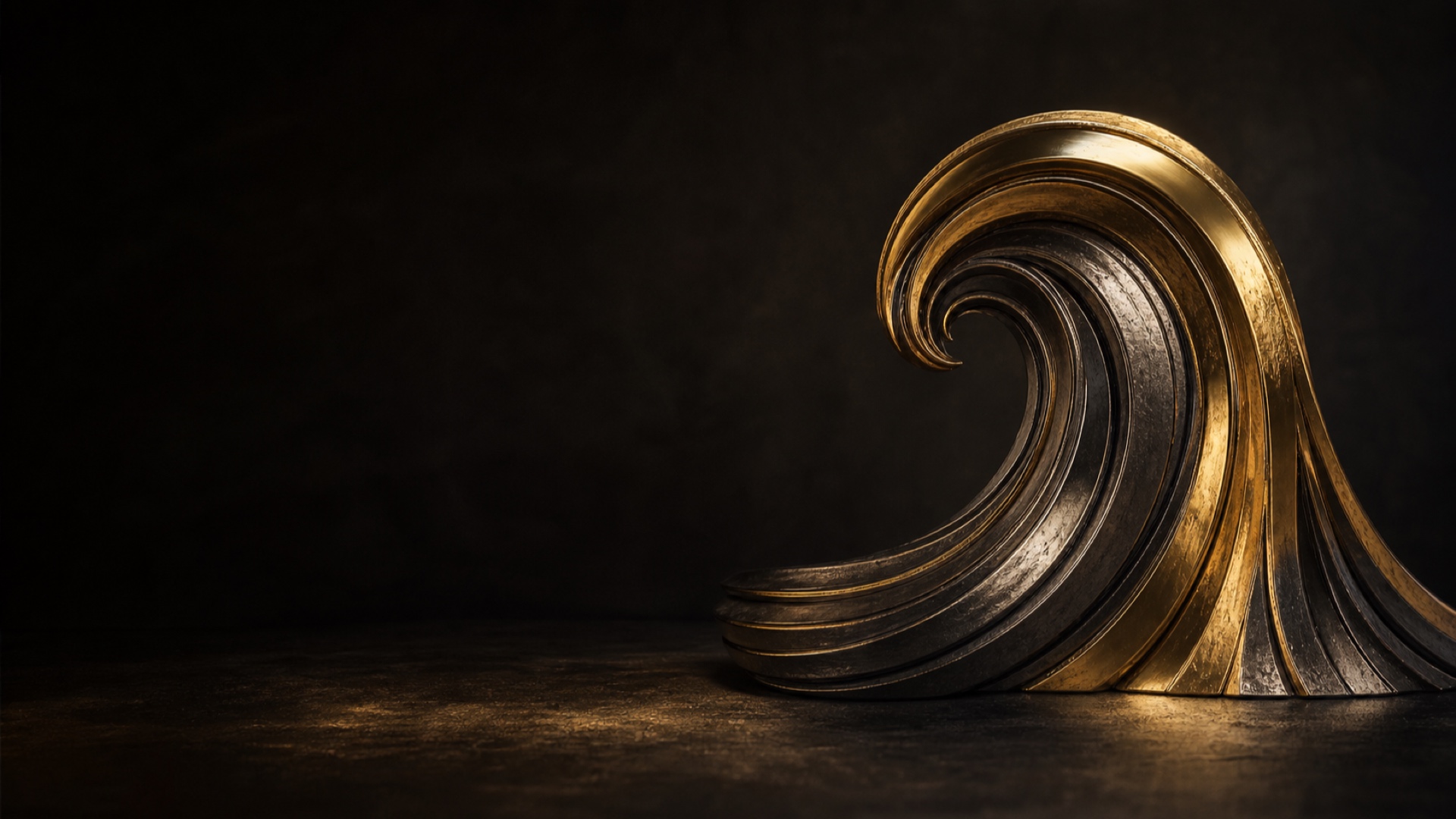
No wave remains.
And yet the sea never ceases.
The wave is one of the most expressive images in nature. It stands for change and the power of nature, for the constant rise and fall, and for an endurance that continues wave after wave.
Discover personal symbolism →
Discover personal symbolism →Origin
The wave shows that change is part of life. It comes and goes – and is reliable precisely in this, because every wave is followed by the next.
Use in Jewelry
Use in Jewelry
It is worn as a sign of change, endurance and connection with the sea. It looks refined when the lines are flowing and precisely crafted.
The Symbolic Meaning of the Wave
The wave reminds us that nothing stays as it is – and that precisely therein lies a deep constancy. Those who go with the wave do not fight the sea, but learn to let themselves be carried.
No wave remains. And yet the sea never ceases.
Change
Change
Strength
The untamed power of nature.
Endurance
Wave after wave, unceasingly.
Rhythm
Ebb and flow, the rise and fall of life.
Composure
Going with the current instead of against it.
The Human Longing Behind the Symbol – Wave
People wish for the good to stay and the hard to pass. Yet life comes in waves: phases of calm and phases in which everything seems to crash over us.
It seems natural to brace against every change – and to wish the sea would simply stand still.
Perhaps this is exactly what explains the special meaning of the wave.
It reminds us that calmer waters come after every wave. Those who accept this need not struggle against the current. The wave shows a different attitude: letting yourself be carried, embracing the rhythm, moving on.
This is precisely why this symbol often accompanies people in times of transition, when change is inevitable.
The History of the Wave as a Symbol
For as long as people have known the sea, the wave has been an image of change and strength. Over the centuries, an everyday natural spectacle became a motif in art and one of the best-known symbols of all.
The Wave Pattern1
The wave became an ornament with meaning early on.
Read more
Read more
As a pattern of good fortune, the Seigaiha stands for lasting peace, happiness and resilience. Similar wave motifs are found in many cultures – from ancient ornaments to maps on which the sea was depicted as a wavy line.1
Thus the wave evolved from an image of nature into a sign of constancy in change.
The Great Wave
Hokusai created the most famous image of a wave in the world.
Around 1830–32, the Japanese artist Katsushika Hokusai created the color woodblock print “Under the Wave off Kanagawa”, known as The Great Wave. It is the first print in the series Thirty-Six Views of Mount Fuji and is considered an icon of world art.
Read more
A towering, breaking wave rises above small boats, while Mount Fuji appears small in the background. The intense blue (Prussian blue) was a new pigment at the time.2
The image is often read as an emblem of the power of nature and human vulnerability.
The Wave in Craftsmanship
From ceramics to the Zen garden.
The wave motif runs through the applied arts: through lacquerwork, ceramics and textiles as well as through the raked patterns (samon) of Japanese Zen gardens.
Read more
It is precisely its clear, repeating form that makes the wave a timeless ornament. It can be finely structured and set in calm, even rows.3
In craftsmanship, the wave thus unites beauty and meaning: movement that becomes order.
Modern Era
Modern Times
Hokusai's Great Wave is a global sign today; in 2024 it even became the motif of Japan's 1000-yen banknote.
Read more
In a figurative sense, we speak of “riding” a wave: not warding off change, but using its power. The wave thus stands for resilience and for the ups and downs of life.4
Its message remains the same: everything is in motion – and constancy lies precisely therein.
The Wave in Jewelry
As a pendant, ring or fine pattern, the wave is an expressive yet understated motif. Its flowing line makes it a rewarding subject for precise craftsmanship.
Wave Pendant
Change and endurance, worn close to the heart.
Wave Ring
A flowing line, guided calmly around the finger.
Wave Bracelet
A fine companion for everyday life, close to every gesture.
From Symbol to Signature
From Symbol to Signature
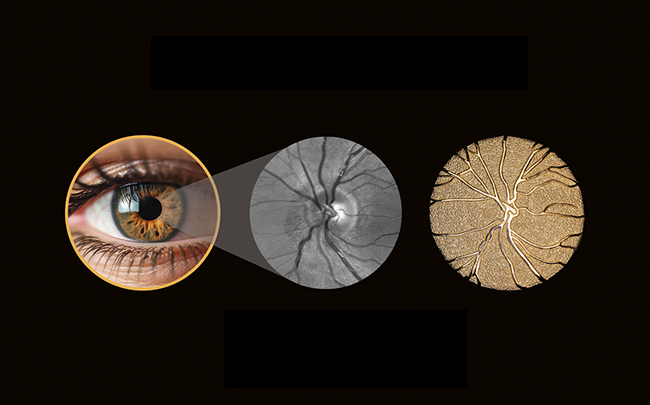
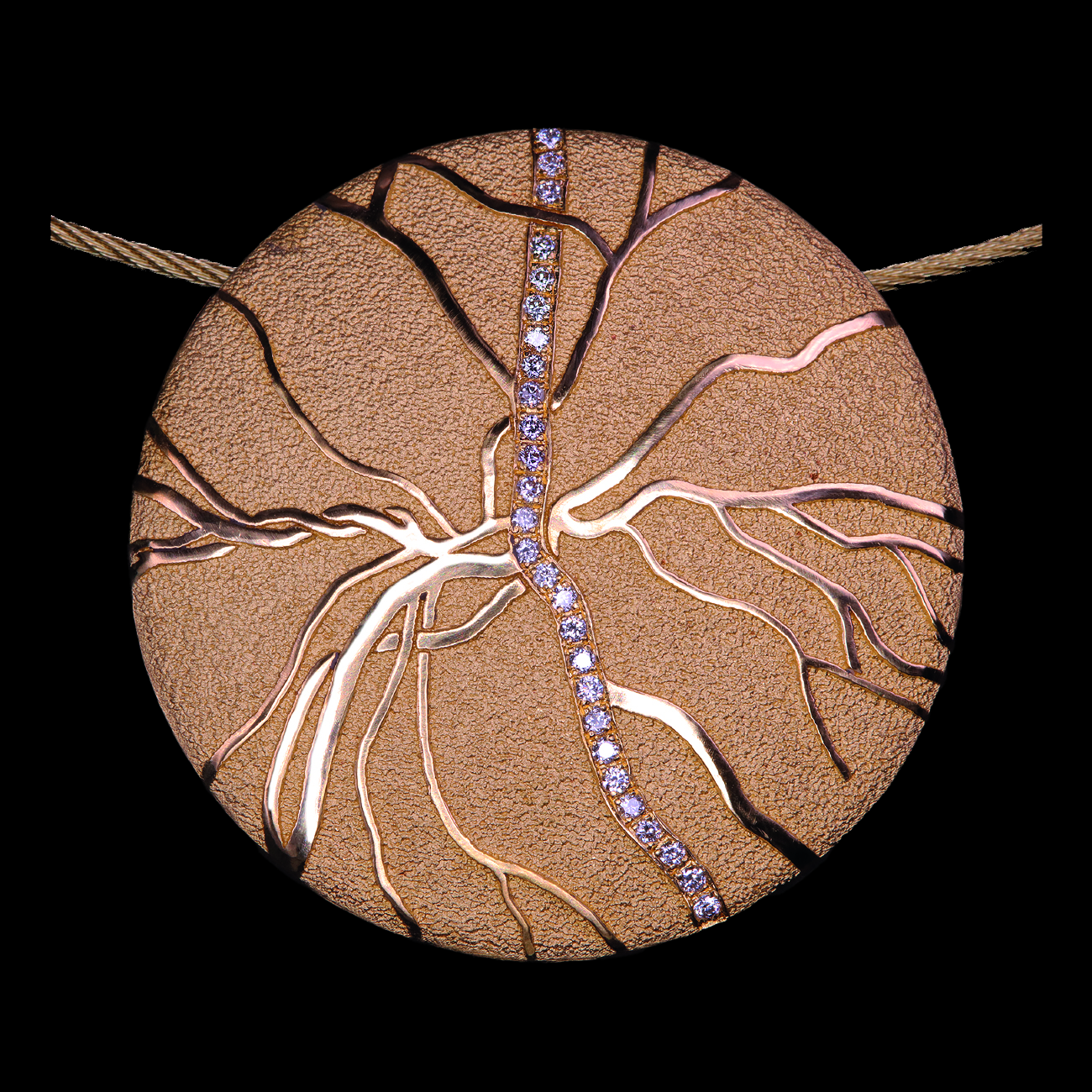
The wave is a universal sign. RETINA® goes further: instead of making a familiar symbol more personal, your own retina itself becomes an unmistakable signature.
The RETINA® Perspective
This is exactly where personal symbolism begins.
This is exactly where personal symbolism begins. It points not to a general image, but to one single, unmistakable person. More about RetinaSignatures →
The wave can make change visible. A RetinaSignature can show which person – and which story – stands behind it.
Discuss personal jewelry →
Discuss personal jewelry →Related RETINA® Pages

Related Symbols


Frequently Asked Questions About the Wave Symbol Meaning
What does the wave mean as a symbol?
The wave stands for change, the power of nature and endurance. It is an image of the fact that everything is in motion and that every wave is followed by the next.
What does the wave mean in jewelry?
As a jewelry motif, the wave usually stands for change, endurance and connection with the sea. It suits people who embrace change as part of life.
What is the Great Wave by Hokusai?
The Great Wave (“Under the Wave off Kanagawa”) is a color woodblock print by Katsushika Hokusai (around 1830–32), the first print in the series Thirty-Six Views of Mount Fuji and an icon of world art.
What is the Seigaiha wave pattern?
Seigaiha (“blue sea waves”) is a Japanese pattern of overlapping semicircles. It is considered a pattern of good fortune and stands for lasting peace, happiness and resilience.
What does the wave stand for in symbolism?
The wave stands for change and constancy at once: no wave remains, and yet the sea never ceases. It unites the idea of transience with that of endurance.
What does it mean to “ride” a wave?
Figuratively, it means not warding off change but using its power. The wave thus stands for composure and resilience in dealing with change.
Is the wave a positive or negative symbol?
Both can resonate. The wave can mean threat and power, but just as much calm, rhythm and new beginnings. Most often it is understood as a sign of change and endurance.
Does the wave suit partner or memorial jewelry?
Yes. As a sign of shared transitions and of a togetherness that weathers many waves, it is well suited to personal keepsakes.
Which material suits wave jewelry?
The flowing form works in many materials. Silver emphasizes the clear line, while gold and platinum give the wave a noble, timeless radiance.
Which symbols go well with the wave?
Water, moon and spiral are close to the wave: they extend it with origin, tides and the ever-recurring rhythm of life.
Why is blue the typical color of the wave?
Blue stands for water, vastness and calm. Even Hokusai's Great Wave lives from an intense blue that shapes the wave to this day.
What is more personal than a wave symbol?
The wave stands for a universal idea of change. A RetinaSignature additionally points to a specific person and can therefore exist only once.
Sources and Further Reading
Show sources on the history of the symbol
1) On the Seigaiha wave pattern, its origin in the court dance and its meaning: Kateigaho International Japan Edition: Kimono Patterns – Seigaiha
2) On Hokusai's “Under the Wave off Kanagawa” (The Great Wave): The Metropolitan Museum of Art: Under the Wave off Kanagawa
3) On the Great Wave and its technique (Prussian blue, series): The Metropolitan Museum of Art: The Great Wave – Anatomy of an Icon
4) On its worldwide impact and the 1000-yen banknote (2024): ars mundi: The Great Wave off Kanagawa – Meaning


Jewelry That Makes Meaning Visible
A symbol can open a story. A RetinaSignature makes it personal. Discover jewelry that gives identity, memory and connection an unmistakable form.
Get in touch →