

Moon – Meaning, History and Symbolism
Not everything stays the same.
And not everything has to.
For thousands of years, people have watched the changing phases of the moon. It reminds us that change is not an exception – but part of life.
Discover personal symbolism →Origin
The phases of the moon were humanity's first clocks: long before solar calendars, people counted the nights from new moon to new moon. The moon became the measure of time – and an image of its passing and returning.
In mythology it appears as a changeable force: Selene and Artemis in Greece, moon deities in almost every culture – sometimes female, sometimes male, always linked to night, dream and intuition.
Use in Jewelry
In jewelry, the moon appears as a crescent, a full-moon medallion, a phase necklace or an engraving – often combined with stars or with the shimmering moonstone.
Many choose moon jewelry to make a chapter of life, a change or their own serenity amid change visible.
Symbolic Meaning of the Moon
The moon is never just a romantic motif. Depending on the context, it stands for change and life cycles, for intuition, for serenity – or for the maturity to accept change.
It does not describe change itself – it describes the ability to live with change.
Change
Waxing, waning, returning – change as the nature of things.
Ebb and flow, the rise and fall of life.
Development unfolds in phases, not in straight lines.
Going with the current instead of against it.
The calm of not having to hold on to every phase.
Intuition
The quiet knowing that grows clearer in the stillness of the night.
Shedding the old skin in order to keep growing.
Every new moon is followed by a first light.
The Human Longing Behind the Symbol – Moon
People long for stability. At the same time, they know that life never stands completely still.
Chapters of life change. Relationships evolve. Priorities shift. What seems important today may hold a different meaning tomorrow.
Unlike many symbols, the moon promises no permanence. It reminds us that change is part of life. For some it stands for personal maturity, for others for serenity, intuition or the insight that growth often happens in cycles.
Perhaps that is why the moon is chosen in times of transition: when one chapter ends and a new one begins – and both are allowed their place.
The moon does not describe change itself. It describes the ability to live with change.
The History of the Moon as a Symbol
The moon played a central role in nearly every culture. Its regular phases made it a natural symbol of time, change and return.1
Time & Calendars
The phases of the moon were humanity's first clocks.
Read more
Long before solar calendars, people counted the nights from new moon to new moon. Many of the world's oldest calendars are lunar calendars.1
To this day, the festivals and traditions of many cultures follow the moon – from the date of Easter to Ramadan.
Thus the moon became the measure of time: not as a rigid grid, but as a living rhythm.
Mythology
Selene, Artemis and the moon deities: the night was given a face.
Read more
In Greece, Selene drove her chariot across the night sky; Artemis linked the moon to wilderness and independence.2
Almost every culture knew moon deities – sometimes female, sometimes male, always changeable.
What they share is intuition: the moon belongs to the night, to dreams, to inner knowing – the quiet side of life.
Faith & Cycles
Fertility, tides, return: the moon as the pacemaker of life.
Read more
The link between moon and water was obvious early on: the tides follow its pull. So it became an image of all that comes and goes.
In many traditions it stood for fertility and the cycles of life – becoming, ripening, passing, returning.
Its deepest message: waning, too, is part of the whole. No new moon without a full moon – and vice versa.
Jewelry & Modernity
Crescent and moonstone: change as a wearable sign.
Read more
The crescent is one of the oldest jewelry motifs of all – as a lunula, it protected women and children as early as antiquity.3
In Victorian celestial jewelry, crescents shone with diamonds and pearls; the shimmering moonstone became a classic in its own right.
Today the moon is often worn as a row of phases – a quiet affirmation that every phase has its worth.
The Moon in Jewelry
As a crescent, medallion, phase necklace or engraving, the moon remains timeless when its design is clear. Combined with moonstone above all, it unfolds its quiet shimmer.
Moon Pendant
The oldest moon motif – delicate, protective, timelessly close to the heart.
Moon Ring
The quiet crescent, laid around the finger – a daily sign of serenity.
Moon Bracelet
The rhythm of change, close to every gesture of daily life.
From Symbol to Signature
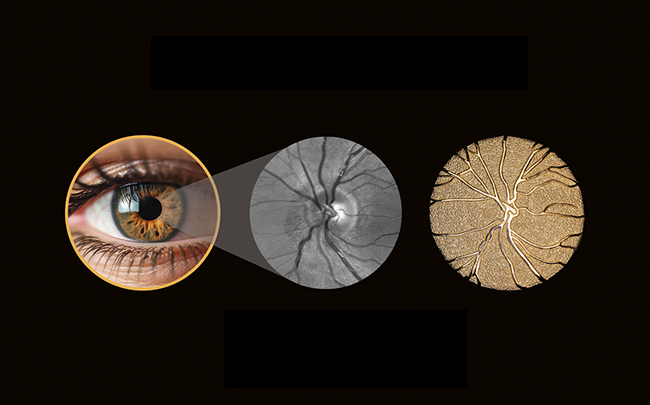
The moon is a universal sign. RETINA® goes further: instead of making a familiar symbol more personal, your own retina itself becomes an unmistakable signature.
The RETINA® Perspective
The moon answers a universal question: how do I deal with change? It can embody change, rhythm and serenity. But it does not yet say which experiences have changed you.
This is exactly where personal symbolism begins. The moon gives change a form. A RetinaSignature connects this form with a concrete human being. Thus a familiar sign becomes a piece of jewelry that exists only once.
From the Moon to the RetinaSignature
A moon can make change visible. A RetinaSignature can show which person or which phase of life stands behind it.
Discuss personal jewelry →Related RETINA® Pages


Related Symbols

Frequently Asked Questions About the Moon Symbol Meaning
What does the moon mean as a symbol?
The moon stands for change, life cycles, serenity and intuition. It reminds us that development unfolds in phases.
Why does the moon stand for change?
Because it is the only celestial light that visibly changes its shape: it waxes, wanes and returns – a natural image of the cycles of life.
What does a moon mean in jewelry?
Moon jewelry usually stands for a chapter of life, a change or serenity amid change – often worn as a crescent or a row of phases.
What does the crescent moon stand for?
The crescent is one of the oldest jewelry motifs: as a lunula, it was considered a protective sign in antiquity; today it stands for new beginnings and quiet strength.
What is a lunula?
A crescent-shaped amulet of antiquity: it was placed around women and children as a protective sign and is among the oldest moon motifs in jewelry.
What do the phases of the moon mean in jewelry?
A row of phases shows the whole cycle from new moon to full moon. It stands for the idea that every phase of life has its worth – the quiet ones included.
Who were Selene and Artemis?
Two moon figures of Greek mythology: Selene drove her chariot across the night sky, while Artemis linked the moon to wilderness and independence.
Do sun and moon belong together?
Yes – as a pair they stand for complement: strength and serenity, day and night. A popular motif for partners and close friendships.
Is the moon a spiritual symbol?
It has spiritual roots in mythology and folk belief, but today it is understood just as well in a worldly sense – as a sign of intuition, rhythm and inner maturity.
Is moon jewelry timeless?
Yes, as long as the design stays clear. A reduced crescent or row of phases looks more timeless than a very playful motif.
Which material suits moon jewelry?
White gold and platinum underline the moon's cool light; the shimmering moonstone is considered its classic companion – complemented by pearls and diamonds.
Is the moon more feminine or masculine?
Neither. Moon deities were sometimes female, sometimes male – the symbol is open to everyone and appears delicate or striking depending on the design.
Does the moon suit memorial jewelry?
Yes. The moon lends itself with dignity to remembrance and transitions – it says: this phase, too, is part of the whole.
Which symbols go well with the moon?
Sun, star, butterfly and infinity extend the moon with strength, hope, transformation and permanence.
What is more personal than a moon?
The moon stands for a universally understood idea. A RetinaSignature additionally points to a concrete human being and can therefore exist only once.
Sources and Further Reading
Show sources on the history of the symbol
1) On lunar calendars and timekeeping: Encyclopaedia Britannica: Lunar calendar
2) On the moon goddess Selene: Encyclopaedia Britannica: Selene
3) On the history of jewelry and moon motifs: Victoria and Albert Museum: A History of Jewellery


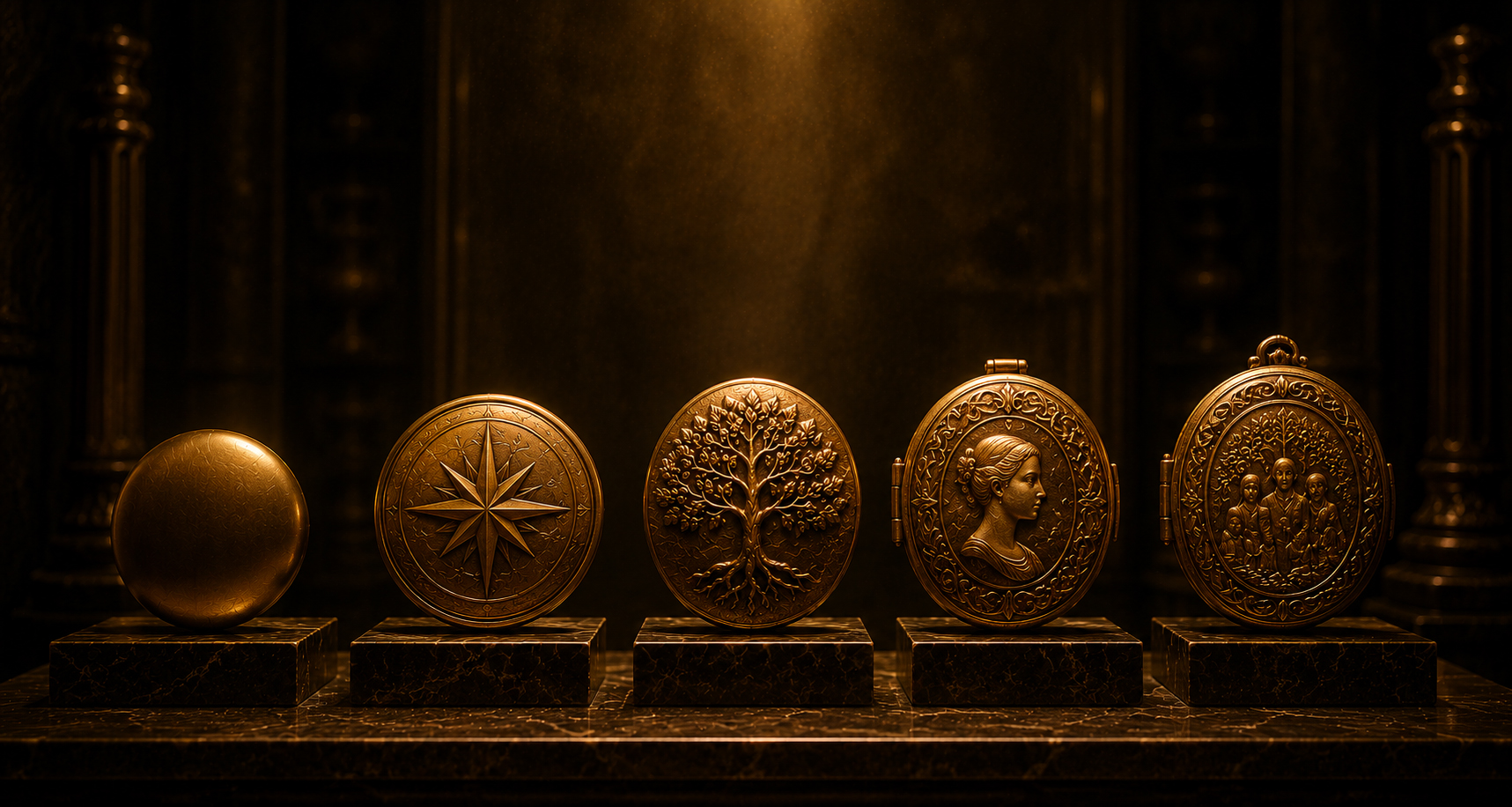
Jewelry That Makes Meaning Visible
A symbol can open a story. A RetinaSignature makes it personal. Discover jewelry that gives identity, memory and connection an unmistakable form.
Get in touch →