

Compass – Meaning, History and Symbolism
Not everyone knows the way.
But everyone seeks orientation.
The compass guided seafarers across open seas. Today it stands for something greater: for decisions, life paths and the ability to find a direction even in uncertain times.
Discover personal symbolism →Origin
The first compasses emerged in China: magnetic stones that pointed south were used there for orientation from early on. Along the trade routes, the technology reached Europe in the Middle Ages and made seafaring beyond familiar coasts possible in the first place.
The instrument became a symbol: whoever owned a compass could venture into the unknown – and find the way back.
Use in Jewelry
In jewelry, the compass appears as a pendant, compass rose, medallion or engraving – often combined with the coordinates of an important place.
Many people wear it not as a sign of a goal achieved, but as a reminder not to lose sight of their own course.
Symbolic Meaning of the Compass
The compass is never just a nautical motif. Depending on the context, it stands for orientation and direction, for courageous decisions, for one's own life path or for a departure into the new.
It describes no destination – it describes the longing for orientation. That is exactly what makes it one of the most personal symbols of all.
Orientation
A fixed point of reference by which to set one's own course.
Life Path
One's own way – consciously chosen, step by step.
Decision
The courage to choose a direction at a fork in the road.
Discovery
Setting out into the unknown – with the trust of not getting lost.
Self-Confidence
The certainty of staying true to one's own values.
The Human Longing Behind the Symbol – Compass
People do not only seek stability. They also seek direction.
In the course of life, we repeatedly face situations in which the next step is not obvious: decisions must be made, new paths open up, familiar points of orientation disappear.
The compass reminds us that orientation does not mean knowing the entire way. Often it is enough to know the direction in which one wants to go.
For some it stands for a new beginning, for others for the courage to make an important decision – or for the trust to find one's own way even in uncertain times.
That is precisely why this symbol often meets people at transitions: when entering professional life, moving house, emigrating, beginning a new relationship or in phases of personal reorientation.
The History of the Compass as a Symbol
The compass began as a technical aid – its symbolic meaning developed only later. An instrument of navigation became an emblem of direction, discovery and personal growth.1
Origin in China
The first compasses emerged in China – as magnetic south-pointers.
Read more
Early on, people in China recognized that lodestone aligns itself. From this arose the first south-pointers – at first probably for ceremonial purposes, later for navigation.
Along the trade routes, the knowledge traveled west. From the High Middle Ages, the compass is documented in the Mediterranean and fundamentally changed seafaring.1
The reinterpretation is remarkable: what pointed south in China became a north-pointer in Europe – the same force, two ways of looking. An early hint that orientation is always also interpretation.
Seafaring & Compass Rose
With the compass rose, direction was given a face – one of the most beautiful ornaments of navigation.
Read more
On the sea charts of the Mediterranean, the compass rose emerged: a star of directional rays naming north, south and every shade in between. It became the graphic epitome of orientation.
For sailors, the compass was more than technology. It was the promise that even on the open sea there is a reliable direction – in night, fog and storm.
The compass rose migrated early into the applied arts: onto maps, buildings, clocks and finally into jewelry – as the star of direction.
Age of Discovery
The compass made journeys into the unknown possible – and became a sign of courage.
Read more
In the Age of Discovery, the compass carried ships across oceans for which no charts existed. It became a symbol of the willingness to leave the familiar behind.2
This era shaped today's meaning: discovery, adventure, departure – but also the responsibility of answering for one's own course.
Both still resonate today: the longing for faraway places and the reassurance of return. Whoever wears a compass says both at once.
Modernity & the Inner Compass
Today the compass rarely means navigation – and almost always attitude.
Read more
With GPS, the compass lost its practical necessity – and gained symbolic power: from an instrument it became the image of the 'inner compass' that stands for values and convictions.
In jewelry, it stands for consciously shaped life paths: given for graduation, a journey around the world, a new beginning.
It is often combined with coordinates – the place of a decision, an origin, a promise. Direction thus becomes a story.3
The Compass in Jewelry
As a pendant, compass rose, medallion or engraving, the compass remains timeless when its design is clear. Combined with coordinates in particular, it becomes a personal sign.
Compass Pendant
Worn close to the body, the compass becomes a quiet sign of one's own course.
Compass Ring
As a fine engraving running around the finger: the compass rose with coordinates, a date or a name.
Compass Bracelet
The star of directions at the wrist – orientation that remains visible with every gesture.
From Symbol to Signature
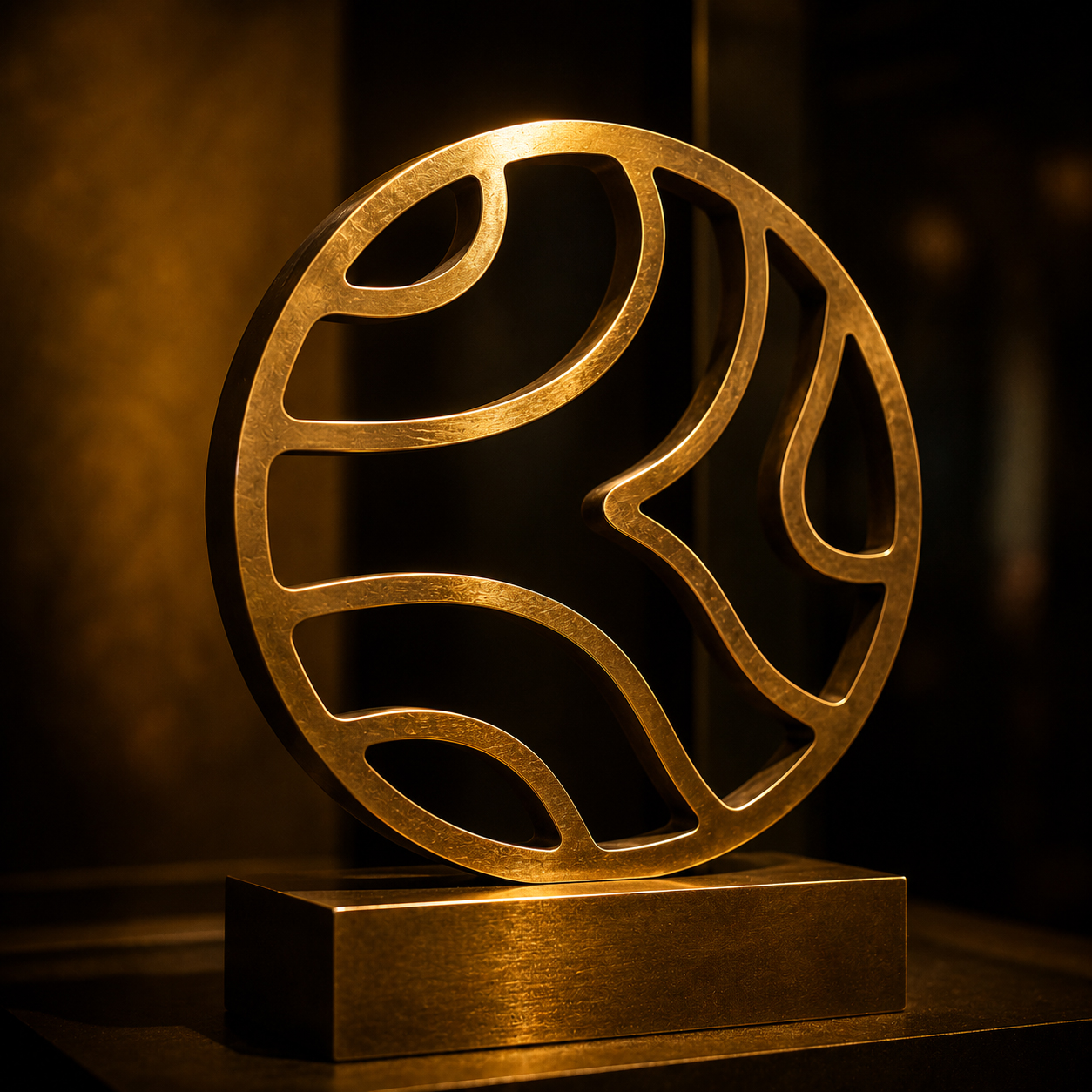
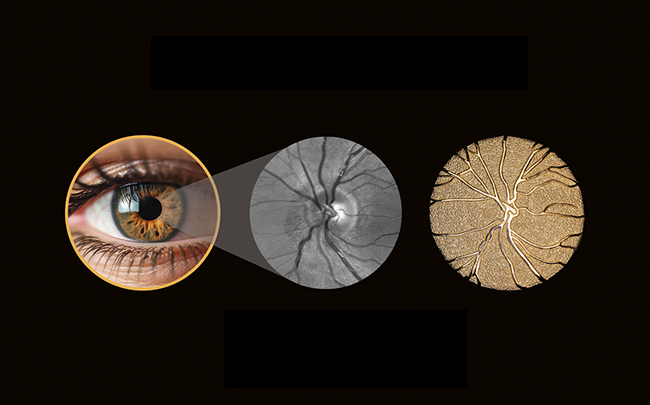
The compass is a universal sign. RETINA® goes further: instead of making a familiar symbol more personal, your own retina itself becomes an unmistakable signature.
The RETINA® Perspective
The compass answers a universal question: what do I orient myself by? It can embody orientation, decision and departure. But it does not yet say why this path is your path.
This is exactly where personal symbolism begins. The compass gives direction a form. A RetinaSignature connects this form with a specific person. Thus a familiar sign becomes a piece of jewelry that exists only once.
From the Compass to the RetinaSignature
A compass can make orientation visible. A RetinaSignature can show which person, which place or which decision determines this course.
Discuss personal jewelry →Related RETINA® Pages


Related Symbols


Frequently Asked Questions About the Compass Symbol Meaning
What does the compass mean as a symbol?
The compass stands for orientation, direction, decisions and personal growth. It symbolizes the search for one's own path and the trust to find a direction even in uncertain times.
Where does the compass come from?
The first compasses emerged in China as magnetic south-pointers. Along trade routes, the technology reached Europe in the Middle Ages and fundamentally changed seafaring.
What does a compass mean in jewelry?
Compass jewelry usually stands for one's own life path, a new beginning or an important decision. It is often combined with the coordinates of a meaningful place.
What does the compass rose stand for?
The compass rose is the star of directions on maps and compasses. As a jewelry motif, it stands for orientation and openness to all paths.
What is the difference between the compass and the North Star?
Both stand for orientation. The North Star is the fixed point in the sky, the compass the tool in one's own hand – orientation as an attitude rather than a matter of luck.
What occasions suit compass jewelry?
Especially transitions: graduation, starting a career, travel, emigration, a new beginning – wherever a new course begins.
Is compass jewelry timeless?
Yes, as long as the design stays clear. A reduced, precisely crafted compass rose feels more timeless than a very decorative motif.
Does the compass suit memorial jewelry?
Yes. As an engraving with coordinates or a date, it recalls places and people who gave direction – dignified and without grand gestures.
What do coordinates mean in jewelry?
Coordinates hold on to a specific place: a birthplace, the place of a wedding or a farewell. Together with the compass rose, they become a personal map.
Does a compass pendant really have to work?
No. In jewelry, the symbolism is what counts: the compass rose stands for orientation – whether the needle actually points north is secondary. Some pieces nevertheless contain a real miniature compass.
Which material suits compass jewelry?
Gold and platinum give the compass rose a warm, lasting radiance; silver feels cooler and more modern. What matters is a precise, symmetrical drawing of the directions.
Is the compass more feminine or masculine?
Neither. The compass is an open symbol and appears delicate or striking depending on the design. Proportion, material and surface are decisive.
How does the compass look modern rather than playfully nautical?
It looks modern as a reduced compass rose with clear lines – less ornament, more craftsmanship. This keeps the motif timeless.
Which symbols go well with the compass?
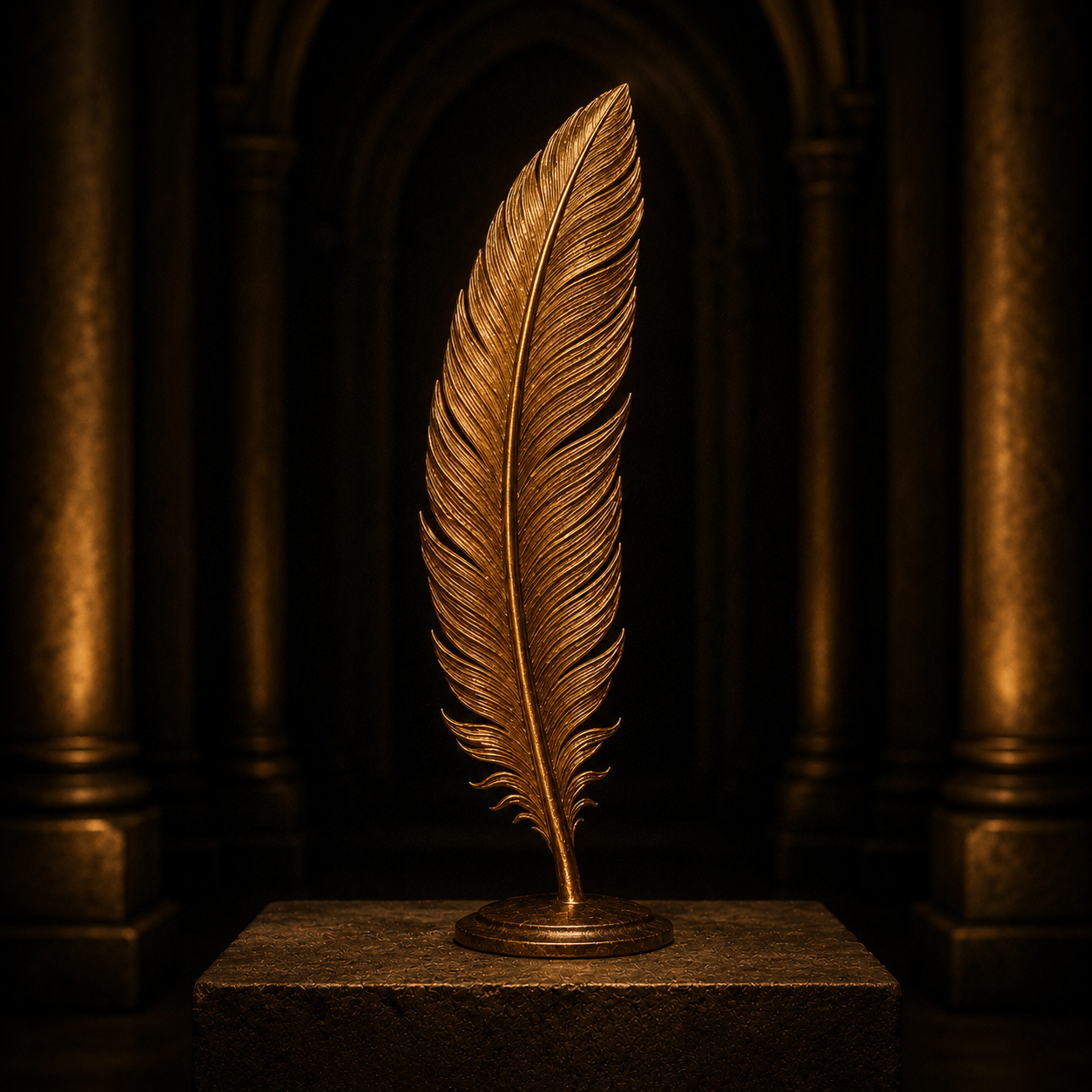
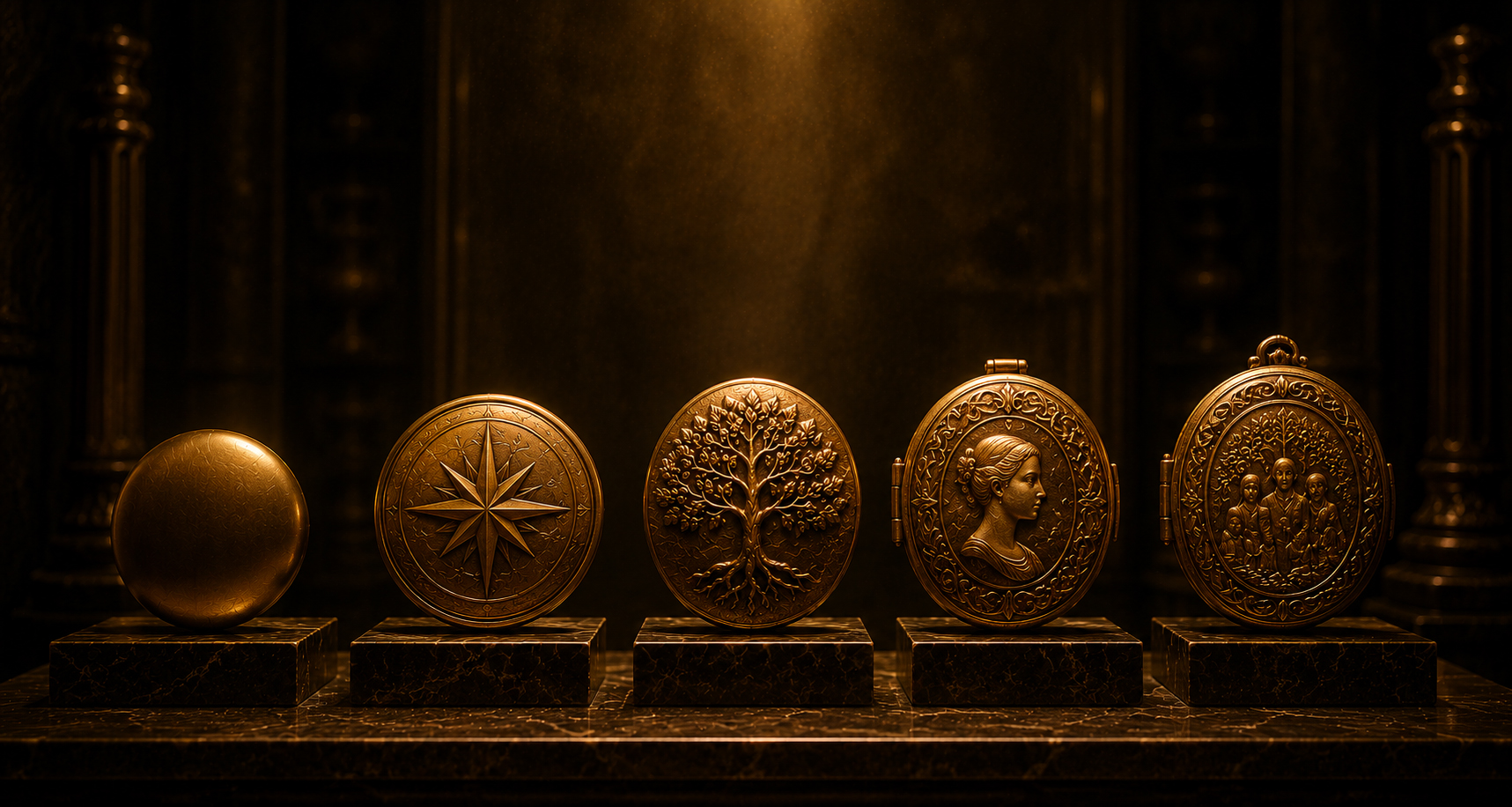
Anchor, North Star, feather and Tree of Life extend the compass with stability, reliability, freedom and origin.
What is more personal than a compass?
The compass stands for a universally understood idea. A RetinaSignature additionally refers to a specific person and can therefore exist only once.
Sources and Further Reading
Show sources on the history of the symbol
1) On the history of the compass: Encyclopaedia Britannica: Compass
2) On the Age of Discovery: Encyclopaedia Britannica: European exploration
3) On the history of jewelry and motifs: Victoria and Albert Museum: A History of Jewellery


Jewelry That Makes Meaning Visible
A symbol can open a story. A RetinaSignature makes it personal. Discover jewelry that gives identity, memory and connection an unmistakable form.
Get in touch →