
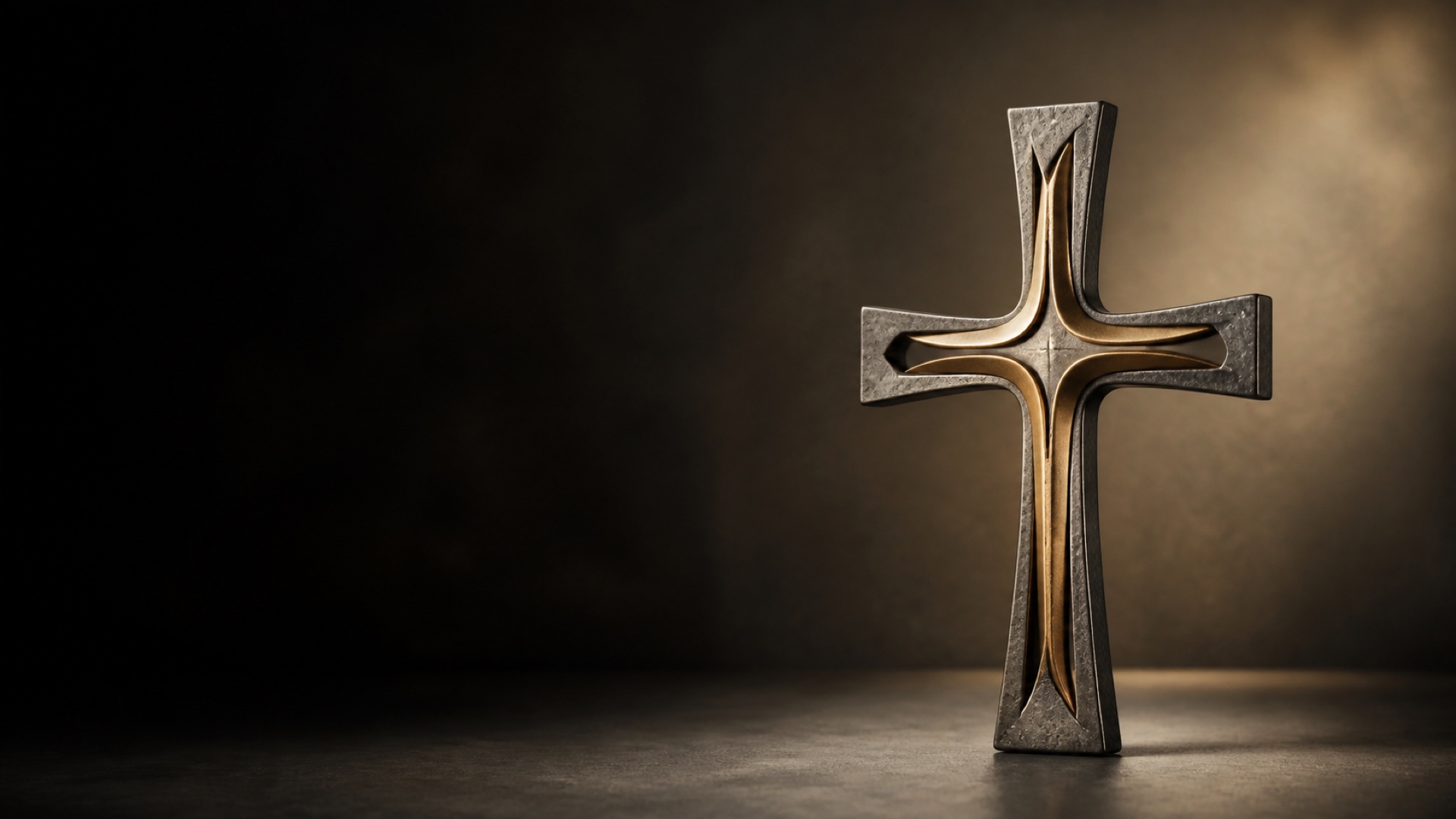
Cross – Meaning, History and Symbolism
Where two lines cross,
stability begins.
The cross is one of humanity's oldest signs. Long before it became the central symbol of Christianity, people saw in its form the meeting of heaven and earth – today it stands for faith, hope and living remembrance.
Discover personal symbolism →Origin
Cross forms were used as signs long before Christianity: the Egyptian ankh, a cross with a loop, was regarded as the hieroglyph for life itself and is held by gods and pharaohs in countless depictions.
In Christianity, the cross was openly displayed only after Emperor Constantine in the 4th century – and then became the central sign of faith, hope and redemption.
Use in Jewelry
In jewelry, the cross is one of the most-worn motifs of all: as a baptism gift, a communion or confirmation cross, as a profession of faith or as a quiet keepsake in memory of a loved one.
It suits people who wish to express stability and belonging – whether understood religiously or in an entirely personal way.
Symbolic Meaning of the Cross
The cross joins two simple lines into one of humanity's strongest signs: the vertical stands for the gaze upward, the horizontal for life among people. Depending on one's story, it stands for faith, hope, protection, remembrance or connection.
Stability arises where directions meet – not where everything runs the same way.
Faith
A profession of faith, worn close to the heart.
Hope
The gaze upward, even in dark times.
Protection
A sign that accompanies and protects.
Remembrance
For those who stay, even when they go.
Connection
Heaven and earth, inner and outer – united in a single point.
The Human Longing Behind the Symbol – Cross
There are moments when everything begins to shake: a loss, a diagnosis, a farewell. In such moments, people are not looking for explanations – they are looking for something to hold on to.
The cross has embodied this search for thousands of years.
Two simple lines that meet: nothing more is needed to express that a person is not alone – that something carries us, even when words fail.
Whoever wears a cross rarely wears only a sign. They wear a promise: that hope can be stronger than fear.
A sign can carry what words cannot hold.
The History of the Cross as a Symbol
From the Egyptian sign of life to the sign of Constantine to the modern piece of jewelry: hardly any symbol has traveled as far as the cross.1
Before Christianity
Cross forms are among humanity's oldest signs.
Read more
Cross forms were used as signs long before the Christian era – whether as marks of protection, ownership or cult cannot always be clearly distinguished.1
The best-known example is the Egyptian ankh: a cross with a loop, the hieroglyph for life. In countless depictions, gods and pharaohs hold it as a life-giving sign.2
Its shape probably goes back to a sandal strap – an everyday object became the sign of life.
The Sign of Constantine
In the 4th century, the cross becomes the open sign of Christianity.
Read more
Before Emperor Constantine, Christians rarely displayed the cross in public – the danger of mockery and persecution was too great.1
After turning to Christianity, Constantine abolished crucifixion as a form of execution and promoted the cross and the monogram of Christ as signs of the faith.
The early crucifixes show Christ alive and upright – as the victor over death. Only from the 9th century onward does the depiction of suffering come to the fore.
Forms and Ornament
From one basic form grows an entire language of signs.
Read more
Latin cross, Greek cross, Jerusalem cross, Celtic high cross: over the centuries, a great variety of forms emerged – each with its own history and meaning.1
In architecture, illuminated manuscripts and ornament, the cross became the underlying pattern of entire visual worlds: from church floor plans to finely interwoven knotwork crosses.
Yet the form always remained legible – its very simplicity makes it inexhaustible.
Modern Times
Today the cross is worn both religiously and in an entirely personal way.
Read more
Cross jewelry has been a fixture of the goldsmith's art for centuries – from medieval reliquary crosses to today's pendants.3
Today people wear the cross as a profession of faith, in memory of a person or as a sign of personal values – often independent of denomination.
Its message remains: there is something to hold on to – even when life does not show it at the moment.
The Cross in Jewelry
As a delicate pendant, a ring detail or at the wrist: the cross is most powerful when its design is calm – proportion instead of decoration.
Cross Pendant
Faith and remembrance, worn close to the heart.
Cross Ring
A quiet profession of faith, laid around the finger.
Cross Bracelet
Stability, close to every gesture of daily life.
From Symbol to Signature
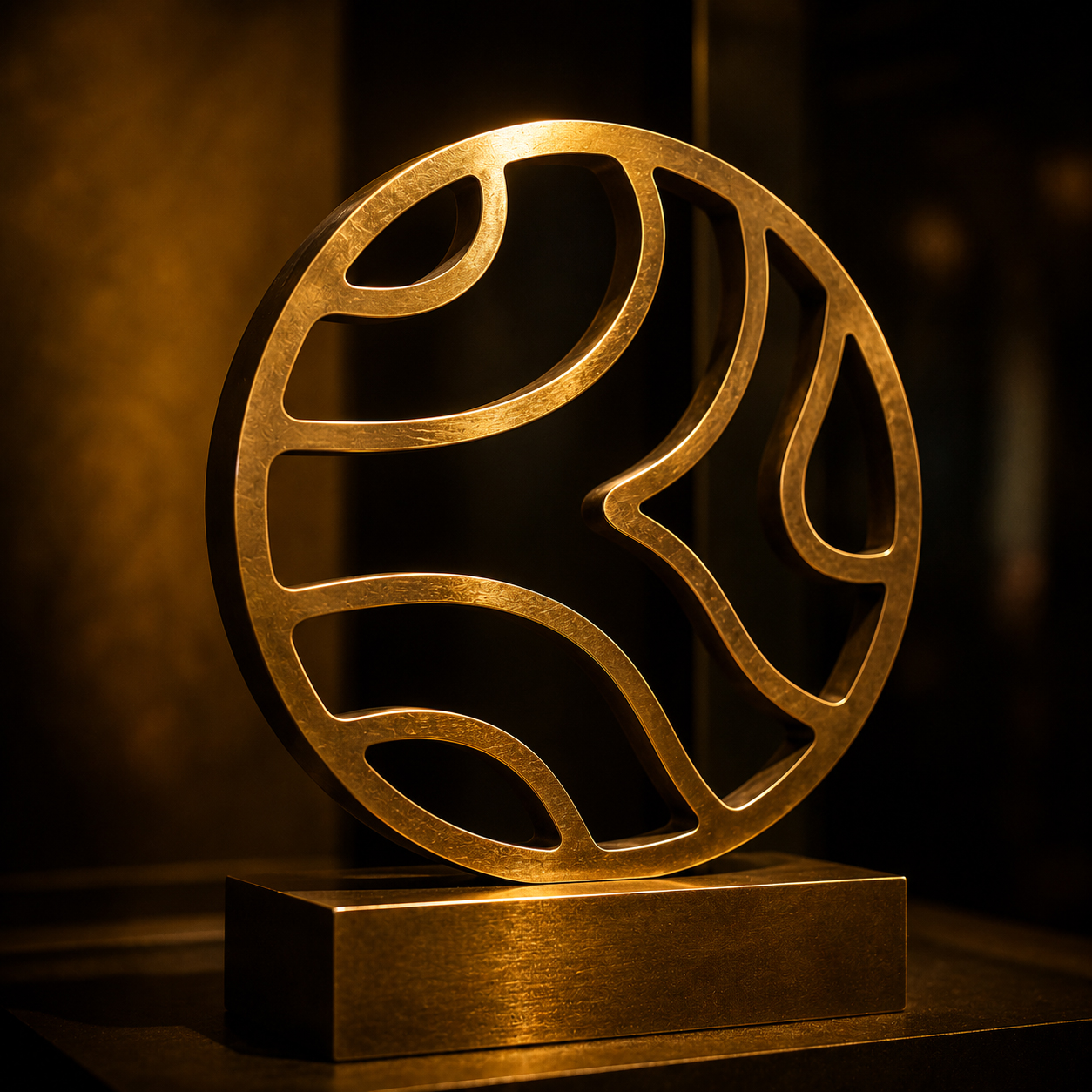
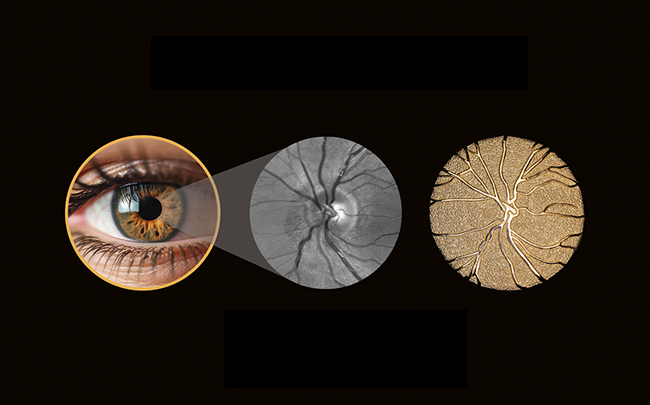
The cross is a universal sign. RETINA® goes further: instead of making a familiar symbol more personal, your own retina itself becomes an unmistakable signature.
The RETINA® Perspective
The cross answers a great question: what do I hold on to? Yet it does not tell which person, which promise or which memory this hold stands for.
This is exactly where personal symbolism begins. The cross gives faith a form. A RetinaSignature connects this form with a specific person. This turns a universal profession of faith into a sign that exists only once.
From the Cross to the RetinaSignature
A cross can make stability visible. A RetinaSignature can show which person stands behind it.
Discuss personal jewelry →Related RETINA® Pages


Related Symbols

Frequently Asked Questions About the Cross Symbol Meaning
What does the cross mean as a symbol?
The cross stands for faith, hope, protection, remembrance and connection – for stability that remains when everything else begins to shake.
Is the cross only a Christian symbol?
No. Cross forms were used long before the Christian era, such as the Egyptian ankh as a sign of life. Its main meaning today, however, came to the cross through Christianity.
What does the ankh (the looped cross) mean?
The ankh is the Egyptian hieroglyph for life: a cross with a loop, held by gods and pharaohs in depictions as a life-giving sign.
Since when has the cross been the central sign of Christianity?
It was openly displayed only after Emperor Constantine in the 4th century: he abolished crucifixion as a form of execution and promoted the cross as a sign of the faith.
What is the difference between a cross and a crucifix?
The cross is the pure form; a crucifix additionally shows the body of Christ. Early crucifixes show him alive and upright; only from the 9th century onward is he shown suffering.
What cross forms are there?
Among others, the Latin and the Greek cross, the Jerusalem cross, the Celtic high cross and the ankh – each form with its own history.
What does a cross mean in jewelry?
Depending on the person, a profession of faith, a sign of protection or a remembrance – often all at once. It is one of the most-worn jewelry motifs of all.
Can you wear a cross without being religious?
Yes. Many wear it as a sign of personal values, in memory of a person or as part of their heritage – its meaning is defined by the one who wears it.
Is a cross a good gift?
Yes, especially for baptism, First Communion or confirmation – as a sign that can accompany a whole life and be passed on.
Does the cross suit memorial jewelry?
Very well: as a sign of stability and hope, it lends itself to remembering people who carried us – and carry us still.
Which material suits cross jewelry?
Gold and platinum give the clear form dignity and permanence. The cross is most powerful when its design is calm – proportion instead of decoration.
How does a cross look modern rather than traditional?
As a reduced line form with precise proportions – presence instead of ornament.
Do the cross as a tattoo and in jewelry mean the same?
The basic meanings are similar, but jewelry needs no permanent commitment and can be passed on – as an heirloom of a faith or a memory.
Which symbols go well with the cross?
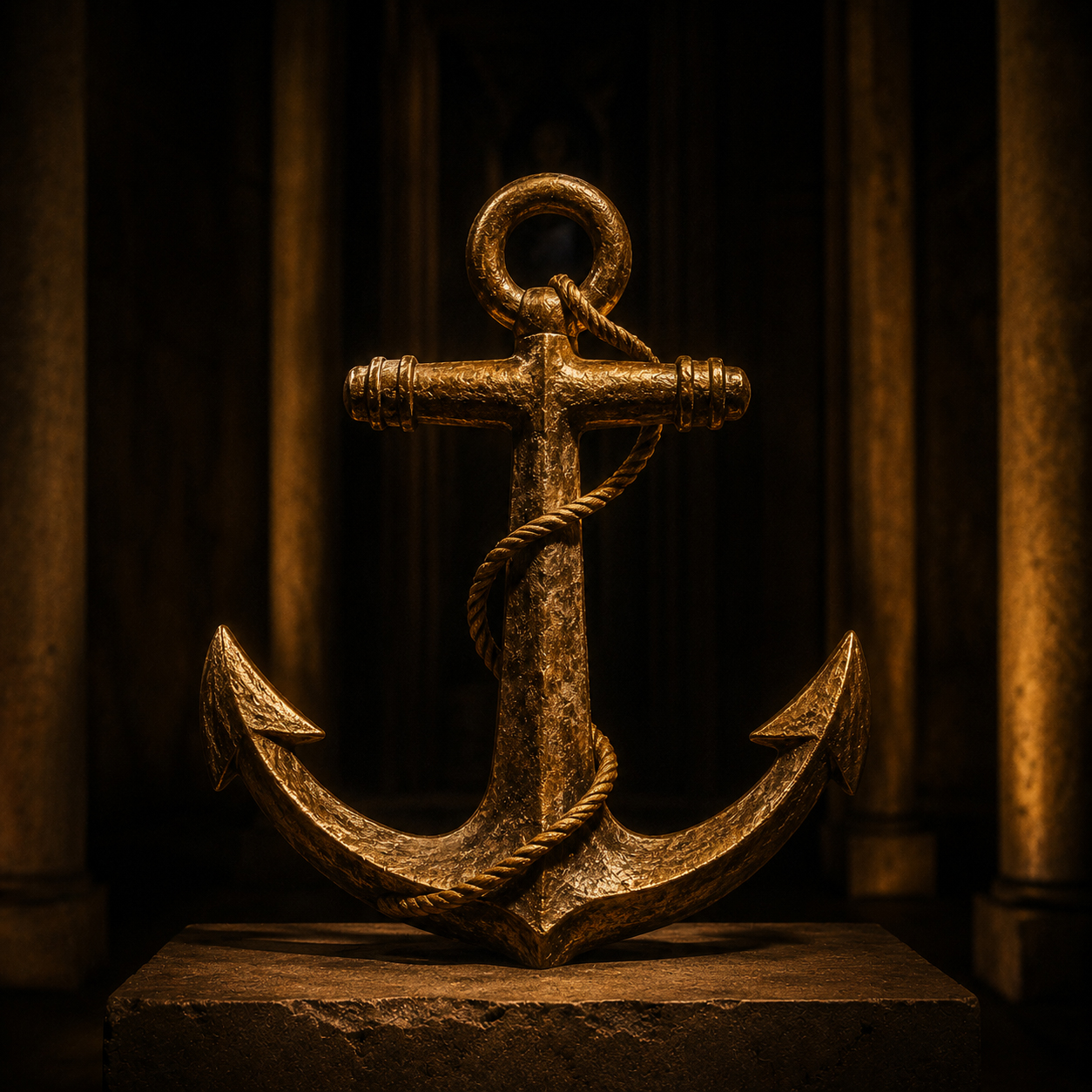
Anchor and dove extend the cross with hope and peace – together with the heart, cross and anchor form the classic trio of faith, love and hope. The Triquetra, with its threefold nature, is another fitting companion.
What is more personal than a cross?
The cross stands for a universal idea of faith and stability. A RetinaSignature additionally refers to a specific person and can therefore exist only once.
Sources and Further Reading
Show sources on the history of the symbol
1) On the history of the cross as a religious symbol, on Constantine and the early crucifixes: Encyclopaedia Britannica: Cross (religious symbol)
2) On the Egyptian ankh as a sign of life: Encyclopaedia Britannica: Ankh
3) On the history of jewelry and religious motifs: Victoria and Albert Museum: A History of Jewellery


Jewelry That Makes Meaning Visible
A symbol can open a story. A RetinaSignature makes it personal. Discover jewelry that gives identity, memory and connection an unmistakable form.
Get in touch →