
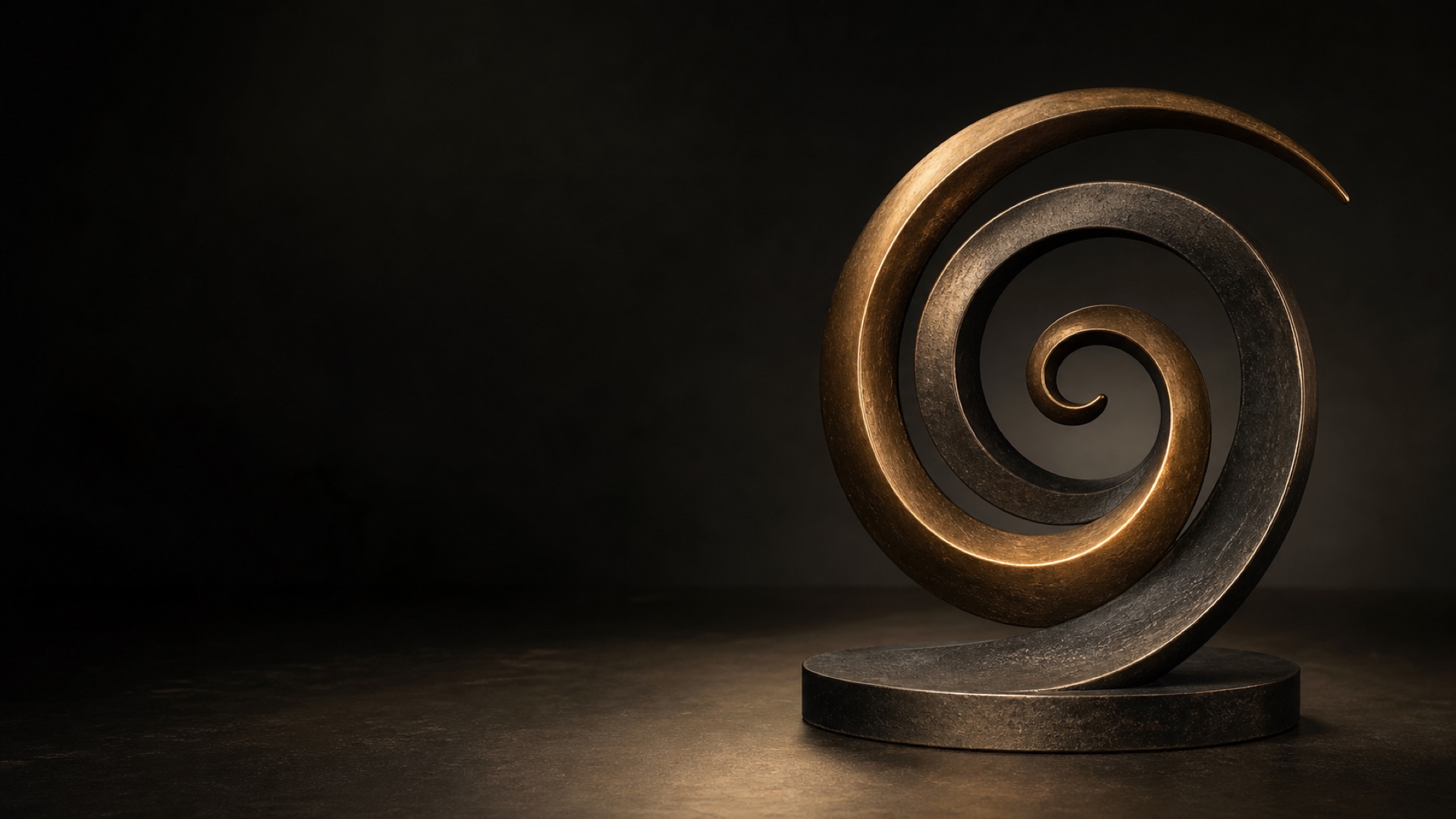
Spiral – Meaning, History and Symbolism
Progress rarely moves
in a straight line.
The spiral is found in shells, plants and galaxies. As a symbol it stands for development and change – and for the experience that growth rarely follows a straight line.
Discover personal symbolism →Origin
The spiral is one of humanity's oldest symbols. It appears in Stone Age rock carvings and megalithic monuments, in Celtic art and in nature itself: in snail shells, sunflowers and galaxies.
Because it circles a center while moving away from it or toward it, it unites constancy and change. Precisely this double movement makes it one of the most fitting images of human development.
Use in Jewelry
In jewelry, the spiral is among the oldest ornaments of all. As a pendant, ring or engraving it stands for life force and development – archaic and modern at once.
Many choose it as a personal sign of their own path – not for perfection, but for the willingness to keep evolving.
The Symbolic Meaning of the Spiral
The spiral is never merely a decorative pattern. Depending on the context, it stands for growth and development, for change, for the cycles of life – or for the maturity that grows out of recurring experiences.
It shows that repetition need not mean standstill.
Growth
Development that circles a center and yet leads onward.
Development
Maturing step by step, not in leaps.
Change
The familiar returns – and yet is never quite the same.
Return
Meeting the same questions on a new level.
Life Cycle
The flow of life between past and future.
The Human Longing Behind the Symbol – Spiral
Many people imagine development as a straight line: steady progress, growing clarity. Reality often looks different.
Certain questions meet us more than once. Conflicts return. Sometimes it feels like standing still.
The spiral offers another view: whoever follows it keeps returning close to the same point – yet never to the same place. We meet similar challenges, but as different people.
Growth does not mean leaving old questions behind. Often it means meeting them on a new level.
Perhaps no form describes human development more aptly.
The History of the Spiral as a Symbol
Spiral motifs are among the oldest known symbolic forms of all. They are found worldwide – often as an expression of life force, growth and the flow of time.1
Prehistory
The spiral is one of humanity's oldest symbols.
Read more
Spiral motifs are found in Stone Age rock carvings and on megalithic monuments such as Newgrange in Ireland, whose entrance stone was decorated with spirals around 3200 BC – centuries before the pyramids.1
Their exact meaning has not come down to us. Yet wherever people carved them into stone, they were evidently concerned with fundamental questions: time, life, return.
The spiral is thus among the oldest signs humans have ever created.
Celtic Tradition
In Celtic art, the spiral became an image of the flow of life.
Read more
Celtic art made the spiral one of its most enduring motifs – on stones, in metalwork and manuscripts, often as a triple spiral, as it already appears at Newgrange.1
It was associated with the cycles of nature, growth and the flow of life.
The circling movement became an image of a life that keeps unfolding without losing its origin.
Observing Nature
From the shell to the galaxy: the spiral as nature's order.
Read more
From the snail shell to the arrangement of sunflower seeds to the arms of entire galaxies, the spiral appears again and again in natural structures.
This omnipresence made it appear in many ornamental traditions as an expression of universal principles of order.2
What grows in nature often grows in spirals – a pattern of the living.
Modern Times
Today the spiral stands for personal development and lifelong growth.
Read more
In its modern reading, the spiral became an image of one's own path: learning, maturing, changing.
In jewelry it is worn as a personal sign – of the willingness to keep evolving without leaving one's own story behind.3
Its timeless appeal lies in the fact that it promises not perfection, but movement.
The Spiral in Jewelry
As a pendant, ring, bracelet or engraving, the spiral remains timeless when its design is clear. As one of the oldest ornaments, it appears archaic and modern at once.
Spiral Pendant
Worn close to the body, the spiral becomes a quiet sign of your own path.
Spiral Ring
A winding line that runs around the finger.
Spiral Bracelet
From Symbol to Signature
From Symbol to Signature
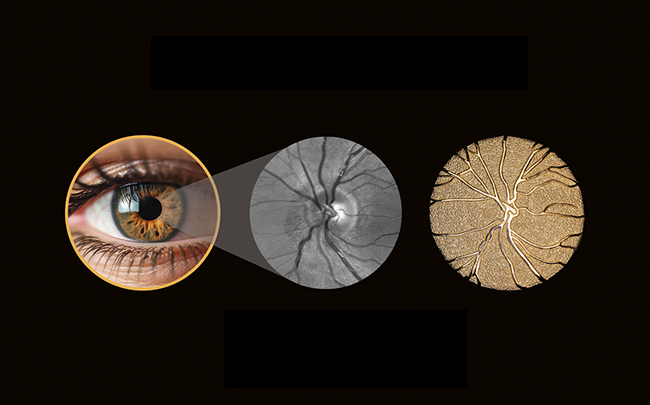
The spiral is a universal sign. RETINA® goes further: instead of making a familiar symbol more personal, your own retina itself becomes an unmistakable signature.
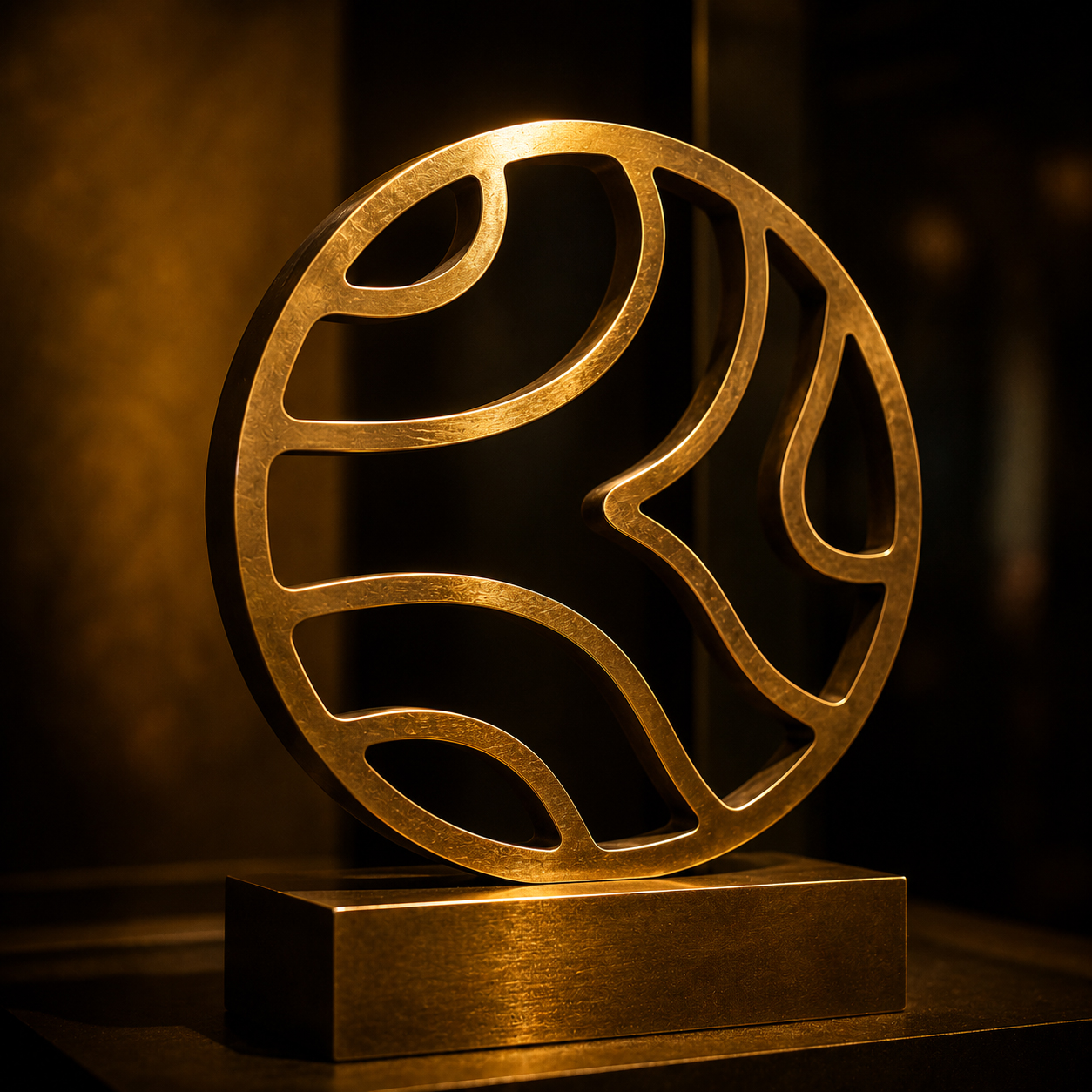
The RETINA® Perspective
The spiral answers a universal experience: development does not follow a straight line. It can embody growth, change and maturity. Yet it does not say which path was your path.
This is exactly where personal symbolism begins. The spiral gives development a form. A RetinaSignature connects this form with a real person. There is a quiet kinship here: the retina pattern, too, unfolds organically around a center. Thus a familiar sign becomes a piece of jewelry that exists only once.
From the Spiral to the RetinaSignature
A spiral can make development visible. A RetinaSignature can show which person and which path stand behind it.
Discuss personal jewelry →Related RETINA® Pages


Related Symbols


Frequently Asked Questions About the Spiral Symbol Meaning
What does the spiral mean as a symbol?
The spiral stands for growth, change and personal development. It shows that progress rarely follows a straight line and that repetition need not mean standstill.
Where does the spiral symbol come from?
The spiral is one of humanity's oldest symbols – it is found in Stone Age rock carvings, on megalithic monuments such as Newgrange and in Celtic art.
What does a spiral mean in jewelry?
Spiral jewelry usually stands for one's own life path and personal development. The spiral is one of the oldest jewelry ornaments of all.
What is the difference between circle and spiral?
The circle returns exactly to its starting point; the spiral moves toward or away from the center – it unites return with development.
What does the Celtic spiral mean?
In Celtic art the spiral stood for the cycles of nature and the flow of life – often as a triple spiral, as it already appears on the entrance stone of Newgrange.
What is a triple spiral (triskelion)?
The triple spiral joins three spiral arms in one rotating movement. It is considered one of Europe's oldest symbols and is often associated with triads such as becoming, being and passing.
Why does the spiral appear so often in nature?
Spirals arise wherever something grows and turns at the same time – from snail shells to sunflower seeds to galaxies. The spiral is a fundamental pattern of the living.
Is the spiral a spiritual symbol?
It can be read spiritually, for instance as a path inward or as an image of life's cycles. It can just as well stand in an entirely secular way for development and growth.
Is spiral jewelry timeless?
Yes, when the design stays clear. As an archaic and at the same time modern motif, the spiral appears especially timeless.
Does the spiral suit memorial jewelry?
Yes. As a sign of one's own path, it suits personal turning points and keepsakes.
Which material suits spiral jewelry?
Gold and platinum render the spiral's flowing lines precisely and durably. Warm gold tones emphasize its organic, living character.
Is the spiral more feminine or masculine?
Neither. The spiral is an open symbol and appears delicate or powerful depending on its execution. Proportion and material are what matter.
Does the spiral mean the same as a tattoo and in jewelry?
The core meanings are similar, but jewelry involves no permanent commitment and can be passed on – as the heirloom of a story.
Which symbols go well with the spiral?
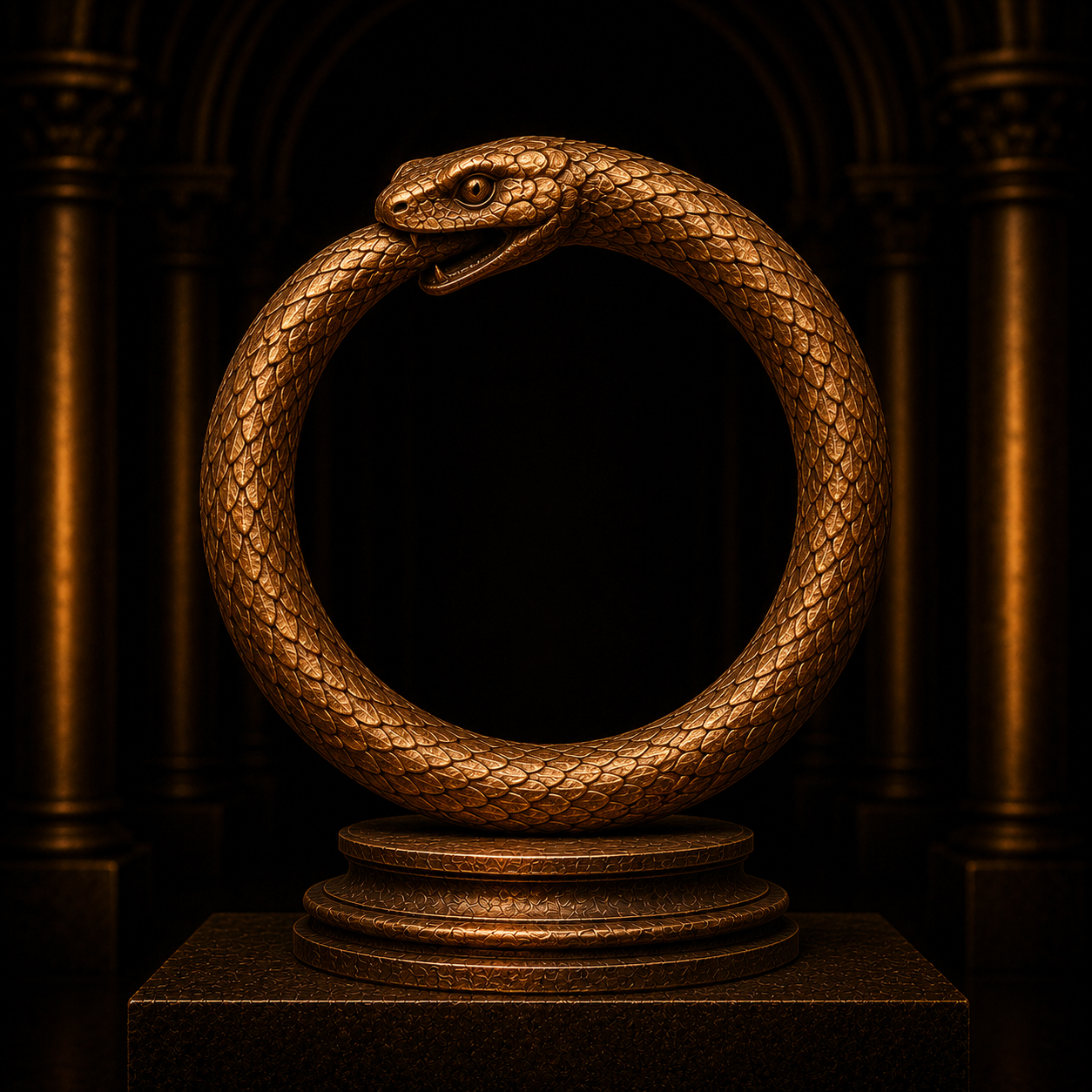
Ouroboros, infinity, Tree of Life and circle extend the spiral with cycle, permanence, growth and wholeness.
What is more personal than a spiral?
The spiral stands for a universally understood idea. A RetinaSignature additionally points to a real person and can therefore exist only once.
Sources and Further Reading
Show sources on the history of the symbol
1) On the prehistoric spirals of Newgrange: Encyclopaedia Britannica: Newgrange
2) On geometric patterns and ornament: The Metropolitan Museum of Art: Geometric Patterns in Islamic Art
3) On the history of jewelry and ornamental motifs: Victoria and Albert Museum: A History of Jewellery


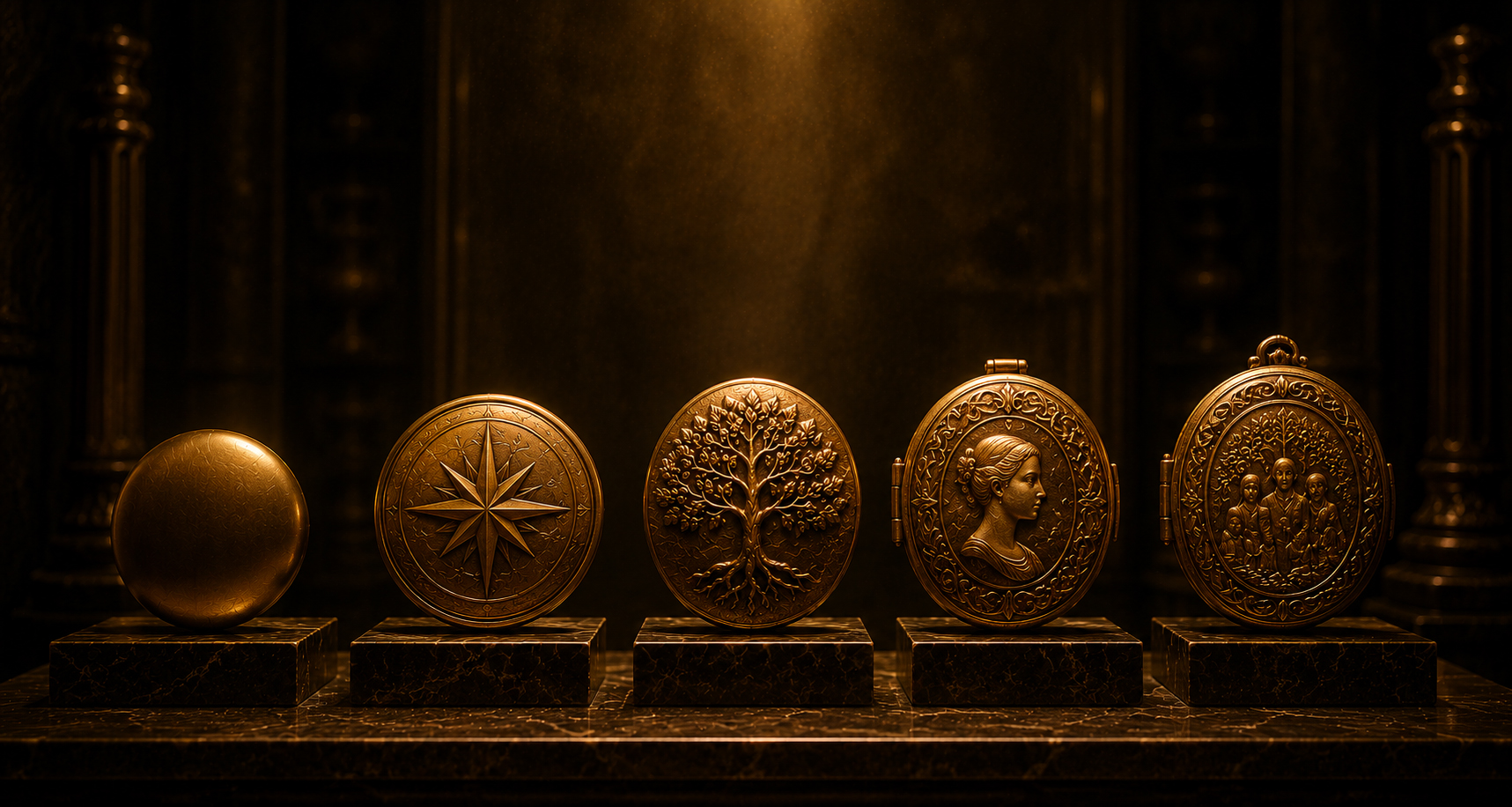
Jewelry That Makes Meaning Visible
A symbol can open a story. A RetinaSignature makes it personal. Discover jewelry that gives identity, memory and connection an unmistakable form.
Get in touch →