
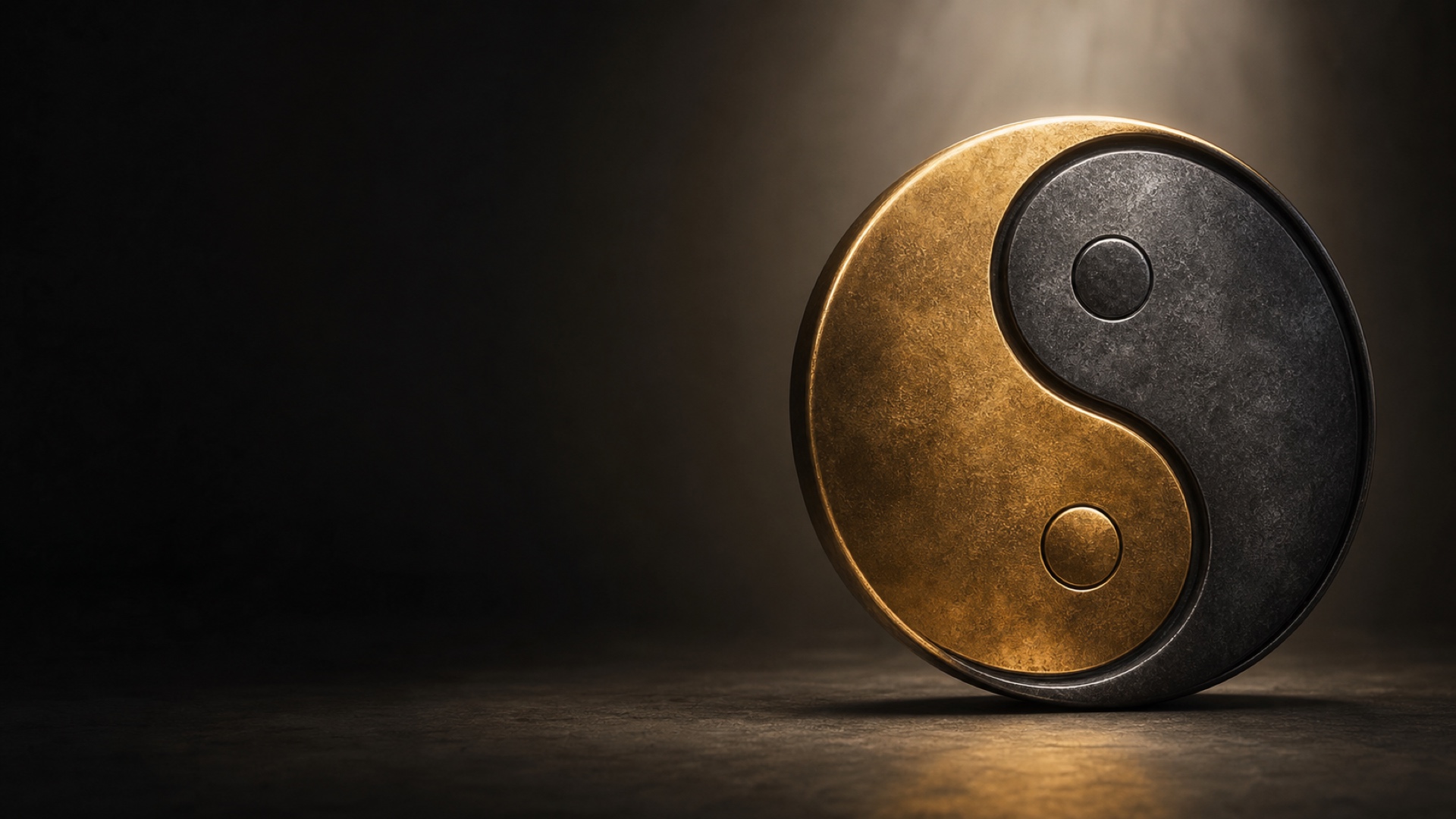
Yin and Yang – Meaning, History and Symbolism
Opposites do not exclude each other.
They need one another.
Yin and yang are among the best-known symbols in the world. The circle of two halves flowing into each other – light and dark, each carrying a dot of the other within it – stands for balance, change and the unity of apparent opposites.
Discover personal symbolism →Origin
The paired terms yin and yang are among the oldest concepts of Chinese culture. Originally the words referred to the shady (yin) and the sunny (yang) side of a hill – and thus to a pair of earth and sky, night and day, receiving and acting.
The two forces are not understood as adversaries but as two sides of the same whole. Neither is conceivable without the other, and each already carries the seed of its opposite within it.
Use in Jewelry
In jewelry, the yin-yang sign appears as a pendant, ring or bracelet – often as a clear, reduced circle with a curved dividing line. It is precisely its simplicity that makes it timeless.
It is worn as a sign of balance, serenity and the acceptance that every light comes with a shadow. It looks refined when the lines are precise and the form is calmly crafted.
Symbolic Meaning of Yin and Yang
Yin and yang remind us that a fulfilled life does not come without opposites. It is not the victory of one side over the other that creates peace, but their balance. What is strong today may yield tomorrow – and vice versa.
Opposites do not exclude each other. They need one another.
Balance
Two forces holding each other in equilibrium.
Opposites
Light and dark belong inseparably together.
Change
Everything flows – nothing remains in one state forever.
Unity
From two halves, a whole emerges.
Harmony
Perfect symmetry as an image of balance.
The Human Longing Behind the Symbol – Yin and Yang
People long for equilibrium. At the same time, we often experience life as an up and down between opposites: closeness and distance, tension and rest, joy and loss.
It is tempting to call the one good and the other bad – and to wish we could keep only the bright side.
Perhaps this is exactly what explains the special meaning of yin and yang. The sign reminds us that the dark side and the light side belong together.
Whoever accepts this no longer has to fight against one half of life. Yin and yang do not describe a world without shadow, but one in which light and shadow carry each other.
This is precisely why this symbol often accompanies people through phases in which control matters less than inner balance.
The History of Yin and Yang as a Symbol
The idea of complementary opposites is thousands of years old. Over many centuries, an early cosmological idea became one of the best-known symbols in the world.
Early Cosmology1
Yin and yang already appear in China's oldest writings.
Read more
Thinking in yin and yang reaches back to Chinese antiquity. Already in the I Ching (Book of Changes), the two forces are represented by two lines: an unbroken line for yang, a broken one for yin.1
From three of these lines each arise the eight trigrams, from six each the 64 hexagrams – a system of order with which change and the interconnections of the world can be described.1
From the very beginning, yin and yang were thus not fixed things but a relationship: the same thing can be yin in one relation and yang in another.
Heart of Daoism
In Daoism, yin and yang become foundational concepts.
Read more
In the classical Daoist texts, yin and yang stand for the interplay from which all things emerge. The Daodejing describes how everything carries yin and embraces yang, and how harmony arises through their interaction.2
In the Zhuangzi, too, yin and yang appear as forces whose interplay – mediated by qi, the life energy – creates balance and order.2
Importantly, neither of the two sides is considered superior. Yin and yang stand side by side, not one above the other.
The Taiji Diagram
The idea became an image: the Diagram of the Supreme Ultimate.
Read more
The familiar sign goes back to the diagram tradition of the Song era. In his treatise Taijitu shuo (Explanation of the Diagram of the Supreme Ultimate), the scholar Zhou Dunyi (1017–1073) described the origin of the cosmos from the interplay of yin and yang.3
His original diagram consisted of several circles set one above the other. The familiar, curved form with the two interlocking halves emerged only later, in the Ming era.3
Thus a philosophical idea became a memorable sign that lives on to this day.
Modern Times
Today, yin and yang is a sign known throughout the world.
Read more
The familiar black-and-white form with the two dots has spread far beyond China and is today mostly understood independently of any particular teaching – as a universal sign of balance and equilibrium.4
In design and jewelry, it is one of the most popular symbols of all.4
Its message remains the same: opposites belong together, and balance does not arise without them.
Yin and Yang in Jewelry
As a pendant, ring or bracelet, yin and yang is an expressive yet reduced motif. Its clear circle and calm, curved line make it a rewarding motif for precise craftsmanship.
Yin-Yang Pendant
The balance of forces, worn close to the heart.
Yin-Yang Ring
A calm sign of balance, carried around the finger.
Yin-Yang Bracelet
A fine companion for everyday life, close to every gesture.
From Symbol to Signature
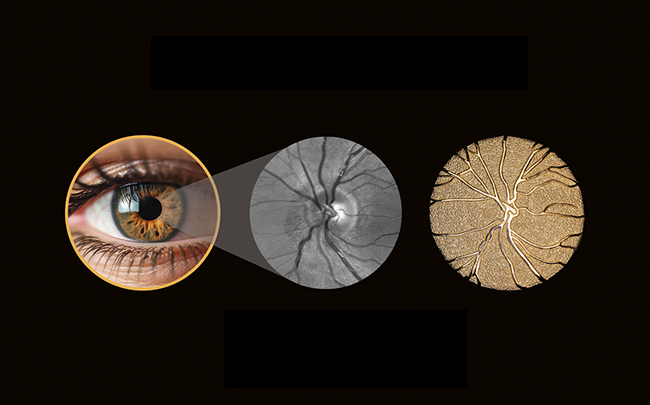
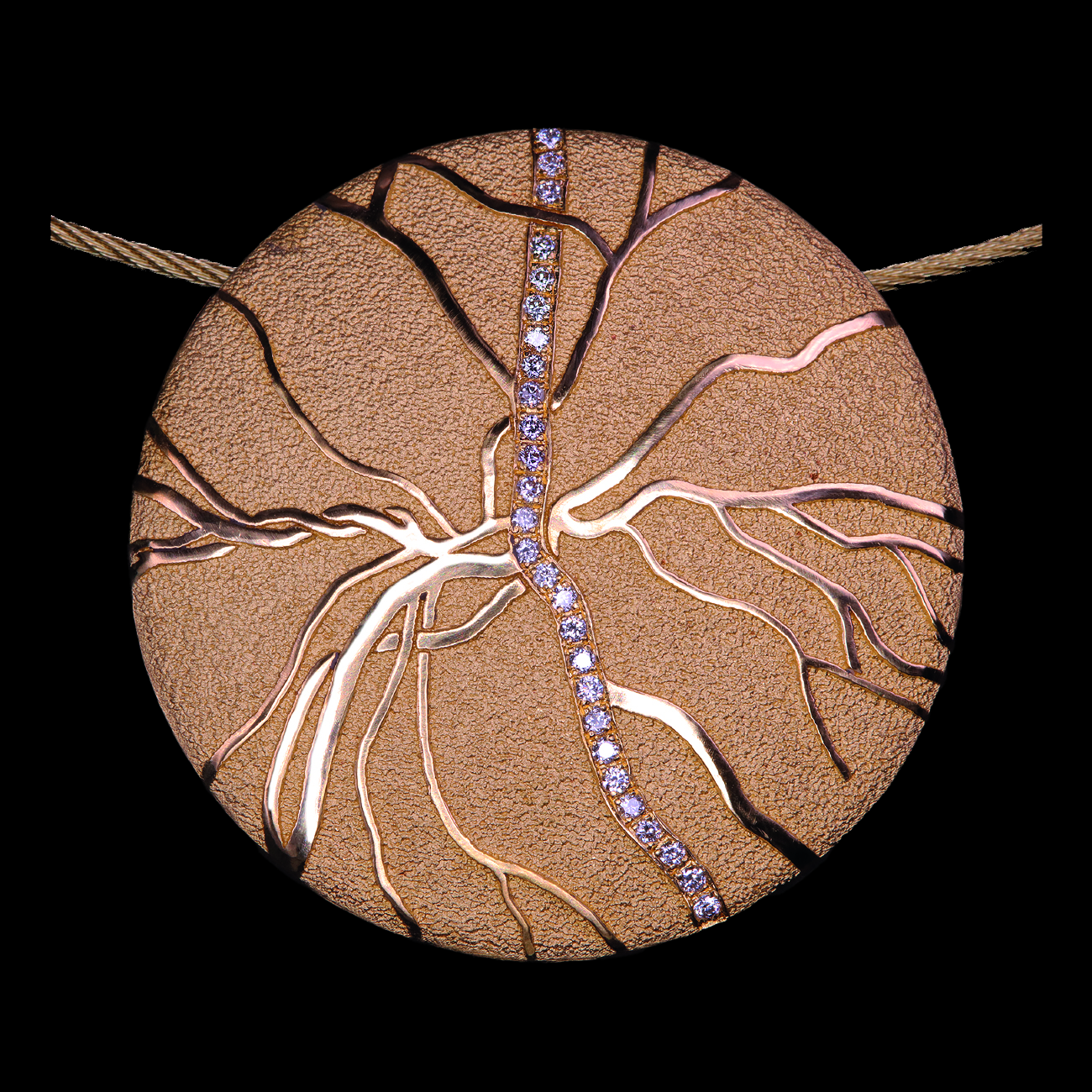
Yin and Yang are a universal sign. RETINA® goes further: instead of making a familiar symbol more personal, your own retina itself becomes an unmistakable signature.
The RETINA® Perspective
Yin and yang make a universal law visible: that opposites belong together. Yet the sign does not tell which opposites a particular person carries within – which experiences have shaped them and which balance they have found for themselves.
This is exactly where personal symbolism begins. Yin and yang give the wish for balance a form. A RetinaSignature can additionally show whose balance is meant. It points not to a general principle but to one single, unmistakable human being.
From Yin and Yang to the RetinaSignature
Yin and yang can make the wish for balance visible. A RetinaSignature can show which person – and which story – stands behind it.
Discuss personal jewelry →Related RETINA® Pages

Related Symbols


Frequently Asked Questions About the Yin Yang Meaning
What do yin and yang mean?
Yin and yang stand for complementary opposites: light and dark, stillness and movement, becoming and passing away. Together they form a balance in which each side carries the seed of the other within it.
What is the taiji sign?
Taiji (also taijitu) means roughly Diagram of the Supreme Ultimate. It is the technical term for the well-known yin-yang symbol: a circle divided into two halves by a curved line.
What do the two dots in the yin-yang sign mean?
The light dot in the dark half and the dark dot in the light half show that each force already contains a part of the other. Nothing is pure or absolute.
What does yin stand for, and what does yang stand for?
Traditionally, yin is associated with earth, night, stillness and the receptive, yang with sky, day, movement and the active. Both are of equal value and depend on each other.
Where does the yin-yang symbol come from?
The idea reaches back to Chinese antiquity and is already found in the I Ching. The familiar diagram goes back to the Song era and the scholar Zhou Dunyi (1017–1073); the curved form emerged later, in the Ming era.
Do yin and yang belong to Daoism?
Yes, yin and yang are central concepts of Daoism, where they describe the interplay from which all things emerge. The idea, however, is older than Daoism and runs through the whole of Chinese culture.
Are yin and yang a religion?
No. It is a philosophical principle and a symbol, not a creed. It can be worn without belonging to any particular religion.
Is one side better than the other?
No. Unlike good and evil, yin and yang know no hierarchy. Both sides are of equal value, and balance arises precisely from their interplay.
Is there a correct orientation of the symbol?
There is no universally binding rule. What matters is the balanced form in which the two halves embrace each other. In jewelry, the aesthetics of the setting often decide.
What do yin and yang mean in jewelry?
As a jewelry motif, it usually stands for balance, serenity and the acceptance that opposites are part of life. It suits people who value inner equilibrium.
Which material suits yin-yang jewelry?
The clear form works in many materials. Silver emphasizes the contrast, while gold and platinum give the sign a refined, timeless radiance. Two color tones can make yin and yang additionally visible.
Do yin and yang suit couple or partner jewelry?
Yes. Because the symbol shows two halves that complement each other, it is often worn as a sign of connectedness and balance between two people.
Which symbols go well with yin and yang?
The circle, the spiral and infinity are close to yin and yang: they extend the motif with wholeness, change and the ever-recurring cycle.
What is more personal than a yin-yang symbol?
Yin and yang stand for a universal idea of balance. A RetinaSignature additionally points to one specific human being and can therefore exist only once.
Sources and Further Reading
Show sources on the history of the symbol
1) On the basic meaning of yin and yang: Encyclopaedia Britannica: Yinyang
2) On yin and yang in Chinese philosophy and Daoism: Internet Encyclopedia of Philosophy: Yinyang (Robin R. Wang)
3) On the Diagram of the Supreme Ultimate and Zhou Dunyi: Journal of the History of Ideas: Zhou Dunyi’s Diagram of the Supreme Ultimate Explained (Project MUSE)
4) On yin and yang, the I Ching and the trigrams: Stanford Encyclopedia of Philosophy: Metaphysics in Chinese Philosophy


Jewelry That Makes Meaning Visible
A symbol can open a story. A RetinaSignature makes it personal. Discover jewelry that gives identity, memory and connection an unmistakable form.
Get in touch →