
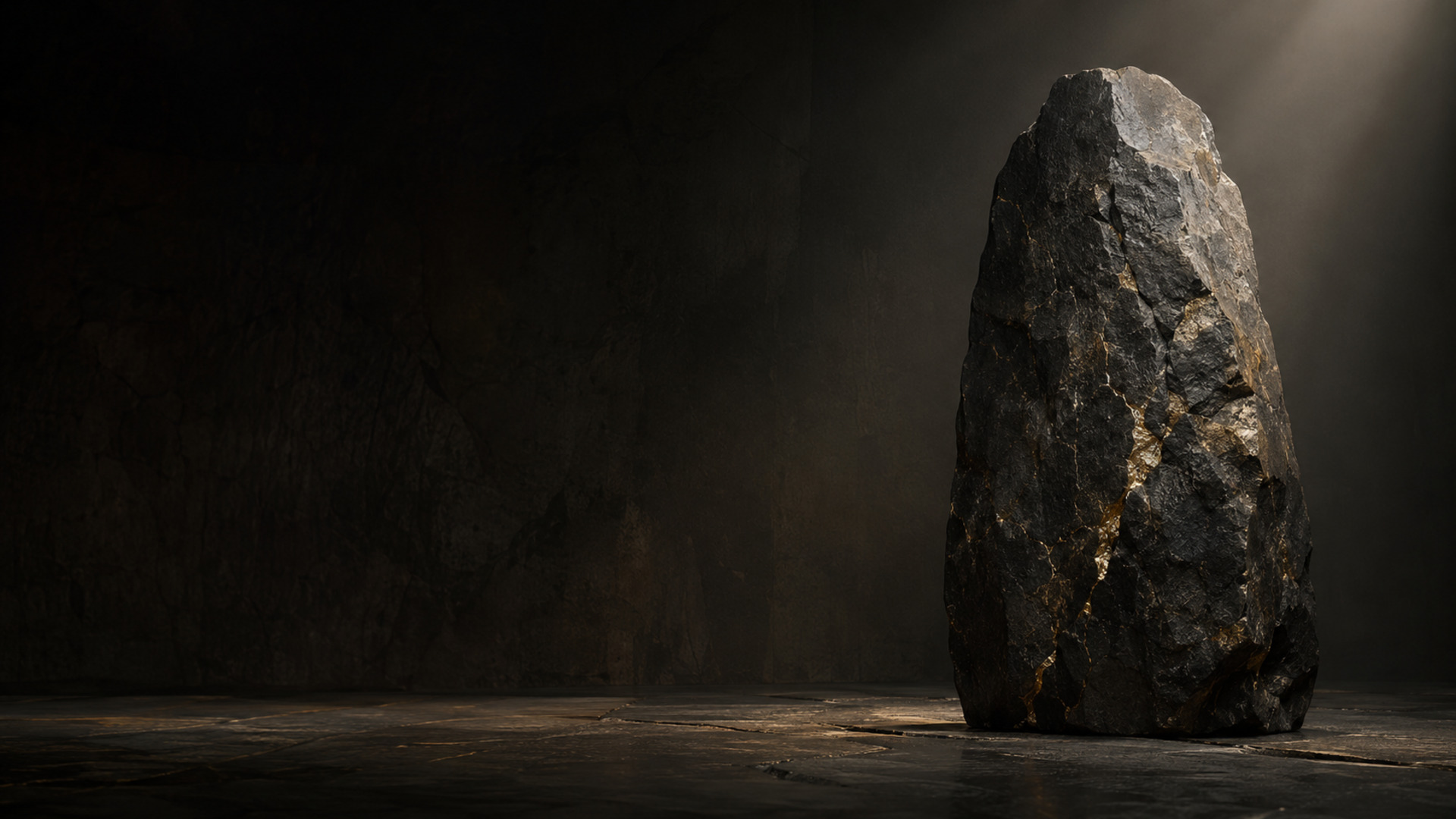
The Rock – Meaning, History and Symbolism
Some things pass.
Some things hold.
The rock is the oldest image of reliability: it was there before we arrived, and it remains when everything else changes. Whoever says “my rock” means a person who can be counted on.
Discover personal symbolism →Origin
Stone is the most durable material known to humankind. As early as the Neolithic period, people raised mighty stones – as signs meant to outlast their builders by millennia.
From this experience grew an image: what stands on rock stands secure. Few metaphors have written themselves so deeply into our language.
Use in Jewelry
In jewelry, the rock appears as a striking form, as a textured surface or as stone itself – left raw or precisely cut.
The motif is worn as a sign of inner strength and reliability. It feels precious when material and surface make the calm of the enduring tangible.
Symbolic Meaning of the Rock
The rock does not describe hardness but reliability: something that holds without pushing itself to the fore.
It is the symbol of quiet strength – and of the people who embody it.
Strength
Power that never becomes loud: the rock has defied wind and weather for millennia.
Stability
Whoever has a rock has a place to stand.
Constancy
The rock changes over millennia – not with moods.
Trust
On rock, one builds. It is the image of trust without reservation.
Calm
The composure of one who need not waver with every storm.
The Human Longing Behind the Symbol – Rock
People long for reliability – especially in a time when much changes quickly and little seems to last.
Relationships, work, places: much is in motion. And yet we wish for something that remains.
Perhaps that is precisely what explains the special meaning of the rock. It describes not hardness but reliability: something that holds when everything else is in motion.
Whoever calls a person “my rock” pays them one of the greatest compliments our language knows: You are there. You can be counted on.
That is exactly why the rock is often worn for people who give support – or as a reminder of one's own quietly grown strength.
The History of the Rock as a Symbol
From the megaliths of the Neolithic to the saying about the “rock in the surf”: the rock has accompanied humanity as a sign of what endures.1
Sacred Stones & Megaliths
Already in the Neolithic, people raised stones as lasting signs.
Read more
Menhirs, dolmens and stone circles like Stonehenge are among humanity's oldest monuments. Their builders chose stone because it remains.1
Many cultures revered striking rocks as sacred places – as the seat of powers greater than humankind.
The raised stone was the first monument: a sign against forgetting.
The Rock in Religion & Language
The rock became an image of unshakable trust.
Read more
In the Bible, the rock is a central image of reliability: the house built on rock withstands the storm. Peter receives his name from the Greek “petra”, the rock.2
Beyond religion, too, the rock became proverbial: the “rock in the surf” you can rely on.
Ever since, the rock has described less a place than an attitude – steadfastness when it matters.
Stone as Monument & Craft
Cut in stone, meaning became lasting.
Read more
Foundation stones, boundary stones and memorial stones show: where something is meant to remain, people reach for stone.
In the art of jewelry, gems were carved in stone for millennia – images and names that outlast generations.3
The carved stone unites both: the permanence of the material and the precision of the craft.
Modern Times
Today, the rock stands for groundedness and inner stability.
Read more
In an accelerated world, the rock has become a counter-image: groundedness, composure, steadfastness.
As a jewelry motif, it is worn for people who give support – partners, parents, friends.
Its message remains: not everything has to move. Some things may simply hold.
The Rock in Jewelry
As a pendant, ring or bracelet, the rock becomes a quiet companion – a sign of support you can touch.
Rock Pendant
A piece of constancy, worn close to the heart.
Rock Ring
Striking form, calm presence: strength for everyday life.
Rock Bracelet
A tangible sign for the person who gives support.
From Symbol to Signature
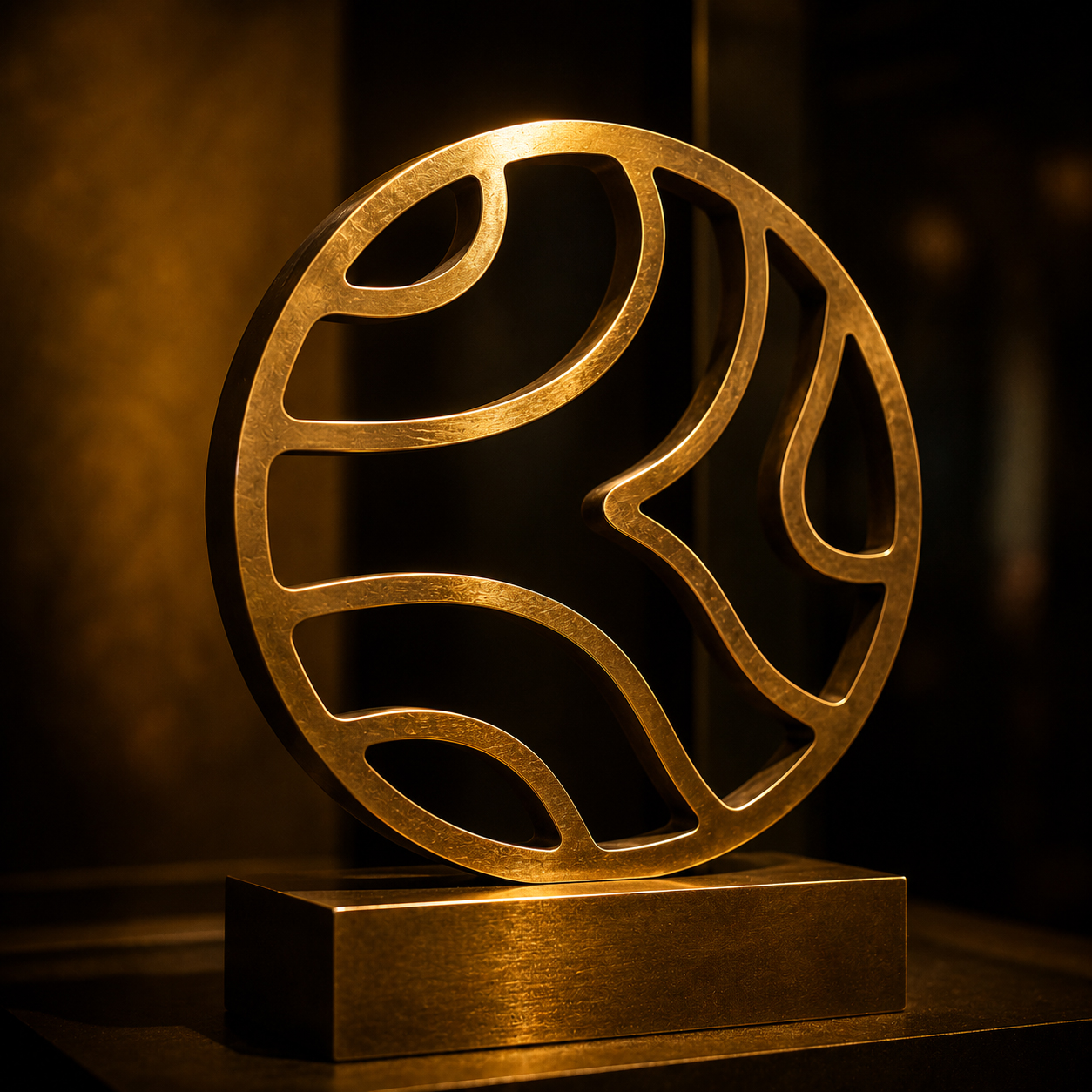
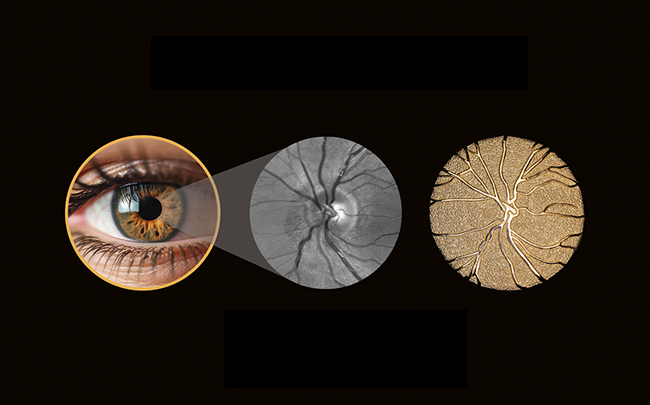
The rock is a universal sign. RETINA® goes further: your own retina becomes an unmistakable signature – as constant as a promise.
The RETINA® Perspective
The rock makes reliability visible. Yet it does not tell who this rock is – which person gave support, which experiences made someone strong. It answers the question: What can I build on?
This is exactly where personal symbolism begins. The rock gives support a form. A RetinaSignature shows which person gives that support. Thus a universal sign becomes a piece of jewelry that belongs to one story alone.
From the Rock to the RetinaSignature
The rock can make support and strength visible. A RetinaSignature shows which person stands behind them – as unmistakable as their retina.
Discuss personal jewelry →Related RETINA® Pages


Related Symbols
Frequently Asked Questions About the Rock Symbol Meaning
What does the rock mean as a symbol?
The rock stands for strength, support, constancy and trust – for what remains when everything else is in motion.
Where does the rock's symbolism come from?
From humanity's oldest experience with stone: it endures. Already in the Neolithic, people raised menhirs and stone circles as lasting signs.
What does the “rock in the surf” mean?
The saying describes a person who stands firm even in stormy times and gives support to others – the rock symbol turned into language.
What role does the rock play in the Bible?
There, the rock is a central image of reliability: the house built on rock withstands the storm, and Peter receives his name from the Greek word for rock.
What does the rock mean in jewelry?
In jewelry, the rock stands for inner strength, groundedness and for people who can be counted on. It is often worn in gratitude to someone who gives support.
What is the difference between the rock and the mountain as symbols?
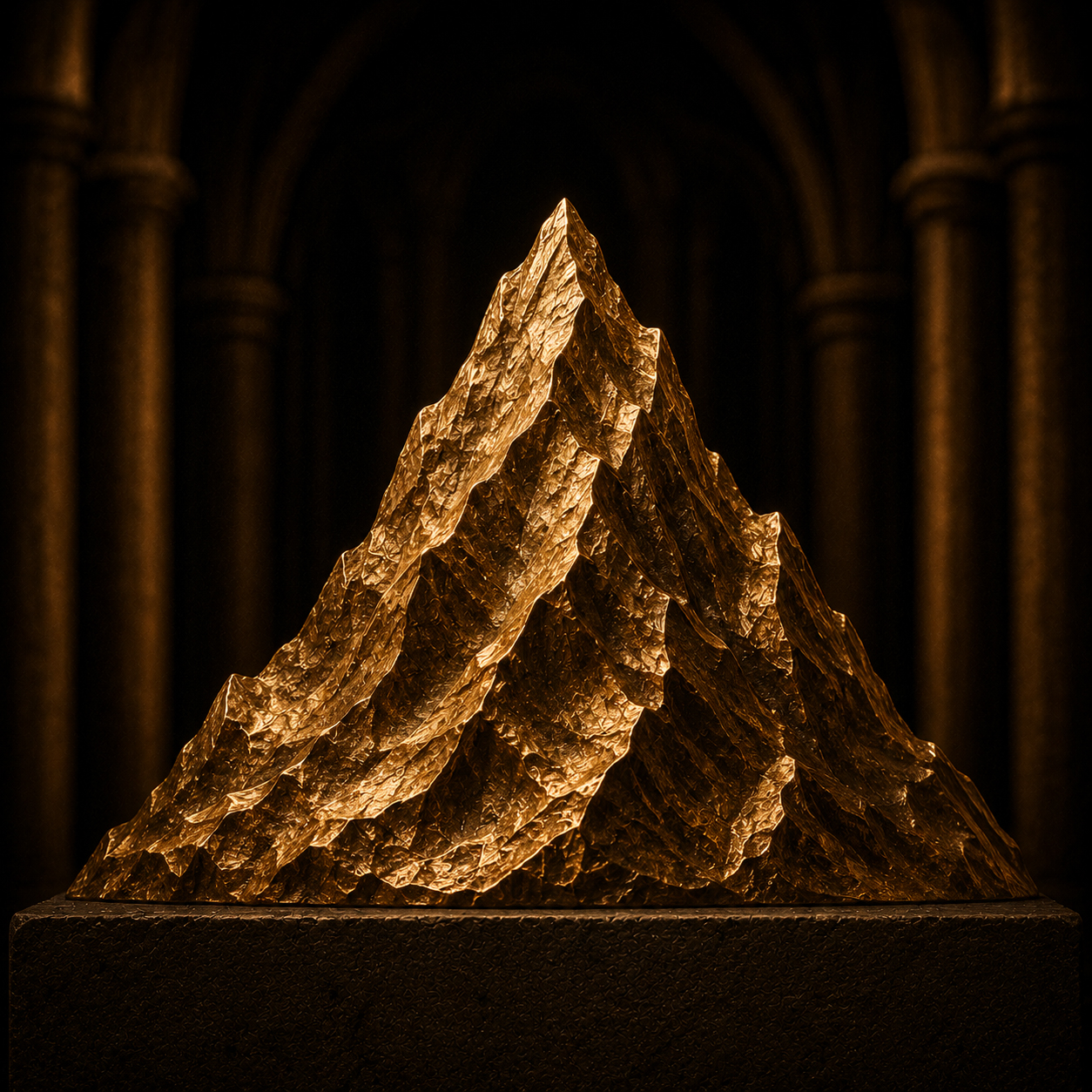
The mountain stands more for goals, ascent and perspective, the rock for support and constancy. The mountain challenges; the rock holds.
Does the rock suit memorial jewelry?
Yes. As a sign of what endures, it is well suited to remembering a person who gave support – stone has always been the material of remembrance.
Who is rock jewelry suited for?
For people who wish to express inner strength and composure – or who want to thank someone who is their rock.
Is the rock suitable as a gift?
Yes, especially as a quiet compliment: for a partner, for parents or for a friend who could always be counted on.
Which material suits rock jewelry?
Platinum underscores the motif's constancy, rich gold its warmth. Textured, matte surfaces also match the calm of the rock.
Is the rock more feminine or masculine?
Neither. Depending on the design, the rock appears bold or delicate – quietly grown strength knows no gender.
How does the rock motif feel modern?
As a reduced, almost sculptural form with a deliberate surface – less depiction, more feeling for the material. This keeps the motif timeless.
Which symbols pair well with the rock?
The mountain, the anchor and the tree extend the rock with goals, hope and growth – four images of support for different situations in life.
How does the rock become more personal?
Through a personal layer: an engraving, a date – or a RetinaSignature that connects the universal sign with a specific person.
What is more personal than a rock symbol?
The rock stands for a universal idea of support. A RetinaSignature additionally points to a single person – for instance the one who gives support – and therefore exists only once.
Sources and Further Reading
Show sources on the history of the symbol
1) On megalithic culture and raised stones: Encyclopaedia Britannica: Megalith
2) On the rock as a biblical image (Matt 7:24-27; Matt 16:18): Matthew 7, BibleServer (Luther Bible)
3) On the art of stone carving (engraved gems): The Metropolitan Museum of Art: Engraved Gems


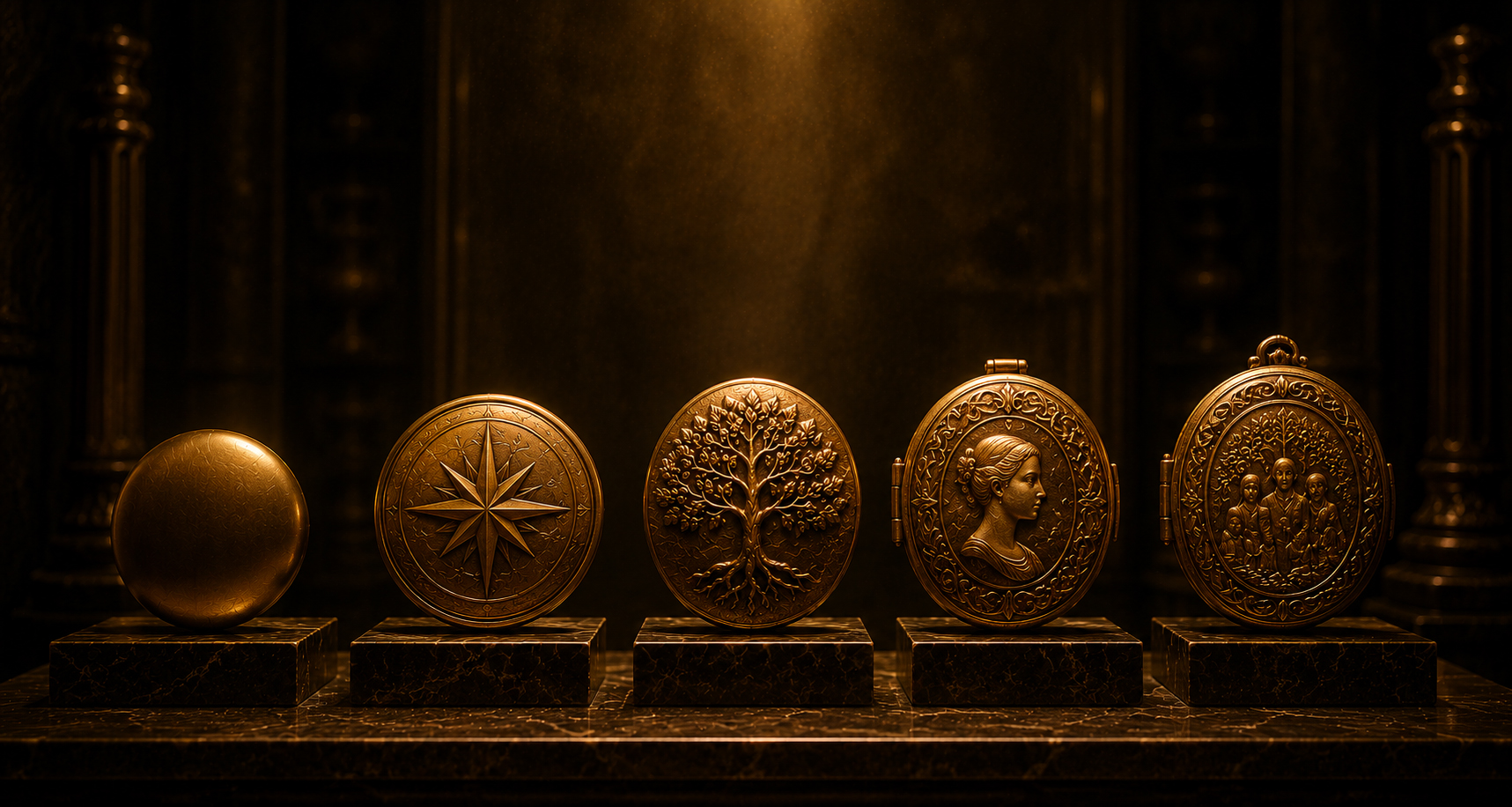
Jewelry That Makes Meaning Visible
A symbol can open a story. A RetinaSignature makes it personal. Discover jewelry that gives identity, memory and connection an unmistakable form.
Get in touch →