
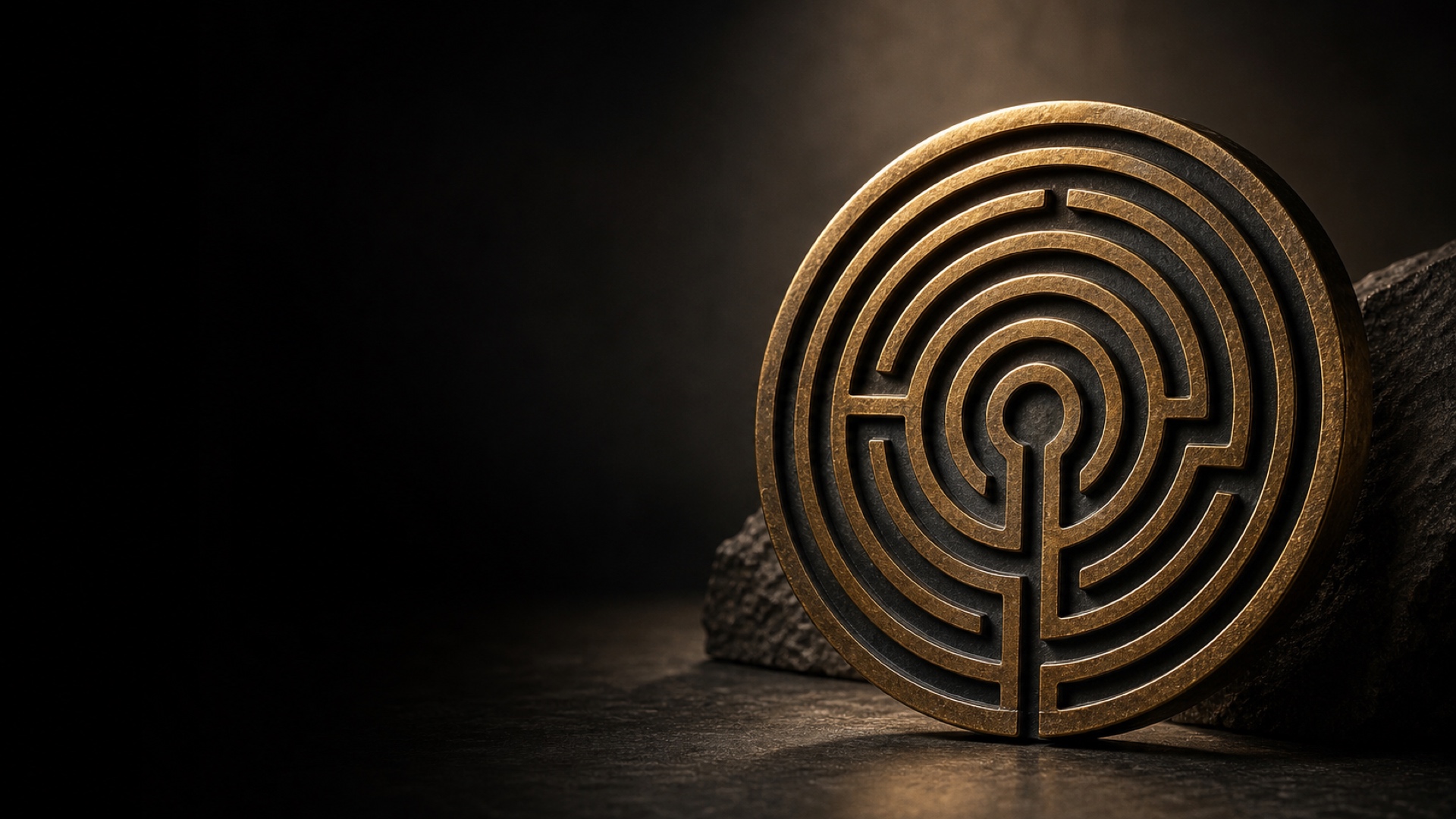
Labyrinth – Meaning, History and Symbolism
Not every detour
is a wrong turn.
The labyrinth is one of humanity's oldest path symbols. It stands for searching, orientation and the experience that important paths rarely run in straight lines.
Discover personal symbolism →Origin
The most famous labyrinth in European culture is linked to the Greek legend of Theseus and the Minotaur. Even there, the motif became an emblem of trial, courage and insight.
Yet the labyrinth is older and more widespread: as a path figure with a single winding course, it appears on coins, rock carvings and later in the floors of great cathedrals. Its message remained remarkably constant: the path itself has meaning.
Use in Jewelry
As a jewelry symbol, the labyrinth stands for personal development, life paths and the search for orientation. Its intricately nested lines make for a graphically strong, finely engraved motif.
It is worn by people who have lived through a meaningful change – or who wish to remember a phase in which patience, trust and perseverance mattered most.
Symbolic Meaning of the Labyrinth
The labyrinth promises no easy answers. It stands for orientation and the search for meaning, for patience and perseverance, for life's transitions – and for the path to oneself. Its symbolism arises not from the destination alone, but from the way there.
Whoever looks at a labyrinth sees complexity. Whoever follows it discovers structure.
Orientation
Trusting the path, even when its course is not yet visible.
Path Inward
Step by step to your own center.
Patience
Perseverance when the path is longer than expected.
Insight
Meaning that often reveals itself only at the end of the path.
Transition
In, to the center, out again – transformed.
The Human Longing Behind the Symbol – Labyrinth
People long for clarity. We want to know which path is the right one, and we hope for unambiguous answers.
Life rarely meets this expectation. Important developments unfold by way of detours: relationships do not follow a plan, careers change course, goals shift.
The labyrinth makes this experience visible. Orientation does not always mean knowing the shortest way – sometimes it means trusting the path.
Many experiences feel chaotic in the moment. Only with distance does it become clear what individual events meant and how they are connected.
The labyrinth reminds us that insight often stands not at the beginning of a path, but at its end.
The History of the Labyrinth as a Symbol
From Minoan Crete through medieval cathedrals to modern mindfulness practice: the labyrinth has accompanied humanity for millennia as an image of the path.1
Antiquity
The legend of Theseus made the labyrinth immortal.
Read more
According to Greek legend, King Minos of Crete had the labyrinth built by the master builder Daedalus to house the Minotaur. Theseus found his way out again with Ariadne's thread.1
The motif was famous beyond Crete as well: ancient authors described a vast Egyptian labyrinth at Hawara as a wonder of their world.2
Even in antiquity, the labyrinth stood for trial, courage and the way through what seems impenetrable.
Middle Ages
In Gothic cathedrals, the labyrinth became a pilgrimage path.
Read more
In many Gothic cathedrals, labyrinths were set into the floor – the most famous around 1200 in Chartres, with a single path to the center.3
They served as symbolic pilgrimage paths: whoever walked the path in prayer completed a journey in miniature – toward the center, toward contemplation, toward God.
The labyrinth thus became a walkable image of the path of faith.
Image of the Path of Life
Many cultures saw in the labyrinth the way to insight.
Read more
Whether as rock carving, floor mosaic or turf labyrinth: in many traditions, the labyrinth was understood as an image of the path of life.
The way to the center was seen as a path to insight, wisdom or inner clarity – and the way out as a return to life, transformed by the experience.
Unlike a maze, the classical labyrinth has no dead ends: it demands not cleverness, but trust.
Modern Times
Today the labyrinth stands for development and the search for meaning.
Read more
In the present day, the labyrinth is often read as a symbol of personal development and a lifelong search for meaning. Walkable labyrinths are enjoying a renaissance as places of stillness.
In jewelry and design, its nested geometry is worn as a sign of one's own, far from straight path.4
Its message remains: the detour is part of the path.
The Labyrinth in Jewelry
As a pendant, ring or engraving, the labyrinth becomes a graphically strong, quiet sign of one's own path. It unfolds its effect especially in precise, reduced execution.
Labyrinth Pendant
The whole path in a single form, worn close to the heart.
Labyrinth Ring
The winding line, guided around the finger.
Labyrinth Bracelet
Your own path, close to every gesture of daily life.
From Symbol to Signature
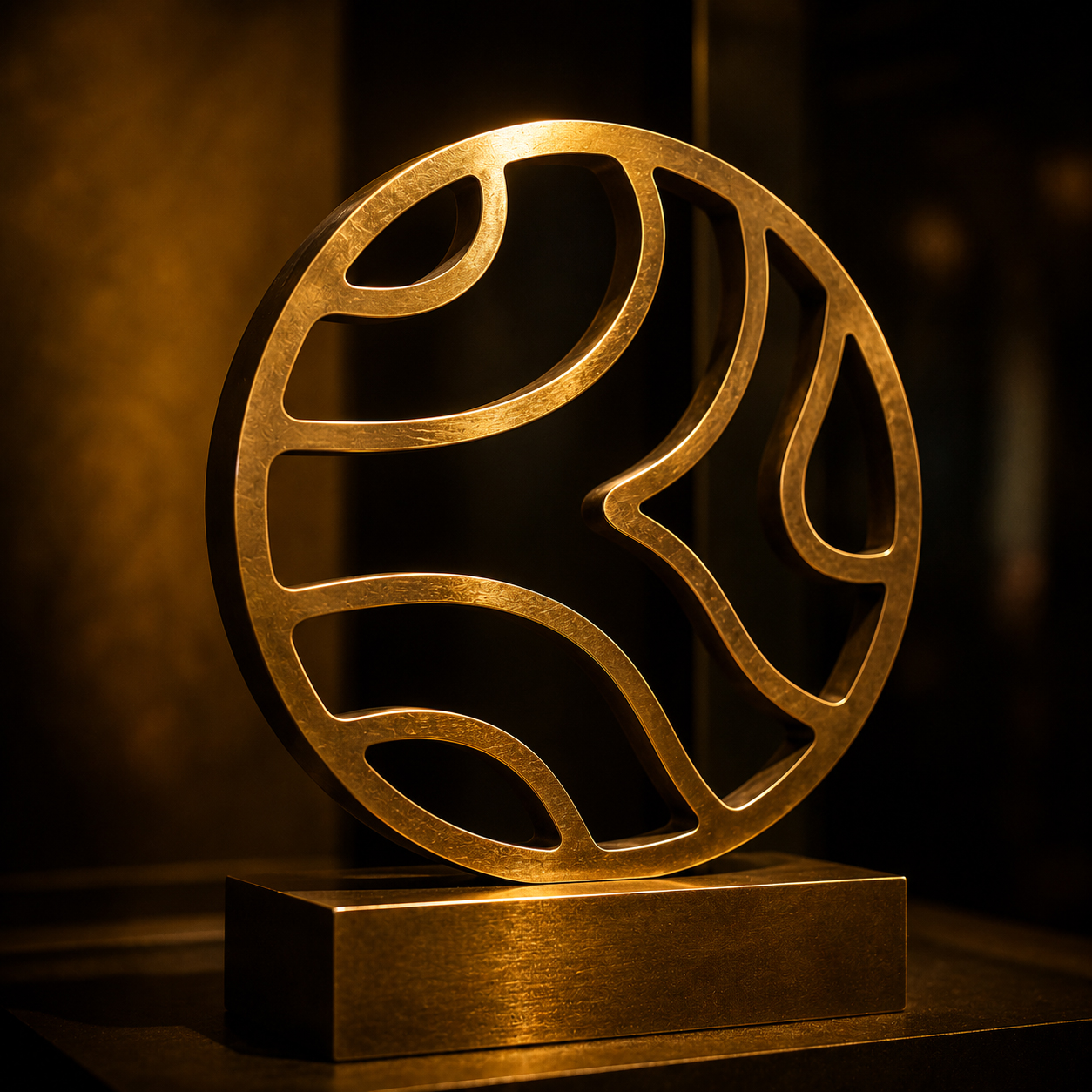
The labyrinth is a universal sign. RETINA® goes further: instead of making a familiar symbol more personal, your own retina itself becomes an unmistakable signature.
The RETINA® Perspective
Looking back, many life paths seem astonishingly logical. While we walk them, they often feel quite different. The labyrinth answers the question: how do I find my path? But it does not yet say which path was yours.
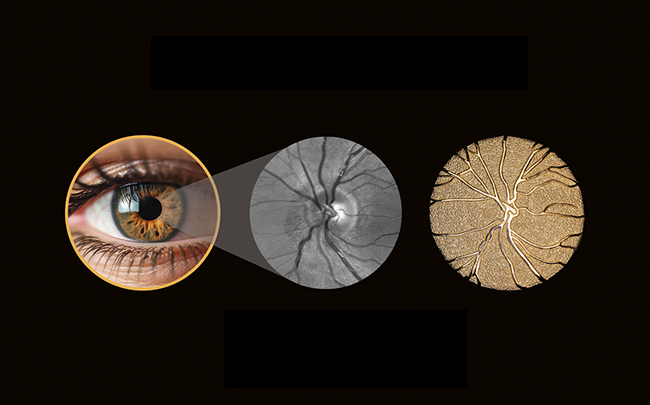
This is exactly where personal symbolism begins. The labyrinth gives the path a form. A RetinaSignature connects this form with a concrete human being. There is an interesting, quiet kinship here: the retina's pattern, too, is a fine web of paths that exists only once.
From the Labyrinth to the RetinaSignature
A labyrinth can make the path visible. A RetinaSignature can show which person has walked it.
Discuss personal jewelry →Related RETINA® Pages


Related Symbols


Frequently Asked Questions About the Labyrinth Symbol Meaning
What does the labyrinth mean as a symbol?
The labyrinth stands for the path of life, searching, inner development and insight. It reminds us that important paths rarely run in straight lines.
What is the difference between a labyrinth and a maze?
A classical labyrinth has a single path without dead ends that leads reliably to the center. A maze wants to confuse – the labyrinth wants to guide.
Where does the labyrinth symbol come from?
It became famous through the Greek legend of Theseus and the Minotaur on Crete. Labyrinth figures, however, are older and are found in many cultures.
What does the labyrinth mean in cathedrals?
In Gothic cathedrals such as Chartres, floor labyrinths served as symbolic pilgrimage paths: the way to the center stood for the path of faith and inner contemplation.
What does a labyrinth mean in jewelry?
Labyrinth jewelry usually stands for one's own path in life, for patience and for developments whose meaning becomes clear only in hindsight.
What does the center of the labyrinth symbolize?
The center stands for insight, clarity or one's own core – the destination of a path that leads there by way of detours. Afterward begins the way back into life.
Is the labyrinth a spiritual symbol?
It can be read spiritually – as a pilgrimage or meditation path. Just as well, it stands in an entirely worldly sense for life paths and personal development.
What is Ariadne's thread?
In the Greek legend, Ariadne gave Theseus a thread with which he found his way back out of the labyrinth. To this day, it stands for what steadies us on difficult paths.
Does the labyrinth suit memorial jewelry?
Yes. It is especially suited to turning points and phases of life in which patience, trust and perseverance mattered.
Which material suits labyrinth jewelry?
Gold and platinum render the fine, nested lines precisely. As an engraving, the labyrinth appears especially fine and rich in detail.
Is the labyrinth more feminine or masculine?
Neither. As a geometric path figure, it is an open symbol and appears graphically austere or playful depending on the execution.
How does the labyrinth look modern rather than playful?
It looks modern as a reduced, precise line drawing – for example as a fine engraving with clear geometry instead of decorative ornament.
Does the labyrinth mean the same as a tattoo and in jewelry?
The core meanings are similar, but jewelry involves no permanent commitment and can be passed on – as the heirloom of a story.
Which symbols go well with the labyrinth?
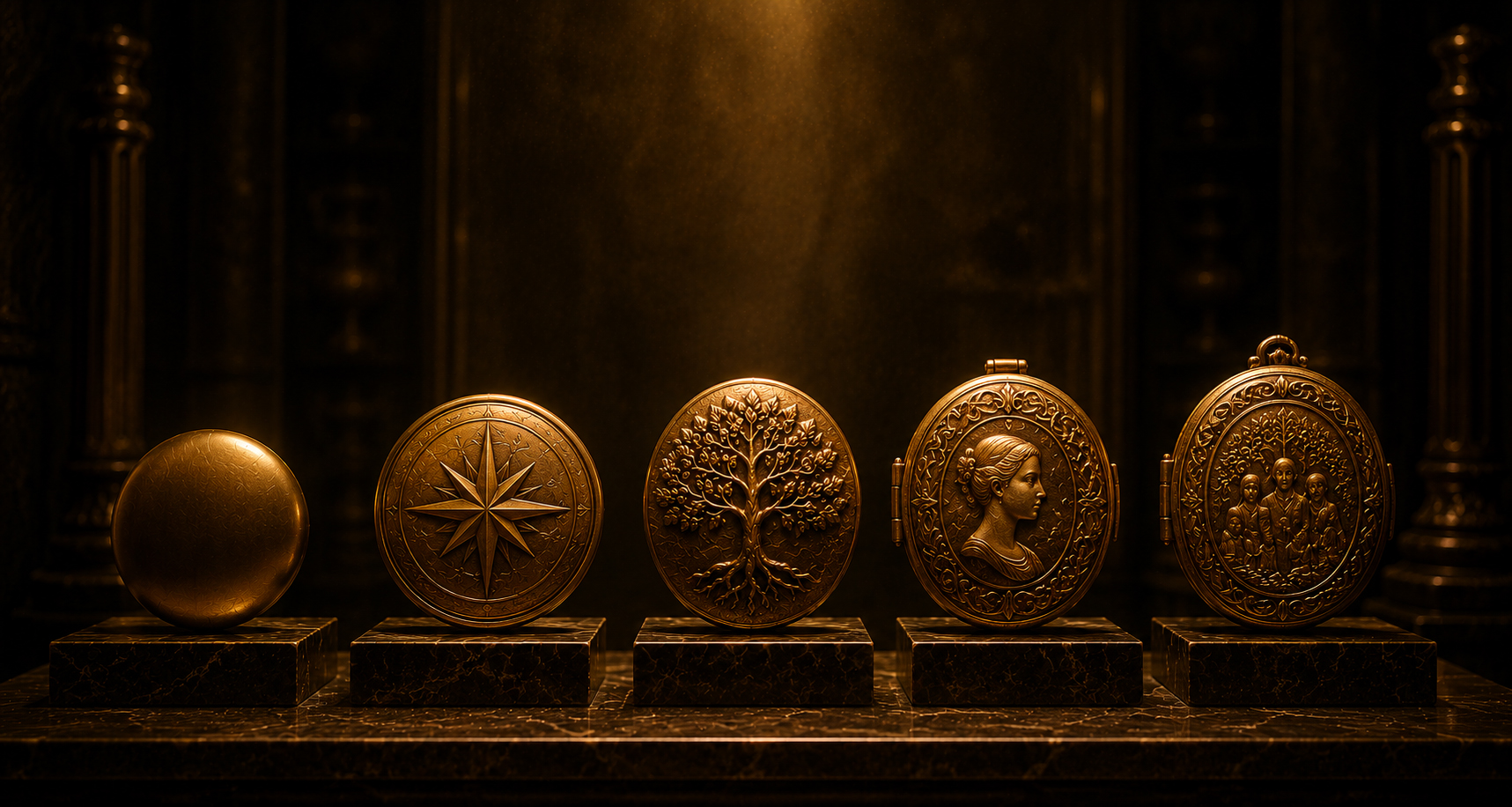
The spiral, the circle and the star extend the labyrinth with development, wholeness and orientation.
What is more personal than a labyrinth?
The labyrinth stands for a general idea of the path. A RetinaSignature additionally points to a concrete human being and can therefore exist only once.
Sources and Further Reading
Show sources on the history of the symbol
1) On the Cretan labyrinth and the legend of Theseus: Encyclopaedia Britannica: Cretan labyrinth
2) On the Egyptian labyrinth of Hawara: Encyclopaedia Britannica: Egyptian labyrinth
3) On the labyrinth of Chartres Cathedral: Cathédrale de Chartres: The Labyrinth
4) On the history of jewelry and symbolic motifs: Victoria and Albert Museum: A History of Jewellery


Jewelry That Makes Meaning Visible
A symbol can open a story. A RetinaSignature makes it personal. Discover jewelry that gives identity, memory and connection an unmistakable form.
Get in touch →