
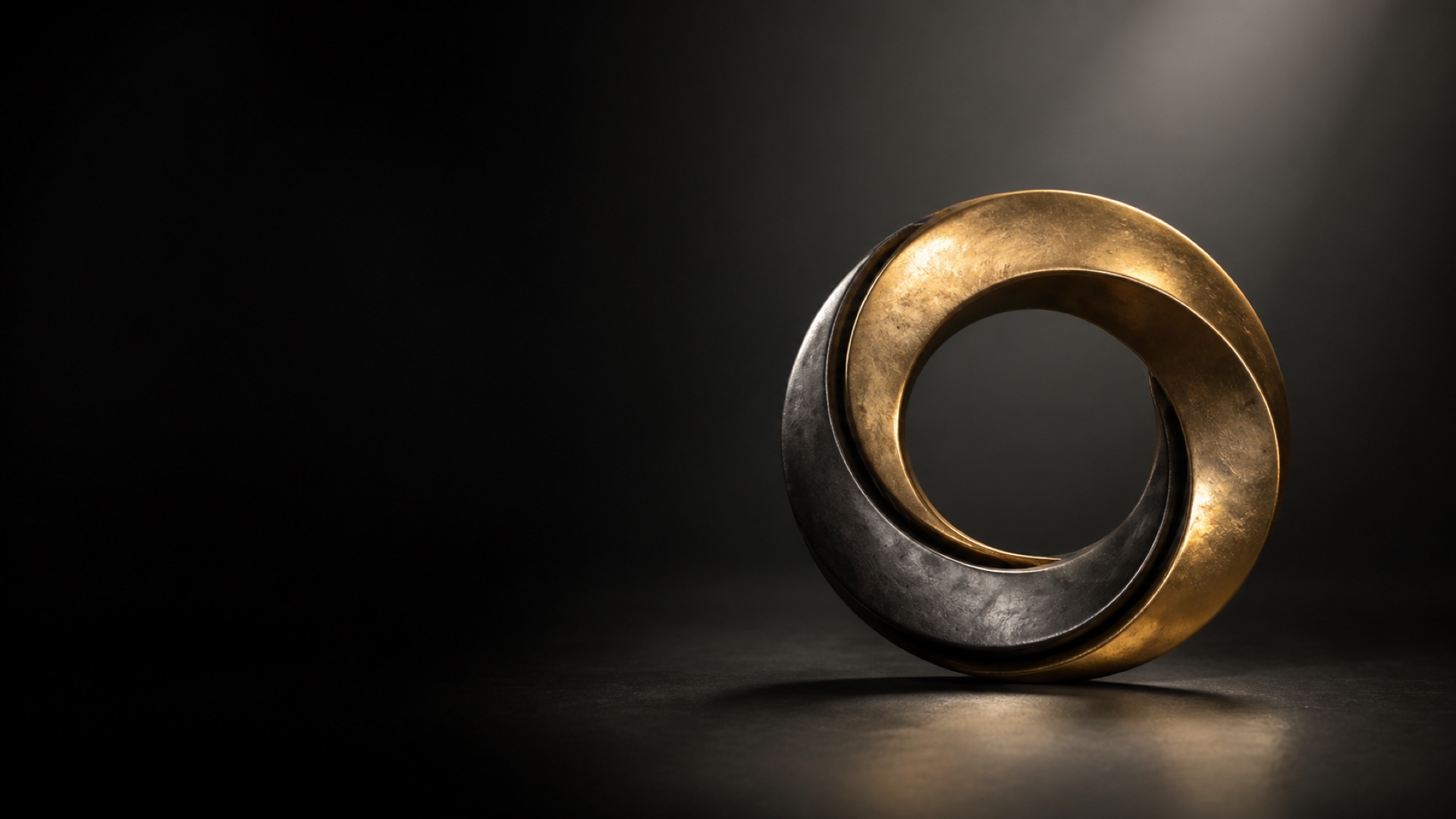
Circle – Meaning, History and Symbolism
Some things have no beginning
and no end.
The circle is one of humanity's oldest and most universal symbols. Without beginning or end, it became an emblem of connection, return and the great interrelations of life.
Discover personal symbolism →Origin
The symbolism of the circle arose from observing nature: sun and moon, the seasons, the cyclical movements of the sky. Wherever people recognized order and return, the circle appeared.
Prehistoric cultures were already building circular sites and carving circle signs into stone. Early on, the circle thus became the image of an order greater than any single person.
Use in Jewelry
Hardly any form appears more often in jewelry than the circle. Rings, pendants and medallions have drawn on its symbolism for centuries – often with the idea of connection at their center.
A circle has no preferred direction; no point matters more than another. That is why, in jewelry, it stands for relationships, community and continuity.
Symbolic Meaning of the Circle
The circle unites two ideas that seem contradictory at first glance: it is perfect and closed – and at the same time without beginning or end. It stands for wholeness and unity, for protection and security, for return and infinity.
Much of what matters to us is never truly finished.
An image of the entire cosmos in a single form.
A form that lacks nothing and carries nothing in excess.
From two halves, a whole emerges.
Everything belongs to the same form – nothing stands alone.
Protection
The closed circle as an image of security.
Return
Seasons, cycles and everything that comes back.
Infinity
No beginning, no end – a path without a final point.
The Human Longing Behind the Symbol – Circle
Much of our everyday life runs in straight lines: we plan, decide and pursue goals. At the same time, we experience that the things that matter rarely follow a straight line.
Relationships grow over years. Memories return. Experiences often reveal their meaning only in hindsight.
The circle reminds us that not everything moves toward an end. Some things unfold their meaning only with time – and many of the most important are never truly finished.
Love, friendship, learning and personal growth follow no clear endpoint. They accompany us throughout our lives.
Perhaps that is the special power of the circle: it conveys the feeling of being part of something greater.
The History of the Circle as a Symbol
From the stone circle through the cosmic orders of antiquity to the rose window: the circle has accompanied humanity as a symbol for as long as people have made signs.1
Early History
Prehistoric cultures built monumental circular sites.
Read more
As early as around 3000 BC, circular monuments such as Stonehenge arose – stone circles whose alignment is associated with the movements of sun and moon.1
Sun, moon and the cycles of nature made the circle an early symbol of order and return.
Whoever drew a circle created a world of their own, a protected one – a gesture that runs through many cultures.
Antiquity
The circle became the image of cosmic order.
Read more
In many ancient cultures, the circle was linked to cosmic connections: the movements of the celestial bodies seemed to reveal an order greater than any single person.
For Greek thinkers, the circle was the most perfect of all forms – the very image of completeness.
This idea shaped astronomy, philosophy and art for centuries.
Sacred Art
Halos and rose windows took up the circle.
Read more
Religious art used the circle as a sign of divine perfection: halos, the rose windows of Gothic cathedrals and sacred floor plans are built upon it.
In Islamic art, too, the circle is the starting point of complex geometric patterns – an image of the unity from which all diversity emerges.2
The circle thus became the quiet foundational form of the sacred.
Modern Times
Today, the circle stands for wholeness and connection.
Read more
In the present day, the circle is often understood as a symbol of wholeness, personal growth and connection.
In jewelry it is everywhere – from the simple ring to the circle pendant that makes relationships and continuity visible.3
Its meaning remains astonishingly current because it touches questions that concern people in every era.
The Circle in Jewelry
Rings, pendants and medallions have drawn on the symbolism of the circle for centuries. Its simple perfection makes it the most timeless of all jewelry motifs.
Circle Pendant
The perfect form, worn close to the heart.
Ring
The circle in its most lived form – a sign of connection.
Circle Bracelet
The closed circle, close to every gesture of daily life.
From Symbol to Signature
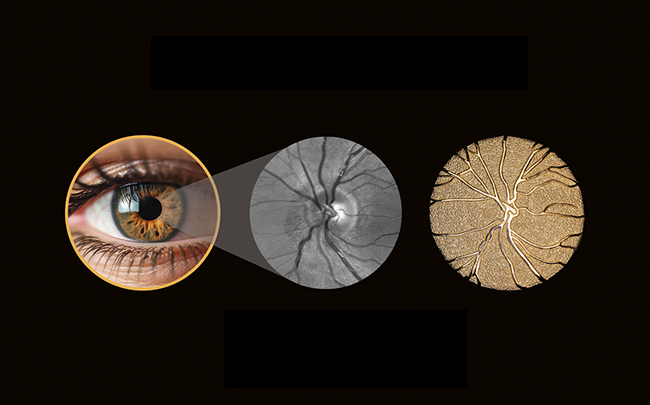
The circle is a universal sign. RETINA® goes further: rather than making a familiar symbol more personal, your own retina itself becomes an unmistakable signature.
The RETINA® Perspective
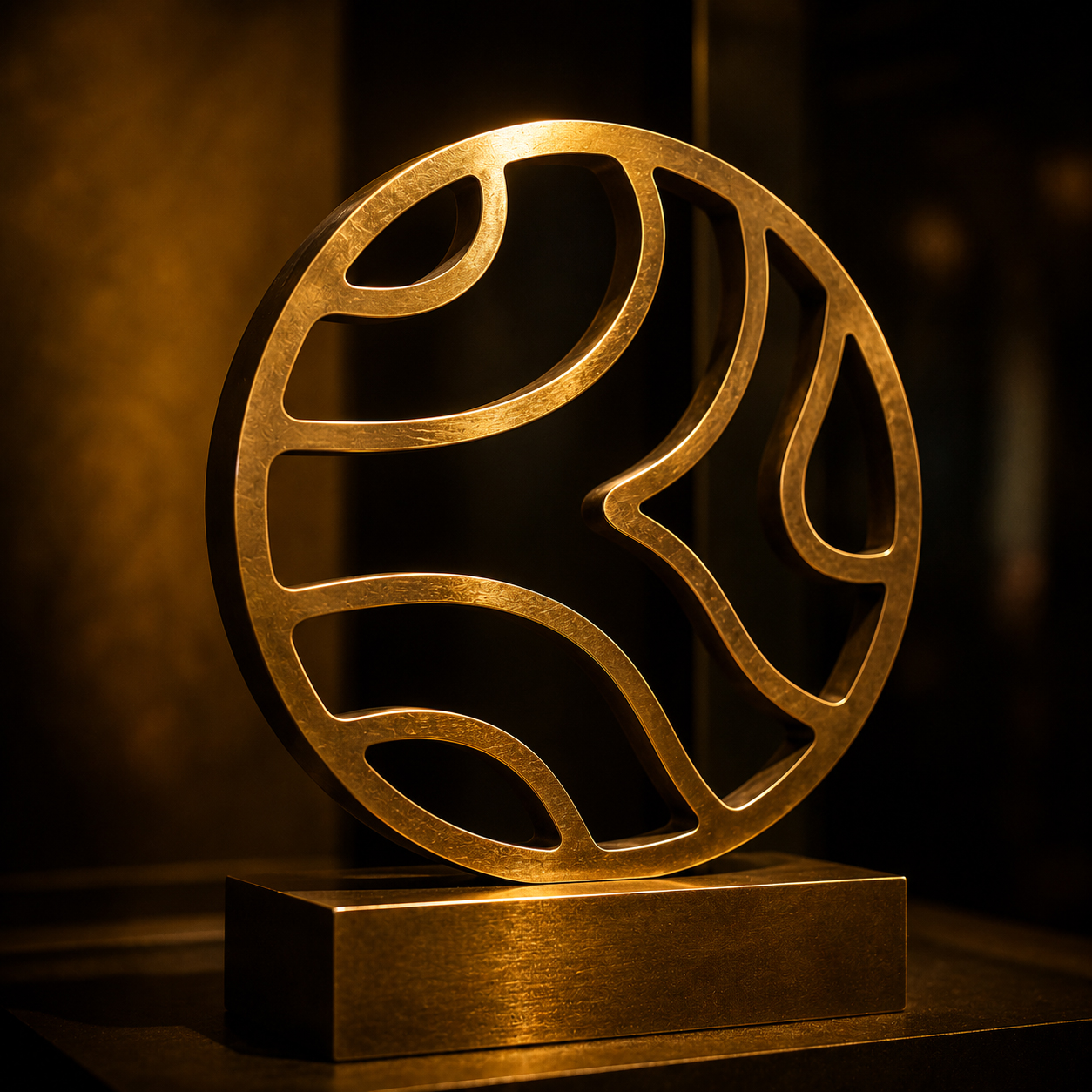
The circle answers a quiet question: what holds everything together? It can embody wholeness, unity and connection. Yet it does not say whose connection is meant.
This is exactly where personal symbolism begins. The circle gives connection a form. A RetinaSignature links this form to one specific person. There is a quiet kinship here: every retina pattern is round by nature – a circle that exists only once.
From the Circle to the RetinaSignature
A circle can make connection visible. A RetinaSignature can show which person stands at its center.
Discuss personal jewelry →Related RETINA® Pages


Related Symbols


Frequently Asked Questions About the Circle Symbol Meaning
What does the circle mean as a symbol?
The circle stands for wholeness, unity, completeness and infinity. Because it has neither beginning nor end, it symbolizes connection and the cycle of life.
Why is the circle such a universal symbol?
Because it appears everywhere in nature: sun, moon, seasons and the cycles of life. Nearly every culture has therefore linked it to order and return.
What does a circle mean in jewelry?
It usually stands for connection, continuity and wholeness. Rings, circle pendants and medallions are among the most timeless forms of jewelry.
Why is the wedding ring round?
The closed circle without beginning or end has been seen since antiquity as an image of lasting connection – a symbolism that lives on in the wedding ring to this day.
What is the difference between the circle and the infinity symbol?
Both stand for the endless. The circle additionally emphasizes wholeness and closure; the figure eight on its side, continuous movement without end.
What is the difference between the circle and the spiral?
The circle returns exactly to its starting point; the spiral moves toward or away from the center – it combines return with development.
What does the circle mean in religious art?
Religious art uses the circle as a sign of divine perfection – from the halo to the rose windows of Gothic cathedrals.
Is the circle a protective symbol?
Yes, in many traditions. A drawn circle marks a protected space – an image that runs through numerous cultures and rituals.
Does the circle suit memorial jewelry?
Yes. As a sign of connection without end, it is especially suited to relationships and memories meant to last.
Which material suits circle jewelry?
Gold and platinum give the simple form weight and permanence. With the circle in particular, precision of execution counts more than any ornament.
Is the circle more feminine or masculine?
Neither. The circle is the most open of all forms and appears delicate or bold depending on its execution. Proportion and material are what matter.
How does the circle look modern rather than arbitrary?
It looks modern in precise, reduced execution – a perfect line, a deliberate detail. Its power lies in clarity, not in ornamentation.
Does the circle mean the same as a tattoo and in jewelry?
The core meanings are similar, but jewelry involves no permanent commitment and can be passed on – as the heirloom of a story.
Which symbols pair well with the circle?
Infinity, sun, spiral and mandala extend the circle with eternity, light, development and center.
What is more personal than a circle?
The circle stands for a universal idea of wholeness. A RetinaSignature additionally points to one specific person – and is round by nature, yet exists only once.
Sources and Further Reading
Show sources on the history of the symbol
1) On prehistoric circular sites: Encyclopaedia Britannica: Stonehenge
2) On the circle as the basic form of geometric ornament: The Metropolitan Museum of Art: Geometric Patterns in Islamic Art
3) On the history of jewelry and symbolic motifs: Victoria and Albert Museum: A History of Jewellery


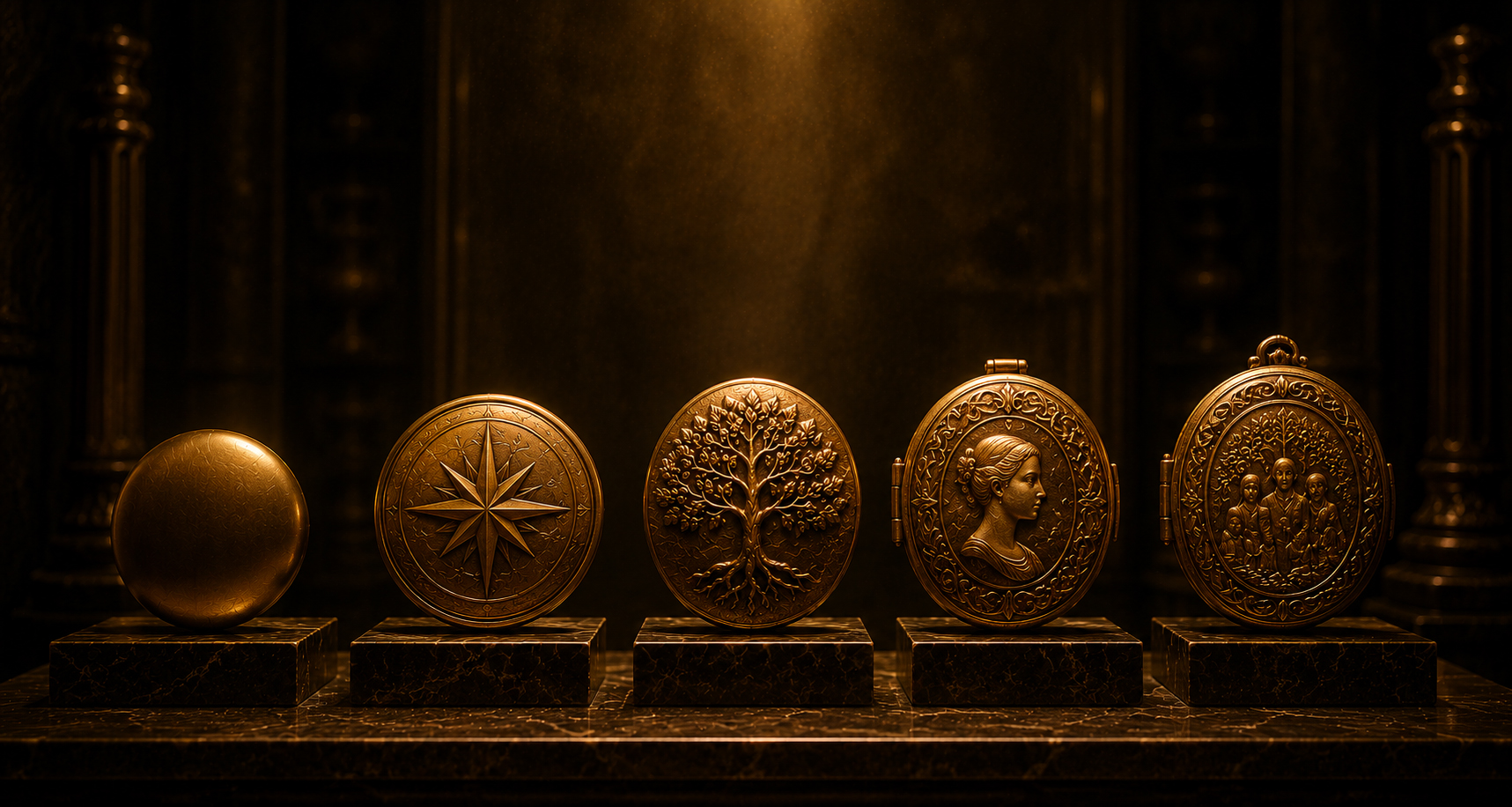
Jewelry That Makes Meaning Visible
A symbol can open a story. A RetinaSignature makes it personal. Discover jewelry that gives identity, memory and connection an unmistakable form.
Get in touch →