
The fascination of symbolism in the world of jewelry
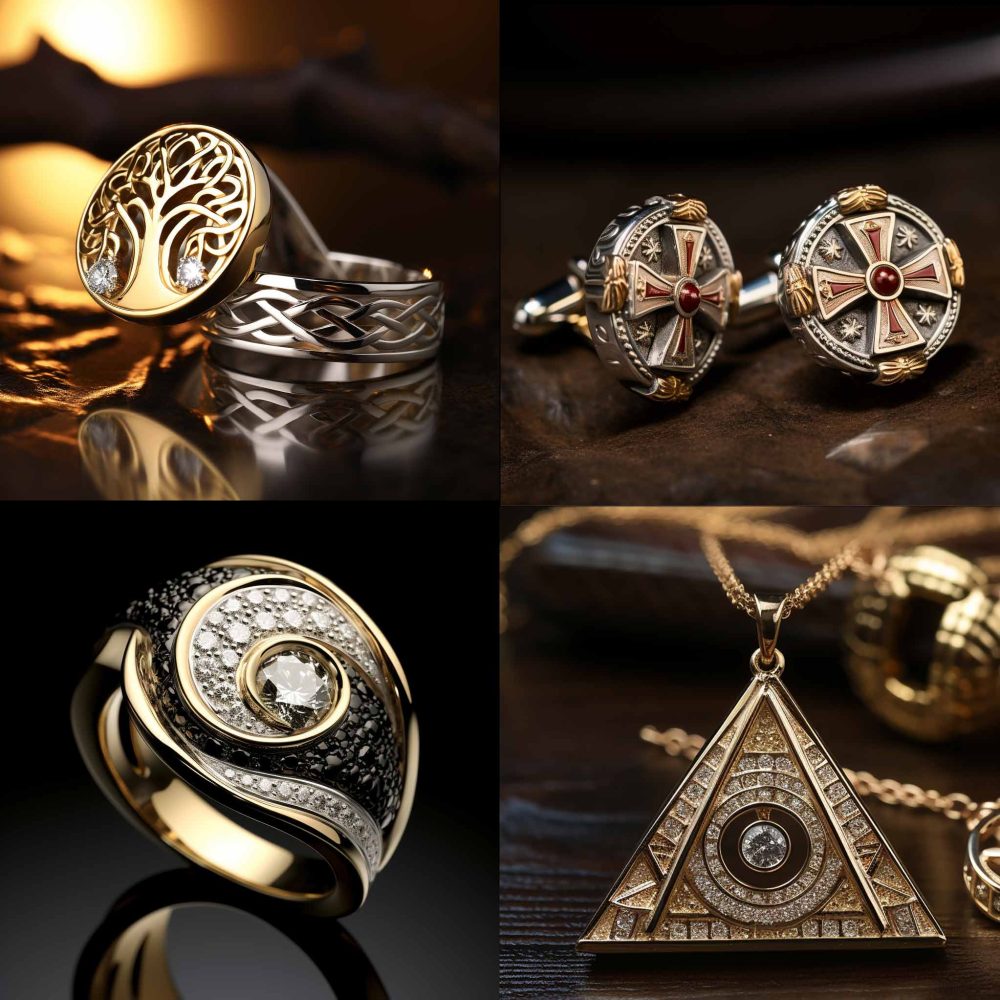
The Language of Symbols in Jewelry
Jewelry is far more than a decorative accessory.
It carries stories.
It holds emotion.
It conveys meaning.
One of the most powerful ways jewelry communicates is through symbols.
These tiny visual elements often hold meanings that span centuries – or even millennia.
From the mysterious hieroglyphs of ancient Egypt to the encrypted emblems of secret societies like the Illuminati or the Knights Templar – symbols have shaped the art of jewelry in remarkable and enigmatic ways.
Among all symbolic jewelry, the wedding ring likely holds the most profound significance across cultures.
It stands for union – for love and devotion to one chosen person, intended to last a lifetime.
A wedding ring has always been more than just gold.
It is a symbol – of trust, connection, and shared destiny.
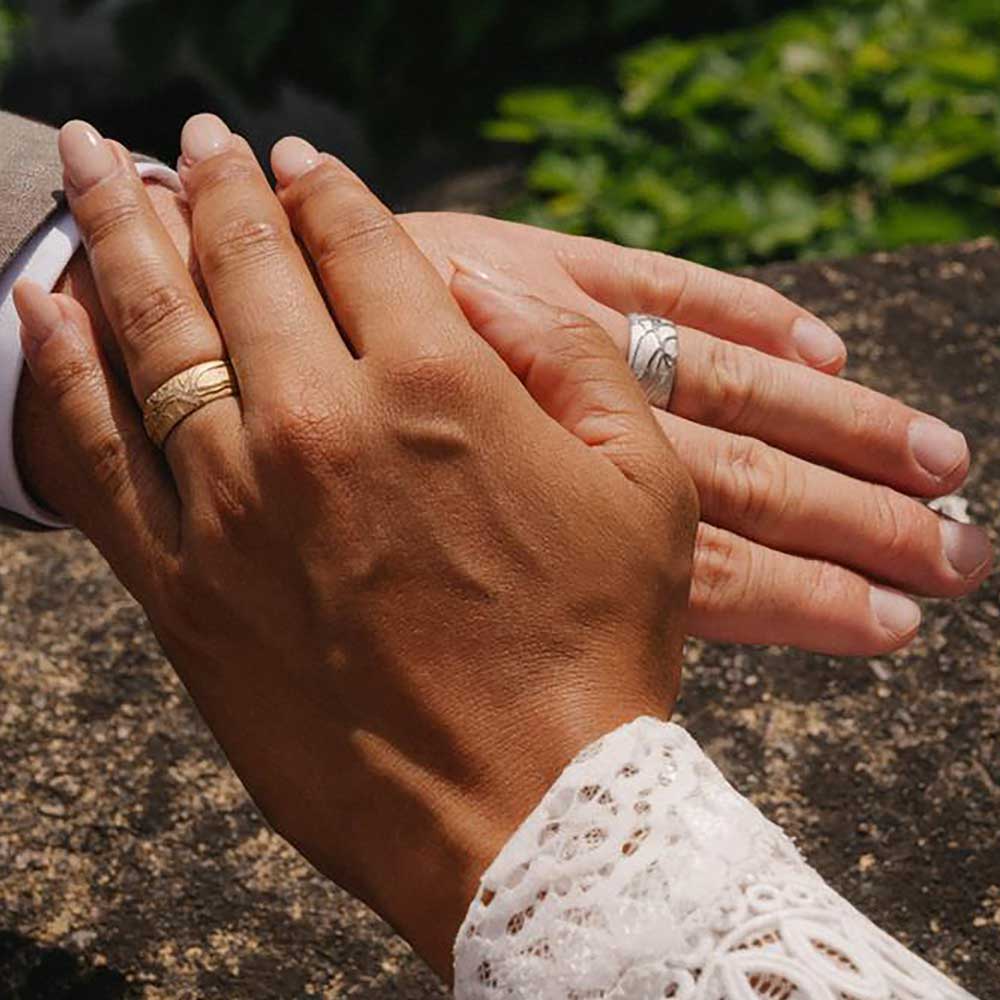
Wedding Rings as Symbols of Love – A Historical Perspective
Rings have long been powerful symbols of love, connection, and devotion.
Over the centuries, wedding rings have taken on deep cultural significance, becoming an essential element in how we express commitment and belonging in a partnership.
The origins of wedding rings as symbols of marriage and eternal love reach far back in time.
The ancient Egyptians were among the first cultures to use rings to represent infinity – a love without beginning or end.
A continuous band, perfectly closed, was seen as the ideal metaphor for something that, like true love, endures.
The Ring Finger and the Path to the Heart
The tradition of wearing a wedding ring on the fourth finger of the left hand also has historical roots.
According to Roman belief, a vein – the Vena Amoris, or “vein of love” – ran directly from this finger to the heart.
Thus, the custom of wearing a ring on this finger became a romantic symbol:
a visible link between love and the heart.
A Circle of Eternity, Fidelity, and Connection
Rings have no beginning and no end, making them timeless emblems of eternity.
This is what makes the circular form so perfect for symbolizing a love that never fades – a bond that holds through change, distance, and time.
To wear a wedding ring is not only to show one’s connection to another person –
but to carry, every day, a quiet reminder of a promise:
To support each other in joy and in challenge.
To stand side by side, in light and in shadow.
While the meaning of wedding rings varies slightly across cultures, one truth remains universal:
They represent love and the sacredness of enduring partnership.
From ancient rituals to modern-day ceremonies, wedding rings remain one of the most powerful and universally shared symbols of love and lifelong commitment.
Individuality and Symbolism in Wedding Rings Today
What was once a simple, slender gold band has evolved into something far more meaningful.
In today’s world of mass production and conformity, the desire for uniqueness and individual expression has grown stronger than ever.
Wedding rings are no longer just symbols of love.
They have become expressions of personal identity – visual narratives of two lives intertwined.
Designing custom-made rings allows couples to translate their shared story into form.
A carefully chosen texture, a meaningful engraving, or a hidden element can turn a ring into a personal relic – something no one else could ever wear in quite the same way.
A Conscious Investment in the Future
Wedding rings are not made for a single day –
They are meant to last a lifetime.
And often, far beyond.
Uniquely designed rings hold not only emotional value, but lasting material and symbolic worth.
They can become heirlooms – passed down from generation to generation, carrying the legacy of a relationship through time.
Choosing bespoke rings is also a conscious statement:
A rejection of disposable luxury.
A stand for craftsmanship, ethics, and sustainability.
By supporting designers who work with care – both for people and the planet – couples contribute to reshaping the values of the jewelry industry.
Retina Jewelry: The Ultimate Expression of Individuality
We believe that jewelry has the power to hold more than beauty.
It can carry a personal symbol – something utterly unique to you.
Our Retina Rings are a quiet, elegant expression of identity.
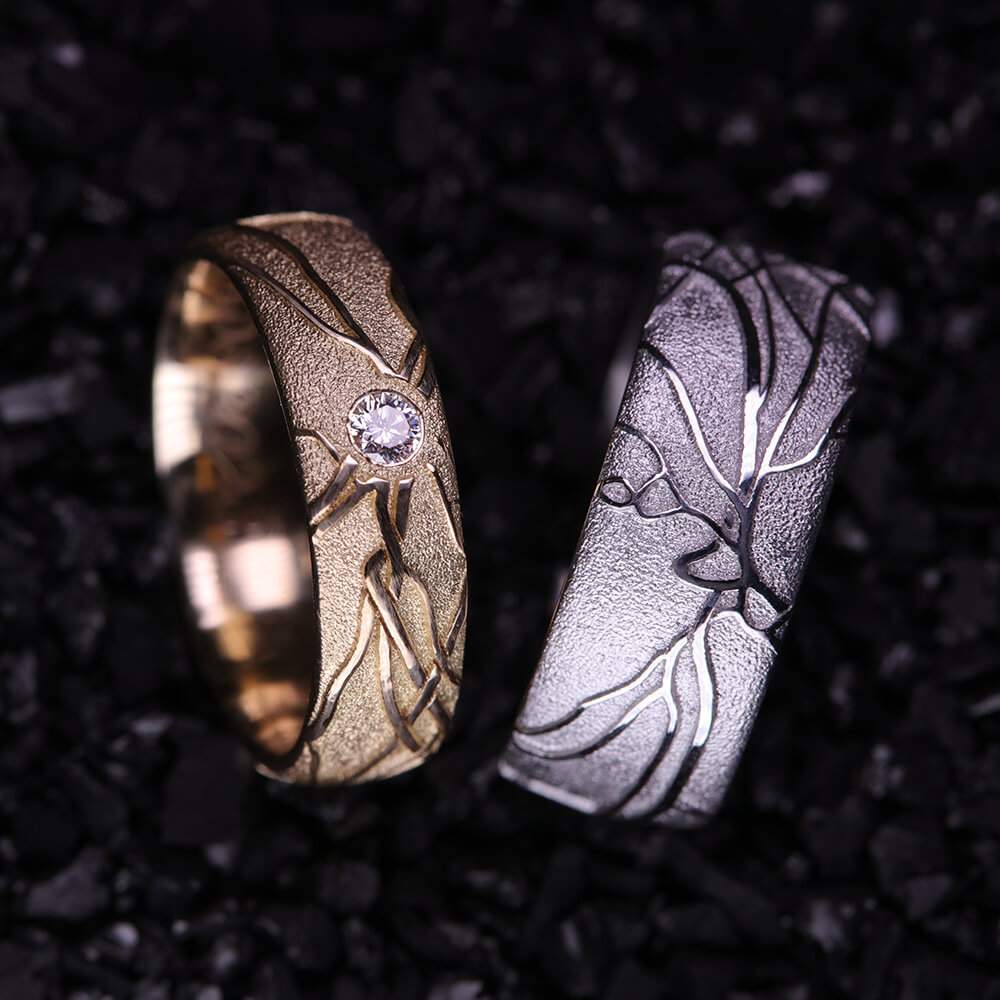
Visually striking yet deeply intimate, each one encodes the retinal pattern of one or more people – a biological signature formed before birth and never to be repeated.
To the outside eye, the design appears fluid and organic – reminiscent of roots, river deltas, or the delicate veins of a leaf.
It is aesthetically pleasing on its own.
But its true emotional power is hidden beneath the surface.
Only when the origin of the pattern is revealed does the full meaning come into focus.
That’s when you realize:
This ring could belong to no one else.
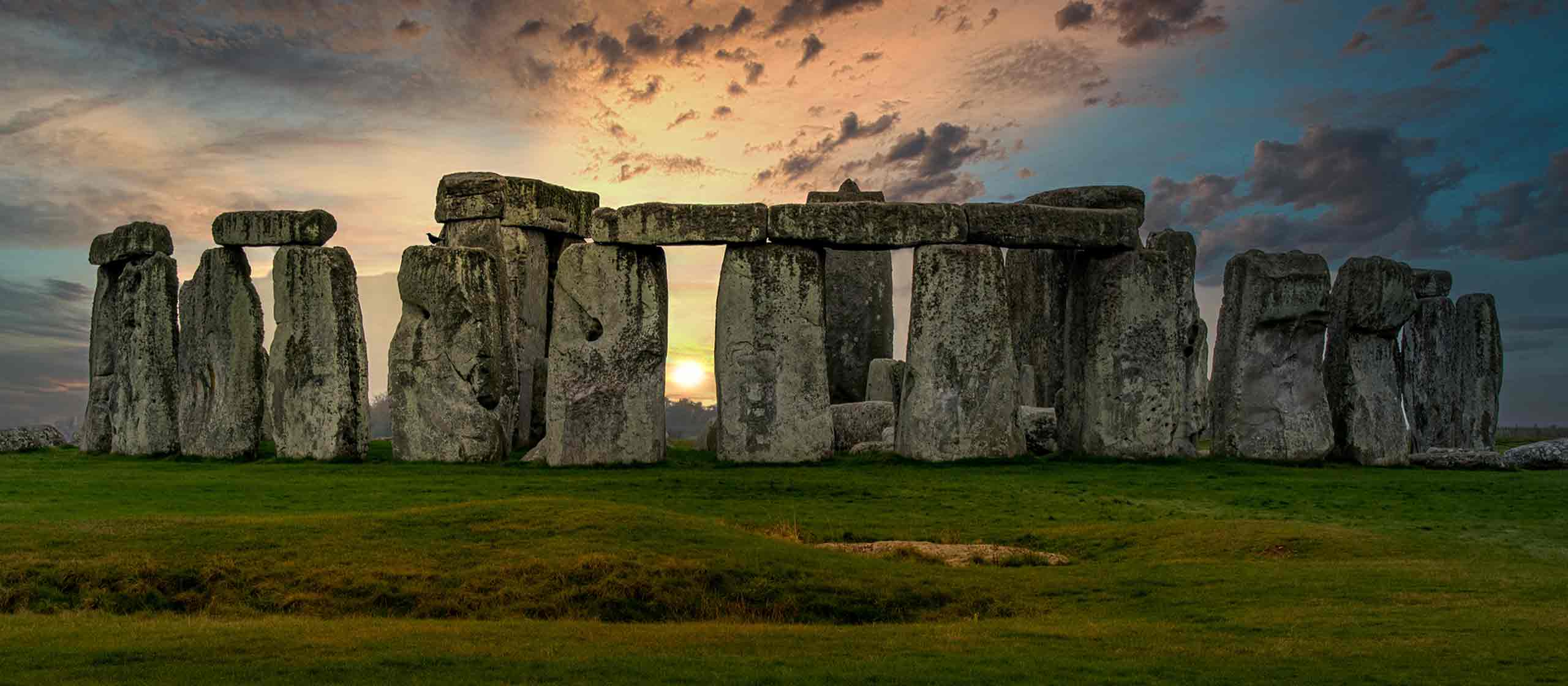
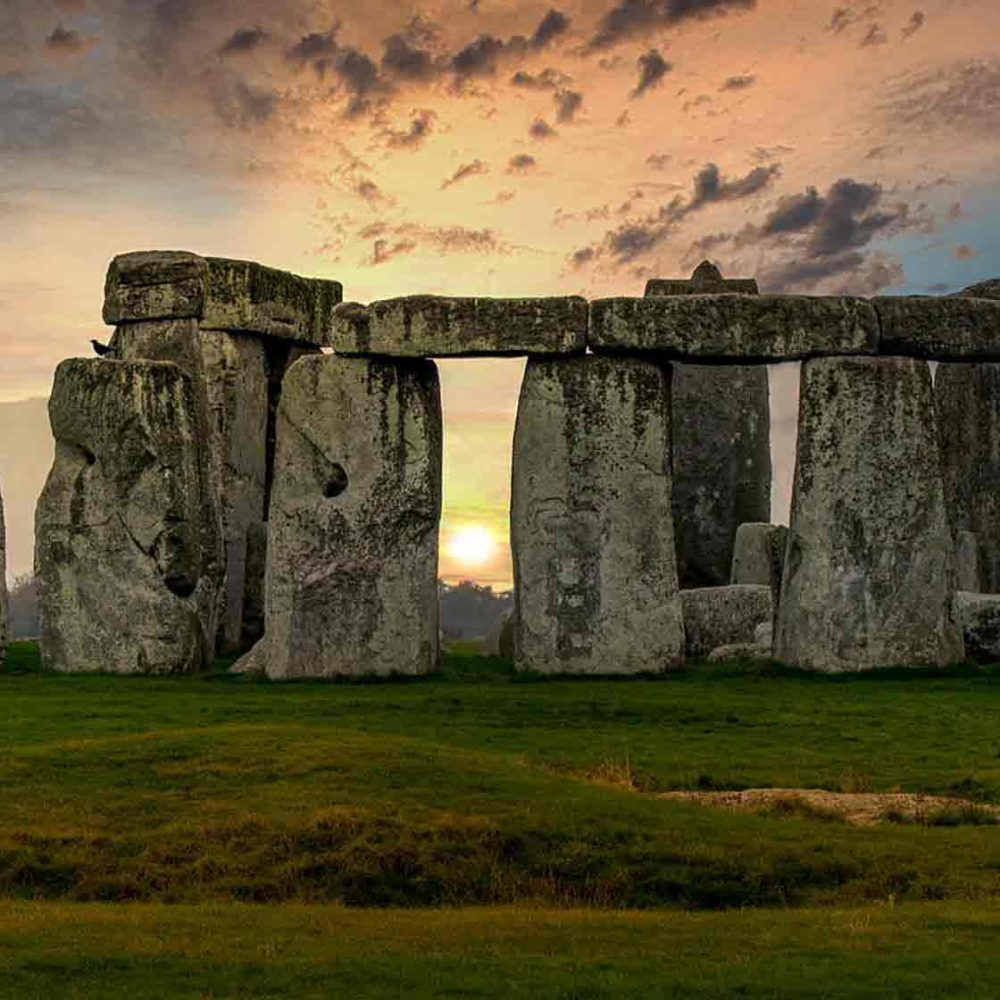
The Mystique and Mystery of Stonehenge
Hidden Stories in the Jewelry of Stones
Stonehenge – that enigmatic circle of towering stones rising from the English plain – carries a symbolic depth that continues to stir wonder.
Shrouded in mystery, this prehistoric monument invites more questions than answers.
Its massive stones are not randomly placed.
They form a deliberate circle.
They align precisely with celestial directions.
And for centuries, scholars, mystics, and dreamers alike have searched for meaning in their silent geometry.
Some believe that Stonehenge functioned as an ancient astronomical calendar, tracking solstices and seasonal changes for ceremonial purposes.
Others see it as a spiritual site, infused with ancestral presence, sacred rituals, and an energy that transcends explanation.
Regardless of theory, one thing remains clear:
These stones are symbols.
Symbols of something older than language, more intuitive than science –
a bridge between human intention and the rhythms of nature and time.
Like all symbols, they don’t just represent –
they connect.
And just like jewelry crafted with deep symbolic purpose,
Stonehenge reminds us that what we wear or build can speak to something eternal:
to belonging, to origin, to the sacred order beneath the surface of things.
Where symbols endure, stories begin.
And even in stone, we find what is timeless.
Ancient Symbolism: Hieroglyphs and Runes
The origins of symbolic jewelry design reach deep into the roots of human history.
Across time and culture, people have used symbols not only to adorn, but to communicate, protect, and connect with unseen forces.
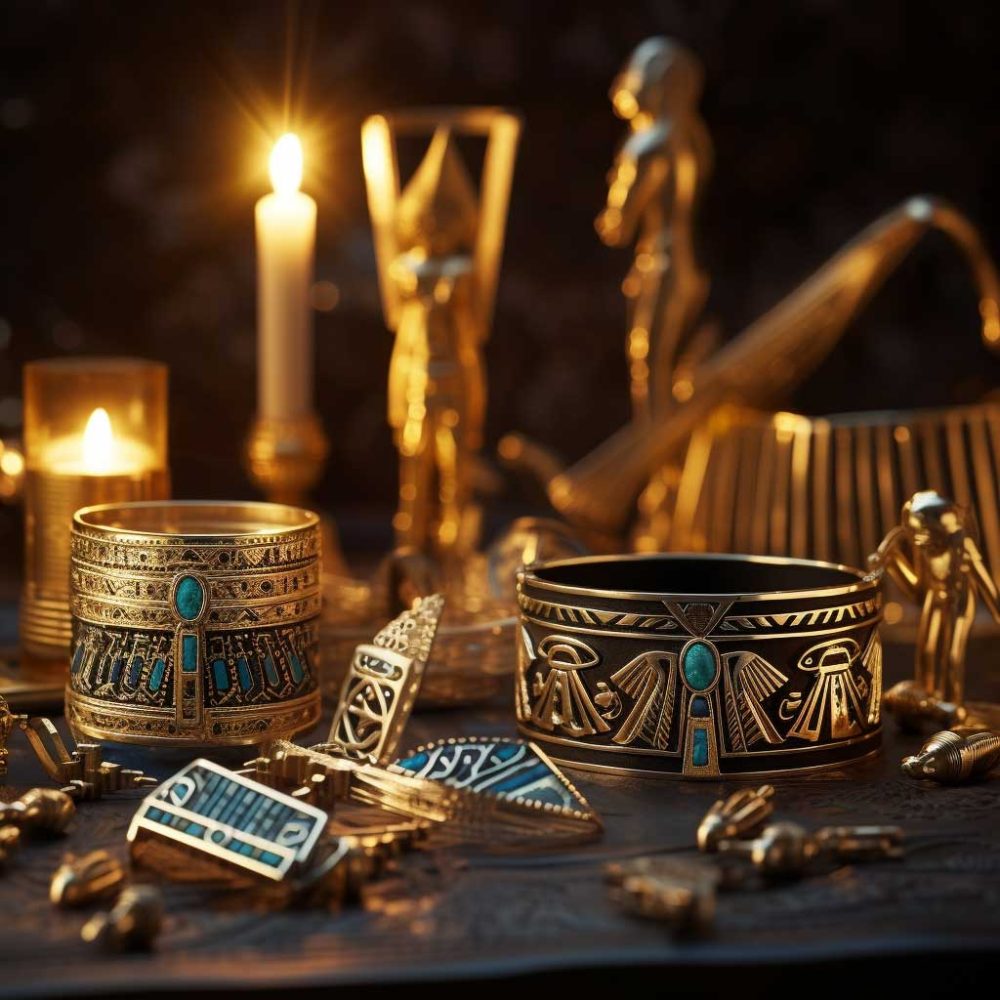
In ancient Egypt, hieroglyphs told stories of gods, pharaohs, and everyday life.
These intricate symbols were engraved into amulets, rings, and necklaces – serving as talismans of protection, good fortune, and divine connection.
Each mark carried meaning.
Each piece of jewelry became a sacred narrative, worn on the body.
Meanwhile, in the far north, Norse cultures developed their own symbolic tradition: runes.
These angular characters were etched not only into stones and scrolls, but also into jewelry – worn to invoke power, offer guidance, or foster a deeper bond with nature and the spiritual world.
Both systems – though vastly different in style – share a common thread:
They transformed jewelry into a vessel of meaning, a bridge between the visible and the invisible.
Eternal Brilliance: Roman Symbols in Jewelry Design
With the rise of the Roman Empire, symbolic jewelry entered a new era of sophistication and imperial grandeur.
Jewelry became a canvas for power, conquest, and cultural identity – reflecting the values, deities, and dominion of Rome.
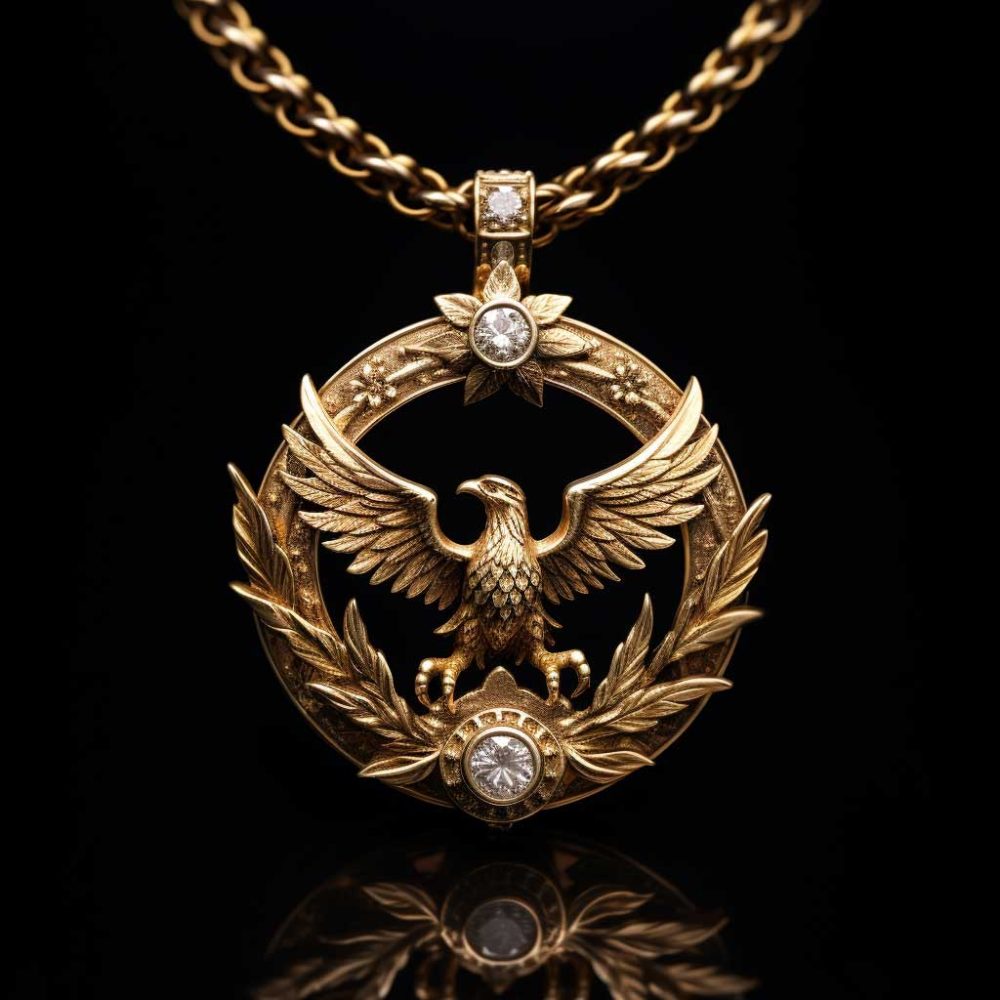
Icons like the eagle, the scepter, and the laurel wreath adorned rings, medallions, and ceremonial pieces.
These were not merely decorative elements – they were emblems of military strength, glory, and the order of empire.
The Roman world was rich in symbols and insignia, many of which found their way into the art of adornment.
Here are a few of the most enduring:
The Roman Eagle (Aquila)
The eagle stood as the supreme symbol of Rome – embodying the spirit of the legions and the reach of imperial power.
It was prominently displayed on the standards of Roman military units and continues to evoke authority and legacy in designs today.
The Laurel Wreath
Worn by victors and emperors, the laurel wreath was a symbol of triumph and honor.
It frequently appeared in Roman jewelry – a motif of excellence still seen today, especially in signet rings and formal insignia worn by officers or statesmen.
Roman Legionary Armor
The distinct armor of Roman soldiers – especially the iconic helmet – is often reimagined in jewelry design as a signifier of bravery, resilience, and duty.
The Fasces
A bundle of rods tied together around an axe, the fasces symbolized the authority of Roman magistrates.
It represented unity through strength and was often featured in **official seals, rings, and state icon
The Magic of Celtic Jewelry: Symbols and Sacred Designs
The Celtic tradition is steeped in rich history and deep symbolism – and it has left an enduring imprint on the world of jewelry.
Celtic art is renowned for its intricate patterns and mysterious knotwork, many of which carry timeless meanings that speak to life, spirit, and connection.
Here are some of the most enduring and meaningful Celtic symbols:
The Celtic Knot
These endless, interwoven patterns represent eternity – the unbroken cycle of life, death, and rebirth.
They are often used in jewelry to symbolize infinite love, continuity, and sacred connection.
The Trinity Knot (Triquetra)
The Triquetra is a threefold symbol representing unity in body, mind, and spirit, or in some interpretations, the trinityof the divine.
It is frequently worn as a sign of spiritual balance, faith, and wholeness.
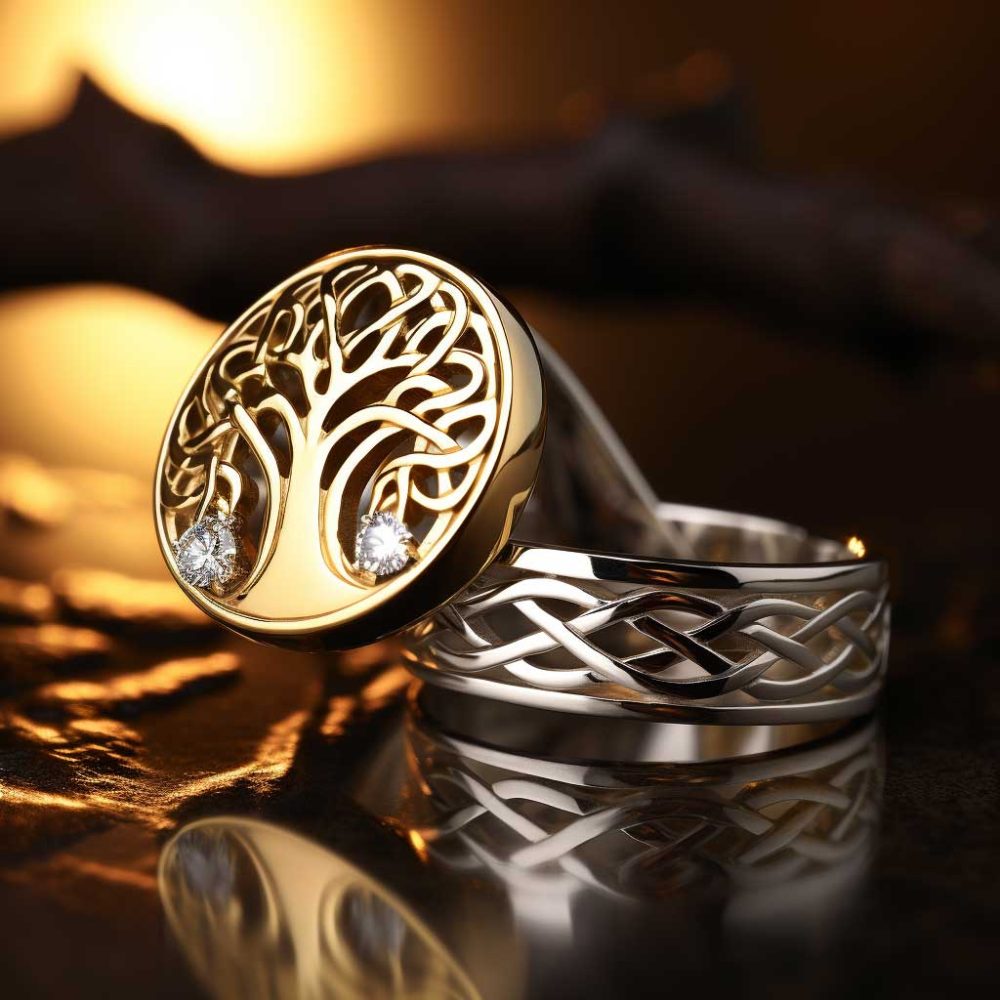
The Celtic Tree of Life (Yggdrasil)
This symbol represents the deep bond between heaven and earth, as well as the rootedness and growth of all living things.
Often found in pendants or medallions, it speaks to the sacred rhythm of nature and the interconnectedness of all existence.
Celtic Animals
Animals such as the Celtic wolf, stag, or boar are common motifs in Celtic-inspired jewelry.
Each carries symbolic weight – often associated with qualities like strength, freedom, courage, or wild beauty.
To wear jewelry adorned with Celtic symbols is more than a stylistic choice.
It is a quiet reverence for an ancient worldview –
a way of honoring timeless wisdom, mystery, and the unseen forces that shape our lives.
Mysterious Medieval Symbols: The Templar Order and the Language of Alchemy
The Middle Ages gave rise to secret brotherhoods like the legendary Templar Order, whose mysterious symbols were more than mere signs – they were seals of identity, secrecy, and power.
From the Knights Templar to the Freemasons, these societies cultivated rich symbolic traditions, deeply rooted in ritual, legend, and esoteric knowledge.
Their symbols not only played a central role within the orders themselves, but also found their way into jewelry, where they continue to evoke mystery and meaning.
Symbols of the Templar Order
Founded in the 12th century, the Templar Order is best known for its iconic emblem:
the red cross on a white field – the so-called Templar Cross.
This stark and powerful symbol has become one of the most recognizable in Western history.
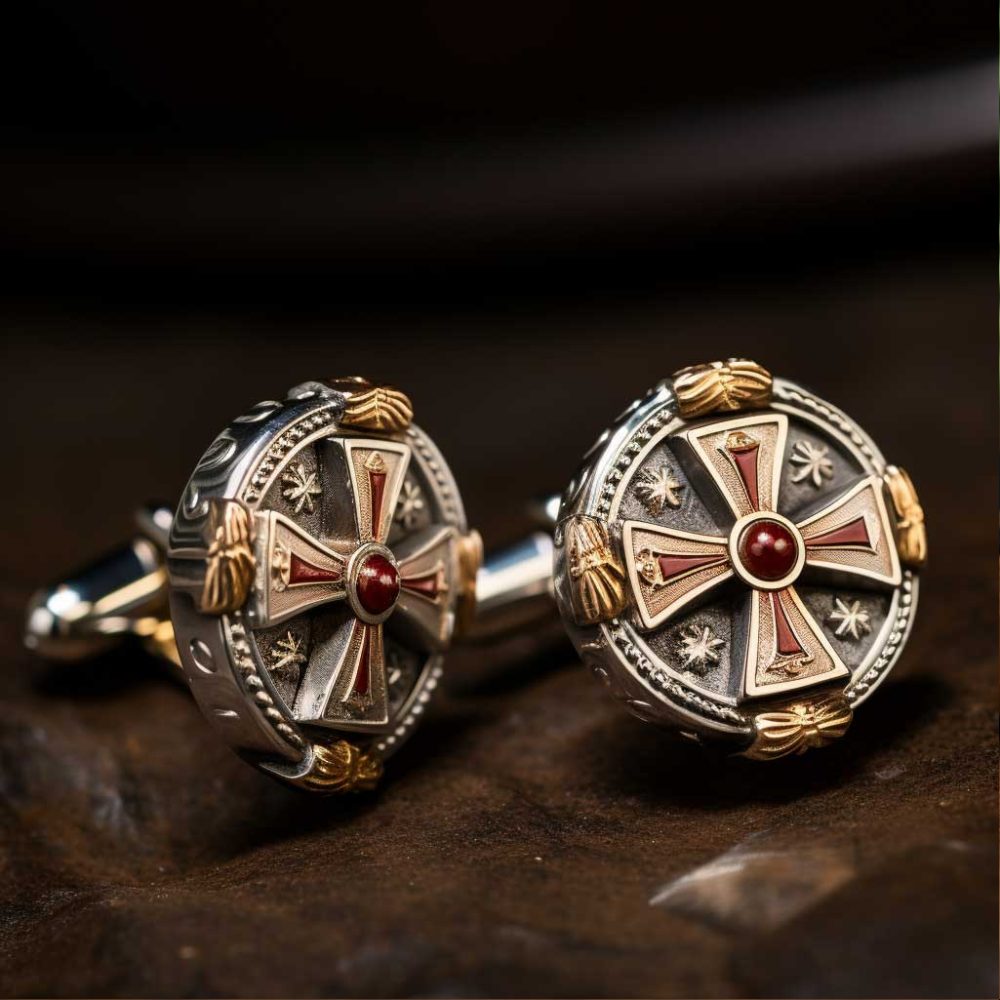
In jewelry design, the Templar Cross is often featured on rings, pendants, and insignia, serving as a connection to the legendary order and its aura of sacred duty, courage, and secrecy.
Beyond the cross, the Templars also used seal rings engraved with layered symbols – including the Temple of Solomon, a rider on horseback, and cryptic inscriptions in Latin or Hebrew.
These elements were not merely decorative – they were designed to protect, to encode, and to signal belonging to an inner circle of hidden knowledge.
Today, wearing such symbols is not only a nod to a mythical past –
it is a quiet acknowledgment of the unseen forces, values, and ideals that once shaped the medieval world.
In the language of jewelry, they continue to speak:
of faith and secrecy, power and devotion –
and the timeless human fascination with what lies beyond the visible.
The Symbols of the Alchemists
Mystic Signs of Transformation, Immortality, and Inner Gold
Alchemy, the esoteric science of the Middle Ages, has also made its way into the world of jewelry.
For the alchemists, the transformation of metal into gold was only one part of the pursuit.
Their true goal was spiritual enlightenment, immortality, and the inner transmutation of the soul.
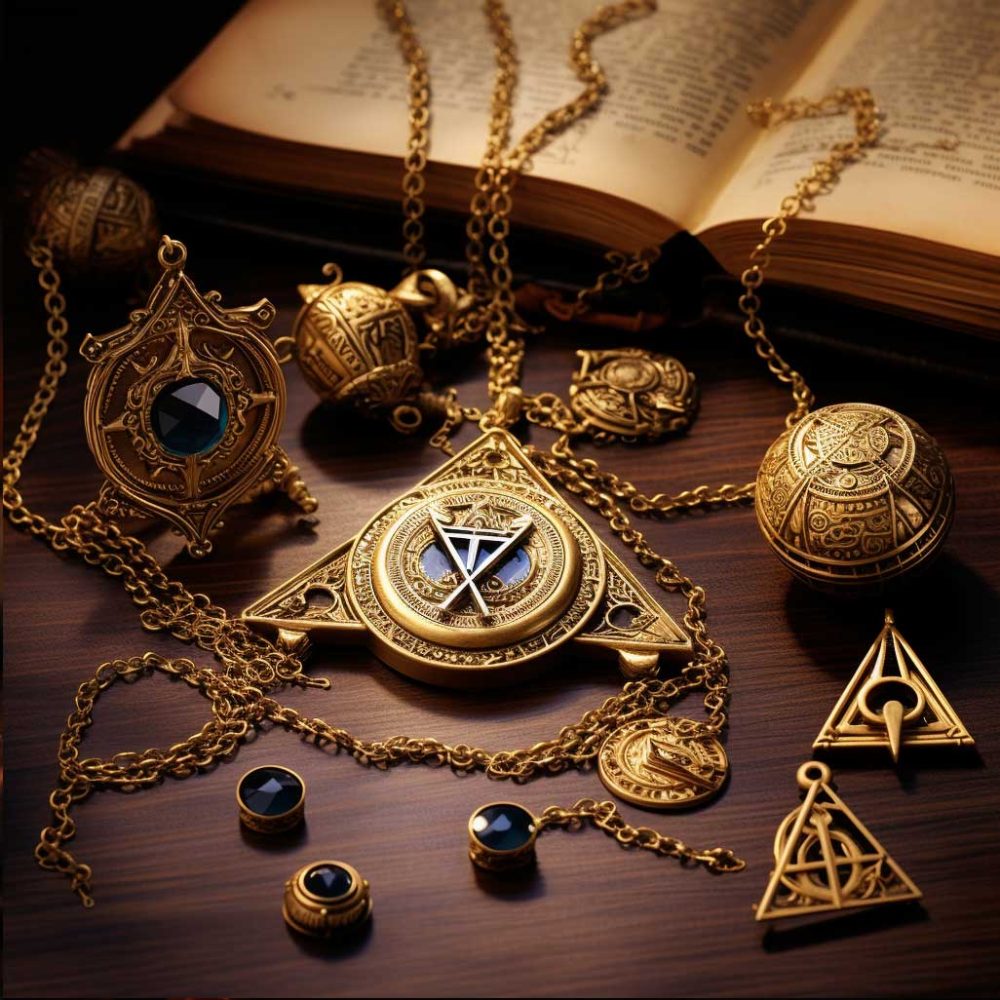
Through symbols, this ancient quest was encoded – on amulets, rings, pendants, and scrolls. These signs are still used today to represent spiritual growth, inner balance, and the unseen dimensions of human existence.
The Philosopher’s Stone
Often symbolized by a circle with a dot at the center, the Philosopher’s Stone represents the ultimate alchemical goal:
the mastery of material and spiritual realms –
transformation, enlightenment, and eternal life.
The Ouroboros
A serpent devouring its own tail, the Ouroboros is a powerful symbol of eternal return, life’s cyclical nature, and the union of opposites.
It reminds us that destruction and creation are never far apart.
The Caduceus
Depicted as a staff entwined by two serpents and crowned with wings, the Caduceus is a symbol of healing, balance, and transformation.
It bridges alchemy, medicine, and mysticism – and is often found in jewelry worn as a talisman of inner harmony.
Sun and Moon
In alchemy, the Sun is often associated with the masculine, active principle – while the Moon represents the feminine, receptive force.
Together, they symbolize the sacred union of opposites and the eternal search for balance and wholeness.
Alchemical symbols carry profound spiritual resonance.
They continue to inspire modern jewelry design – appearing on rings, amulets, earrings, and pendants as subtle expressions of the inner journey.
These signs are more than ancient curiosities.
They are reminders:
That there is more to life than what the eye can see.
And that the quest for wisdom, transformation, and soul-deep beauty is one of humanity’s oldest and noblest pursuits.
Modern Mysteries: Secret Societies, Freemasonry, the Illuminati, and Hidden Symbols
The influence of symbolism in jewelry continues well into the modern era.
Dan Brown’s bestselling novel Angels & Demons brought the enigmatic Illuminati into the mainstream – and with them, a world of arcane symbols, layered meanings, and secret philosophies.
These contemporary interpretations of symbolic design show how ancient traditions can evolve, adapt, and reappear – often in unexpected ways.
The Illuminati – a name that conjures centuries of mystery, conspiracy, and coded knowledge – has not only captivated the minds of theorists and historians, but also influenced the world of jewelry design.
Known for their complex and multilayered symbolism, the Illuminati’s visual language is rich in meaning and metaphor.
Here are some of their most well-known and frequently reimagined symbols:
The All-Seeing Eye
Depicted as an eye within a triangle, this is perhaps the most iconic of all Illuminati symbols.
It represents divine omniscience, awareness, and sometimes, surveillance or hidden control.
As a jewelry motif, it can symbolize perception, watchfulness, or spiritual insight.
The Pyramid
Especially the unfinished pyramid crowned by the All-Seeing Eye, this symbol represents the ascent toward enlightenment, the structure of power, and the pursuit of ultimate knowledge.
The Pentagram
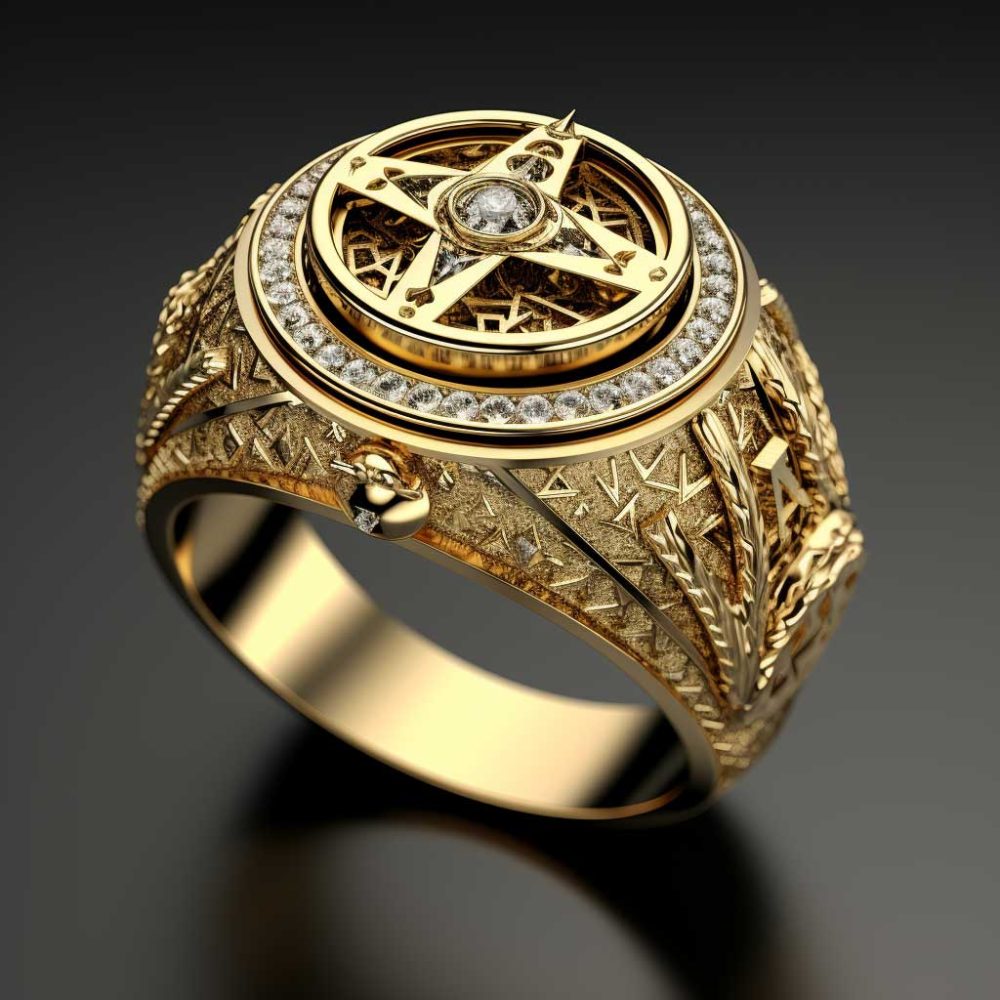
A downward-pointing pentagram enclosed in a circle is often associated with ritual magic, spiritual duality, or darker interpretations in occult contexts.
In jewelry, its use is controversial – yet undeniably captivating to those drawn to esoteric aesthetics.
The Owl of Minerva
Sometimes associated with the Illuminati, the owl – particularly the Owl of Wisdom – symbolizes hidden knowledge, discernment, and intellectual clarity.
Its silent flight and nocturnal gaze make it a symbol of insight that sees what others do not.
Wearing Illuminati-inspired symbols in jewelry is often less about allegiance and more about fascination.
It is a way of expressing one’s curiosity for what lies beneath the surface – for what is hidden, encrypted, or yet to be understood.
Such pieces speak to the wearer’s interest in mystery, knowledge, and the unexplored corners of human thought.
Because even today, the world remains full of mysteries.
And those who choose to wear them do so not just as adornment –
but as an invitation to explore the unknown.
The Symbols of Freemasonry
Sacred Geometry, Divine Vision, and the Language of Brotherhood
Freemasonry is renowned for its layered symbolism, filled with allegory, ritual, and ancient wisdom.
These symbols are not merely decorative – they serve as emblems of values, principles, and a legacy of philosophical tradition.
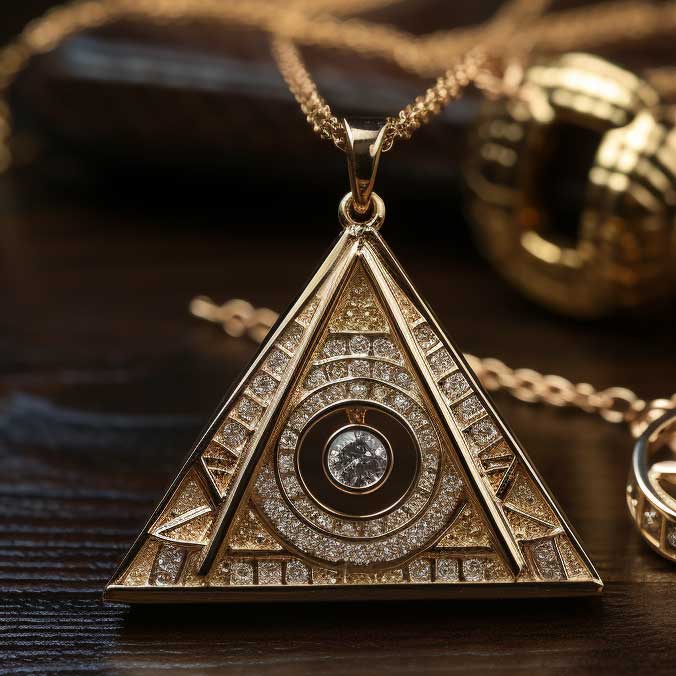
Perhaps the most well-known Masonic emblem is the Eye of Providence, often depicted as an eye enclosed in a triangle.
This symbol – also known as the All-Seeing Eye – represents the divine presence and is frequently associated with the idea that “God sees all.”
It can be found on pendants, cufflinks, and rings, worn by those who resonate with its spiritual or philosophical implications.
The Square and Compass
Another essential symbol in Freemasonry, the square and compass embodies the values of precision, balance, and moral integrity.
The square reminds one to act rightly; the compass, to keep desires within bounds. Together, they represent the ideal of a life guided by both reason and restraint.
Masonic and Templar symbols in jewelry go far beyond visual appeal.
They carry layers of meaning – connecting the wearer to hidden knowledge, historic brotherhoods, and spiritual inquiry.
For many, wearing such symbols is a quiet way of expressing:
-
a fascination with the mysterious,
-
a reverence for history,
-
and a personal alignment with the values of discipline, wisdom, and inner exploration.
These are not simply ornaments.
They are inscribed beliefs, worn close to the skin – and closer still to the soul.
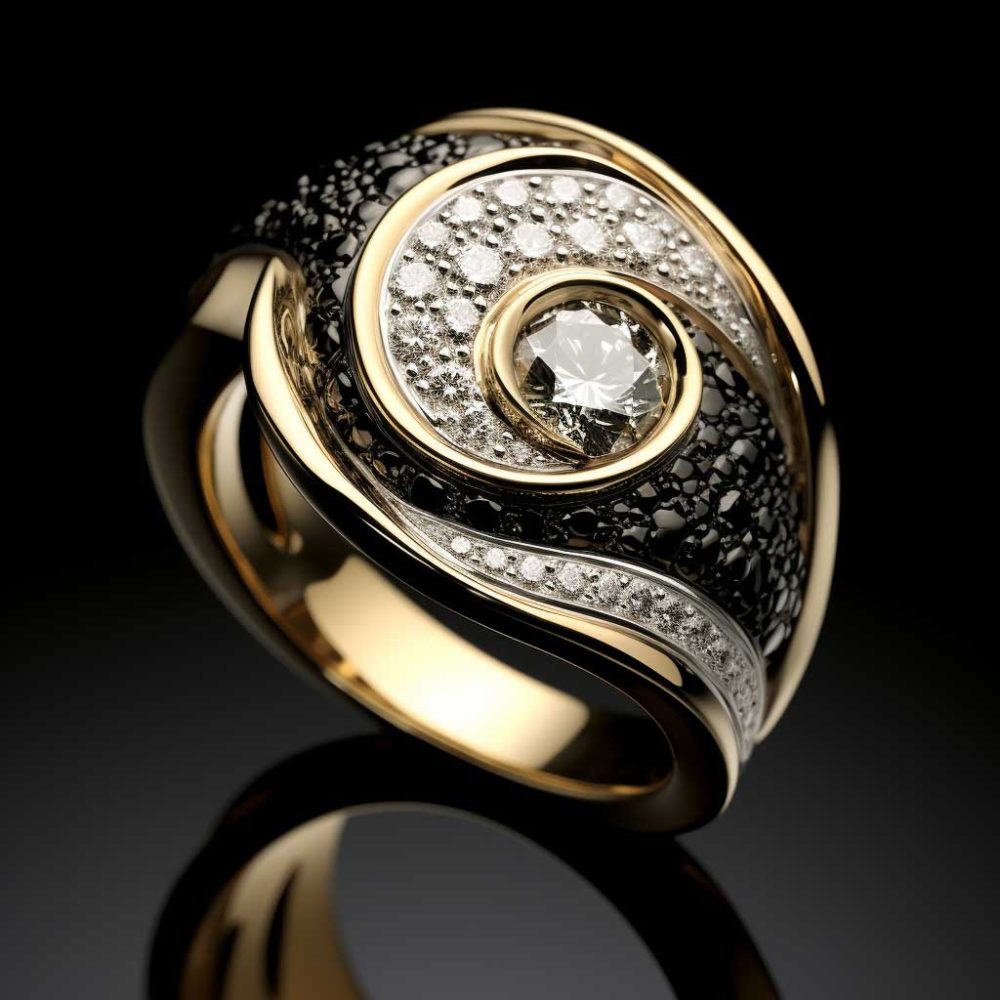
Yin and Yang in Jewelry: The Beauty of Balance
Few symbols in the world of design and philosophy express harmony and duality as powerfully as Yin and Yang.
Rooted in ancient Chinese philosophy, this symbol is far more than a visual motif – it is a worldview.
One that continues to inspire jewelry design with its timeless message: balance is beauty.
What Yin and Yang Represent
In Chinese thought, Yin and Yang are not opposing forces in conflict – but complementary energies in dynamic relationship.
-
Yin is associated with darkness, stillness, femininity, rest, and introspection. It is symbolized by the black field containing a white dot – a reminder that light always exists within shadow.
-
Yang represents light, activity, masculinity, warmth, and outward movement. Its symbol is a white field with a black dot – a sign that even in radiance, stillness remains.
Together, Yin and Yang form a perfect circle – not static, but in constant flow. Each gives rise to the other, just as night gives way to day, and tension gives way to peace.
More Than Aesthetic: A Symbol of Life’s Harmony
To wear Yin and Yang-inspired jewelry is to carry a quiet reminder:
Balance is not the absence of contrast, but its integration.
These pieces go beyond beauty.
They reflect a philosophy – a call to embrace both strength and softness, action and rest, self and other.
In relationships, in health, in personal growth – Yin and Yang jewelry speaks to the deep need for harmony, not as perfection, but as presence.
It reminds us that opposites are not enemies.
They are two voices of the same truth.
Any questions?
We’d love to hear from you if you have any questions or if we could be of service in any way.
Feel free to fill in the following form and we’ll get back to you within 24 hours.
Chat here directly with somone of your team.